

 English
 中文简体
中文简体 Español
Content
A hair dryer is the complete electric appliance that generates heated airflow to dry hair, while a diffuser is an attachment that fits onto the nozzle of the dryer to spread that airflow over a wider area at lower velocity, reducing frizz and preserving natural curl pattern. In other words, a diffuser does not work on its own, it modifies how the airflow from a device such as a Hair Dryer is distributed across the hair, changing a direct concentrated stream into a broader, gentler flow better suited for curly, wavy, or textured hair types.
The sections below explain how each component functions, how airflow and heat behave differently with and without a diffuser, and which hair types benefit most from using one.
What the Hair Dryer Itself Does
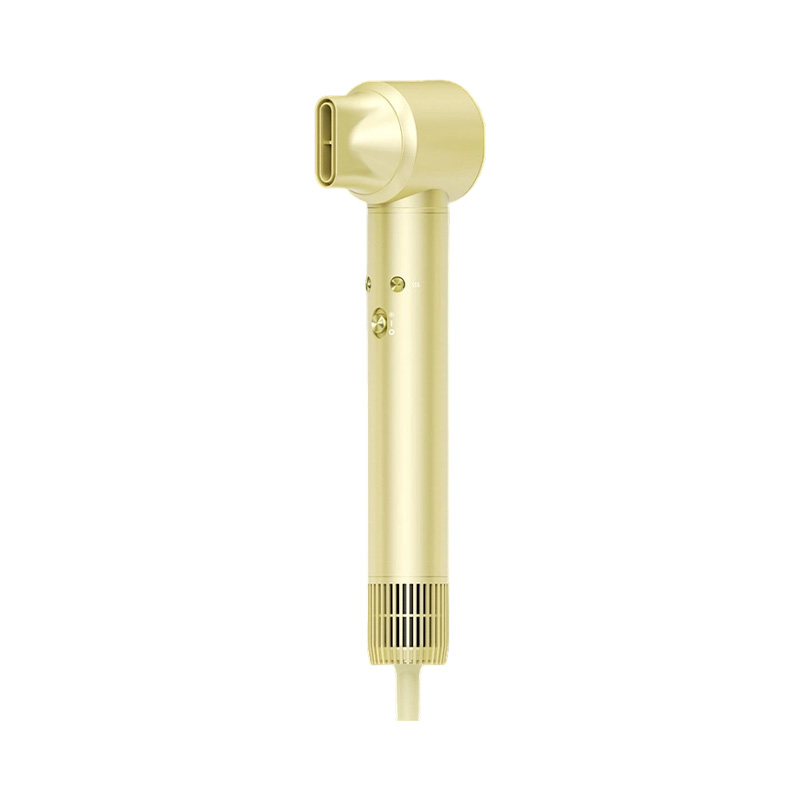
The hair dryer is the core appliance, built around a motor driven fan, a heating element, and a nozzle that directs airflow in a concentrated stream.
Airflow and Heat Generation
Inside the dryer, a motor spins a fan that pulls in air and pushes it across a heating element before it exits through the nozzle. Standard nozzles concentrate this airflow into a narrow, directional stream, which allows for fast drying and precise styling control, particularly useful when smoothing hair with a round brush.
Speed and Heat Settings
Most modern hair dryers offer multiple speed and heat combinations, commonly ranging from around 1600 to 2200 watts for consumer models, allowing users to adjust airflow intensity and temperature based on hair thickness and desired styling outcome.
What a Diffuser Attachment Changes
A diffuser is a separate accessory, typically a bowl shaped attachment with finger like prongs, that snaps onto the dryer's nozzle to alter how air reaches the hair.
Wider, Slower Airflow Distribution
Instead of one concentrated stream, the diffuser's prongs break up airflow into multiple smaller, slower moving streams spread across a wider surface area. This reduces the direct force of air against individual strands, which helps minimize frizz caused by strands being blown around and tangled during drying.
Reduced Direct Heat Contact
Because air is dispersed rather than concentrated, hair sits closer to the diffuser bowl and receives gentler, more even heat exposure rather than one hot concentrated blast, which is particularly helpful for curl types prone to frizz or dryness under direct high velocity airflow.
Side by Side Comparison
| Factor | Standard Nozzle | Diffuser Attachment |
| Airflow pattern | Concentrated, directional | Dispersed, wide coverage |
| Best for hair type | Straight or fine hair | Curly, wavy, or textured hair |
| Drying speed | Generally faster | Generally slower |
| Frizz control | Lower, unless brushed carefully | Higher, due to gentler airflow |
| Curl pattern preservation | Can disrupt curl shape | Helps maintain natural curl clumping |
This comparison reflects general styling tool guidance commonly referenced by hairstyling educators and appliance manufacturers regarding airflow behavior and its effect on different hair textures.
Which Hair Types Benefit Most From a Diffuser
Not every hair type needs a diffuser, and understanding your hair's natural texture helps determine whether the attachment is worth using.
- Curly and coily hair types generally benefit most, since diffused airflow helps curls form defined clumps rather than being scattered into frizz
- Wavy hair types often see reduced frizz and more visible wave definition when dried with a diffuser
- Fine straight hair usually does not need a diffuser, since the goal is typically smoothness rather than texture preservation
- Thick coarse hair may take noticeably longer to dry with a diffuser due to the slower, gentler airflow it produces
For straight hair styling that relies on brushing and directional airflow to create smoothness or volume, the standard concentrator nozzle remains the more practical tool.
How to Use a Diffuser Effectively
Getting the best results from a diffuser attachment involves technique as much as the tool itself.
- Apply styling product to damp hair before diffusing to help define curl or wave pattern
- Use a low to medium heat setting to reduce frizz and prevent moisture loss
- Cup sections of hair gently into the diffuser bowl rather than moving it rapidly through hair
- Avoid touching or scrunching hair excessively while it dries to reduce frizz from friction
- Finish with a cool shot setting if available to help set the curl pattern in place
Since diffusing generally takes longer than standard drying, pairing the attachment with a dryer that offers a dedicated diffuser mode or lower airflow speed setting, such as a Hair Dryer designed with adjustable speed control, can make the process more comfortable for extended use.
Do You Need Both a Standard Nozzle and a Diffuser
Many hair dryers come with both a standard concentrator nozzle and a diffuser attachment included, allowing users to switch between them depending on the desired style. Someone with naturally wavy or curly hair might use the diffuser for everyday drying to enhance natural texture, then switch to the standard nozzle when using a round brush for a smoother, straighter look on occasion.
Summary
The difference between a hair dryer and a diffuser comes down to the appliance versus the attachment. The hair dryer generates and directs heated airflow through its motor and heating element, while the diffuser attachment changes that airflow from a concentrated stream into a wider, gentler distribution better suited for curly and wavy hair textures. Understanding which one fits your hair type, and how to use the diffuser correctly, helps achieve better frizz control and more defined natural texture during everyday styling.
 Previous

 +86-574-63982198
 +86-574-63982197
 No. 933, Lingxu 2nd Road, Binhai Economic Development Zone, Cixi, Zhejiang, China.