

 English
 中文简体
 Español

Content
- 1 Why Damaged Hair Responds Differently to Heat
- 2 The Specifications That Actually Matter
- 3 Heat Control: What Smart Temperature Control Should Mean
- 4 Airflow Does More for Damaged Hair Than Heat
- 5 Negative Ions and Surface Finish
- 6 Features Worth Paying For and Features That Are Only Labels
- 7 How to Validate a Dryer Before Committing to a Bulk Order
- 8 Matching the Device to the End User
- 9 Sourcing Notes for OEM and ODM Programs
A customer returns a hair dryer not because it stopped working, but because after three weeks of daily use the ends feel like straw. The airflow was strong, the drying time was short, and the complaint still landed on the brand's desk. That is why damaged hair has become one of the most specific selection criteria in the personal care appliance category.
The short answer: choose a dryer that removes water with airflow rather than heat, holds its outlet temperature steady instead of cycling, and adds negative ions to cut static and friction. Those three things do more for compromised hair than any single marketing feature. This guide covers why they matter, what numbers to write into a specification, how to test a sample, and what to check when sourcing in volume.
Why Damaged Hair Responds Differently to Heat
Healthy hair has a tight, overlapping cuticle layer that keeps moisture inside the cortex. Chemical treatments, repeated brushing, and previous heat exposure lift those scales and leave gaps. Moisture then escapes faster during drying, so the same temperature that feels comfortable on undamaged hair pulls water out of damaged strands far more aggressively.
There is also a practical trap. Damaged hair often feels dry at the surface while the inner cortex still holds water. Users read the rough feel as dryness and keep the nozzle on the same section, which pushes surface temperature up and drives more moisture loss. A dryer cannot repair a cuticle, but it can avoid making the problem worse, and that is the realistic goal.
The Specifications That Actually Matter
When buyers compare samples, they usually start with wattage and price. Both are weak proxies for hair safety. The measurements below correlate far better with how a dryer treats fragile hair, along with realistic targets to request from a supplier.
| Specification | Practical target | Why it matters for damaged hair |
|---|---|---|
| Outlet air temperature | 50 to 60 degrees C at the nozzle on the gentle setting | Every extra degree accelerates moisture loss from a lifted cuticle |
| Temperature stability | Set point held within 3 to 5 degrees C over ten minutes | Cycling heat forces users to hold the dryer in one spot longer |
| Airflow velocity | Around 20 metres per second or higher at the nozzle | Moving water with air means less reliance on heat |
| Negative ion output | Stable release measured at the nozzle across a full cycle | Lower static keeps the cuticle flatter and reduces brushing friction |
| Weight and balance | Under about 500 grams, balanced toward the handle | Fatigue is what makes people hold the nozzle too close to the hair |
Heat Control: What Smart Temperature Control Should Mean
The phrase smart temperature control appears on almost every premium spec sheet, yet it means very different things. A basic thermostat cuts power when the element overheats and restores it seconds later, producing a slow swing of 10 to 15 degrees. A closed loop system with a sensor near the outlet samples the air far more often and adjusts power in small steps, keeping delivered temperature close to the set point.
Sensor placement and sampling rate
Where the sensor sits decides how honest the reading is. A sensor on the heating element measures the element, not the air reaching the hair. For damaged hair the useful measurement point is the nozzle outlet or the duct behind it. Ask for the sampling interval as well, because anything slower than roughly one reading per second will drift under real use.
What to put in a purchase specification
Write the requirement as a delivered temperature band, not a feature name. For example, a gentle setting that stays between 55 and 60 degrees C at the nozzle for ten minutes of continuous operation, with a maximum surface temperature of 65 degrees C. That is testable and gives both sides a clear pass or fail line.
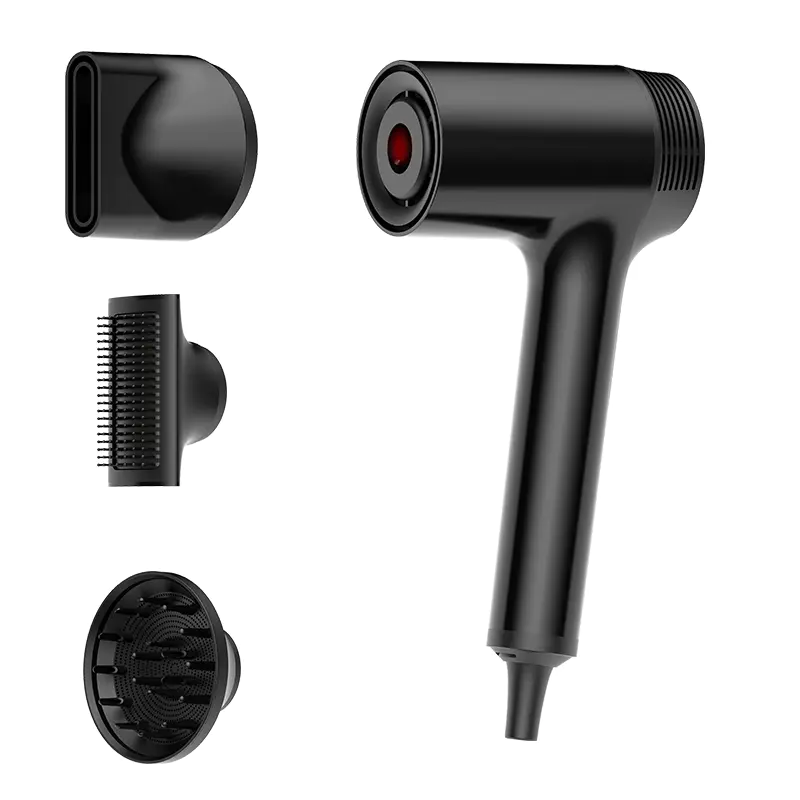
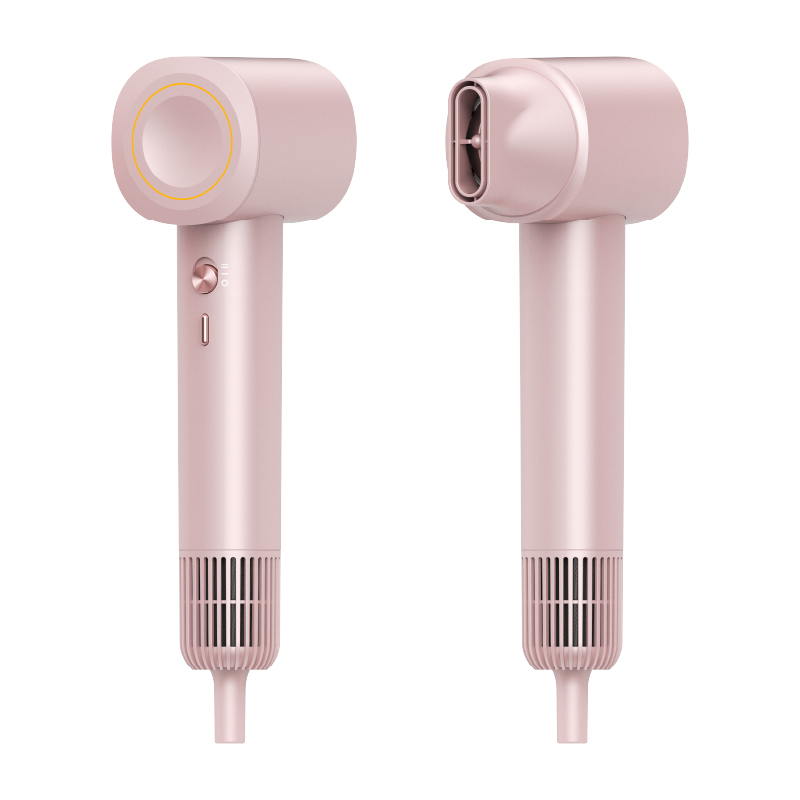
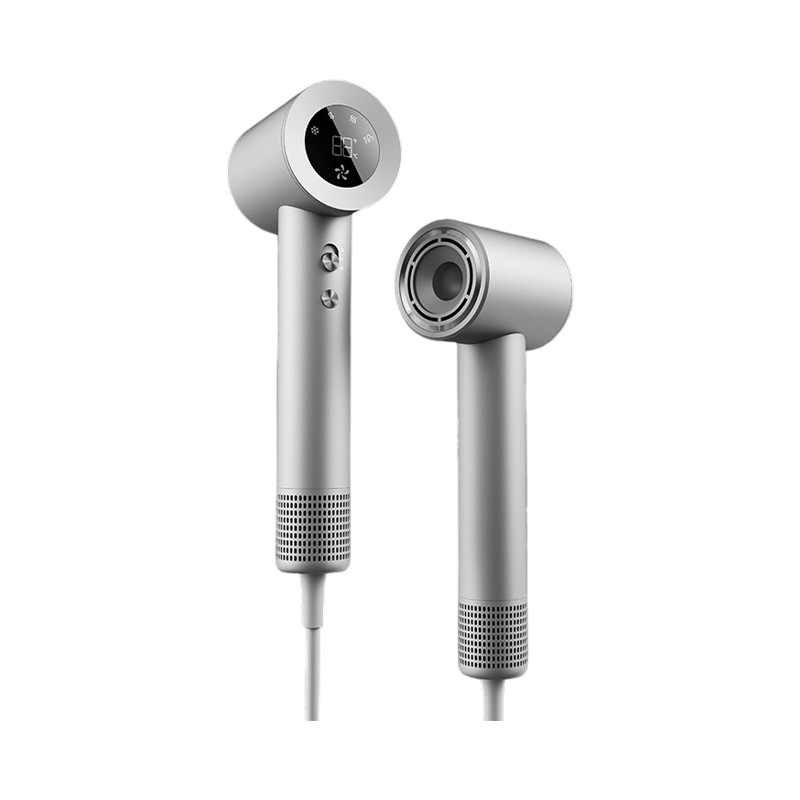 KH-804C LED Display Smart Temperature Control Hair DryerHigh-speed dryer with LED display and smart temperature control; its adjustable heat and airflow support stable, testable gentle settings for gentler drying.View Product →
Airflow Does More for Damaged Hair Than Heat
Water sitting on the hair surface is removed by air movement, not by temperature. A high velocity stream breaks the surface film and carries moisture away, so the strand reaches the same dryness level in less time and at a lower temperature. That is the core argument for brushless high speed motors, and it explains why a lower wattage high airflow unit can be gentler than a conventional high wattage dryer.
The implication for damaged hair is straightforward. When airflow is high, users do not need to park the nozzle in one place, and the strand spends fewer total seconds above the threshold where moisture loss accelerates. Lower heat plus higher velocity is the combination worth aiming for.
Negative Ions and Surface Finish
Ion generators are frequently oversold. They do not rebuild broken bonds or repair a lifted cuticle. What they do is reduce static charge, and that matters more than it sounds. Static makes strands repel each other, which raises friction during brushing and encourages the cuticle to catch on itself. Fewer flyaways also mean less re-drying, and that is where the real benefit appears.
When evaluating ion performance, request a measurement taken at the nozzle during continuous operation rather than a peak figure from a short burst. Output that fades after five minutes is common in low cost designs.
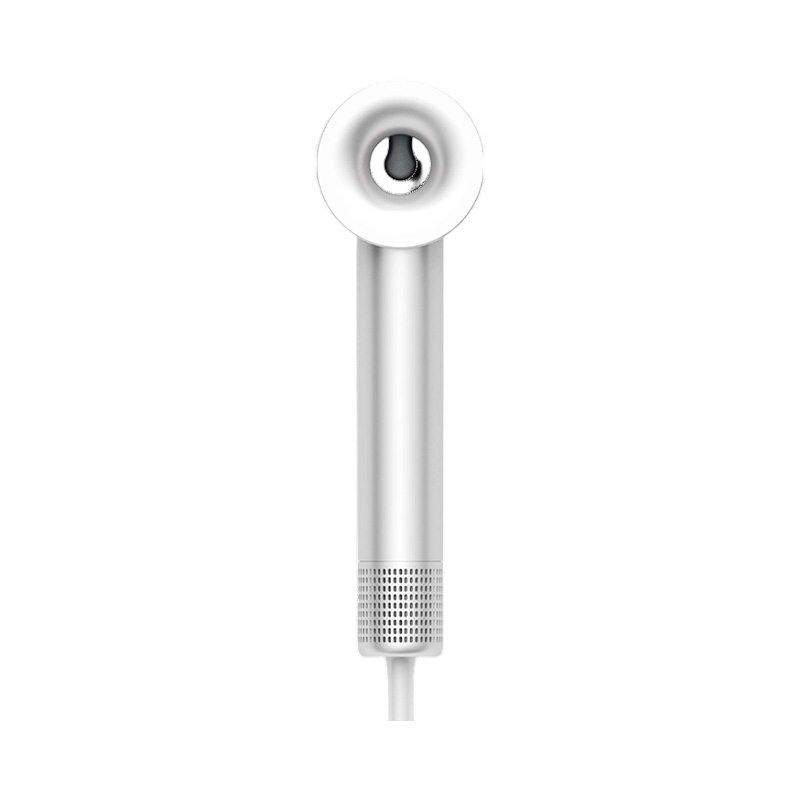 KH-803B Negative Ion Smart Hair DryerCompact negative ion dryer with real-time temperature sensing and optimized airflow, suited for protective styling and consistent ion performance during continuous operation.View Product →
Features Worth Paying For and Features That Are Only Labels
- A measured nozzle temperature band rather than a vague term such as intelligent heat.
- Airflow velocity above roughly 20 metres per second on the high setting.
- A cool shot that genuinely lowers outlet temperature instead of simply switching the element off.
- Balanced weight under about 500 grams, since fatigue pushes users to hold the dryer closer than they should.
- A concentrator nozzle that focuses airflow so sections dry without overheating surrounding hair.
- Stable ion output across a full drying cycle, confirmed by data rather than by a badge.
How to Validate a Dryer Before Committing to a Bulk Order
- Measure outlet temperature with a thermocouple at the nozzle, not on the built in display, and log it for ten minutes on each heat setting.
- Run a wet swatch test on the gentlest setting and record the time needed to reach the same moisture level as a reference unit.
- Test at the voltage and frequency of the destination market, because a unit tuned for 220 volts behaves differently on 120 volts.
- Check noise at one metre, since buyers with fragile hair often dry at night and low noise drives purchase decisions.
- Confirm where the ion emitter sits and that heat does not degrade it over time.
- Inspect the thermal fuse and overheat protection circuit, then verify they still work after a drop test.
Matching the Device to the End User
Not every customer has damaged hair, but most brands need a model that can be positioned for it. A protective platform with a stable low heat setting, real time monitoring, and a true cool shot covers the widest range of buyers. In markets where travel and styling matter, a compact unit with the same control logic performs better than a stripped down version, because the gentle setting is exactly what a compromised strand needs.
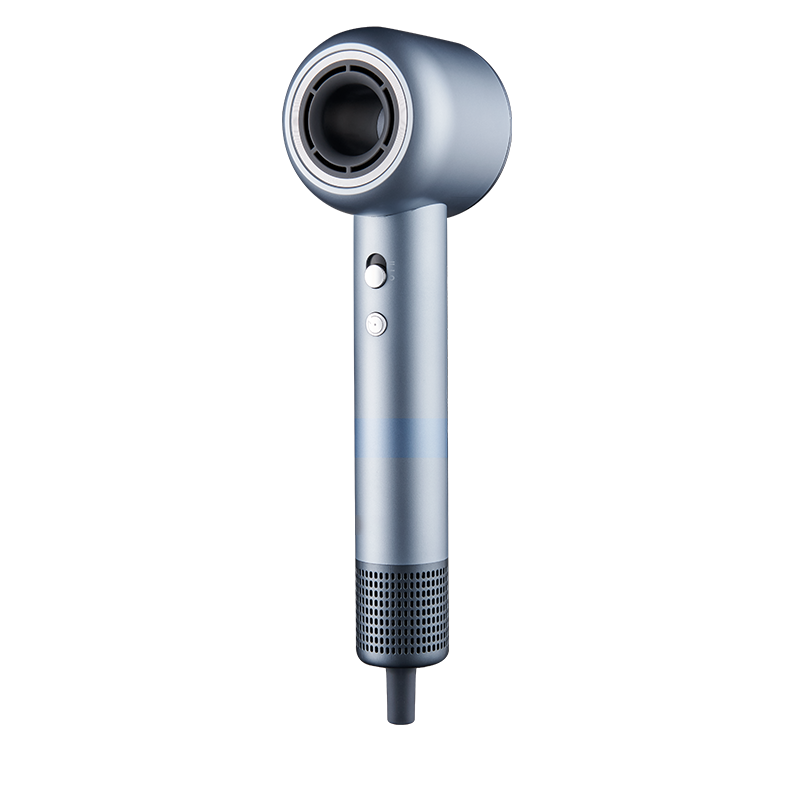
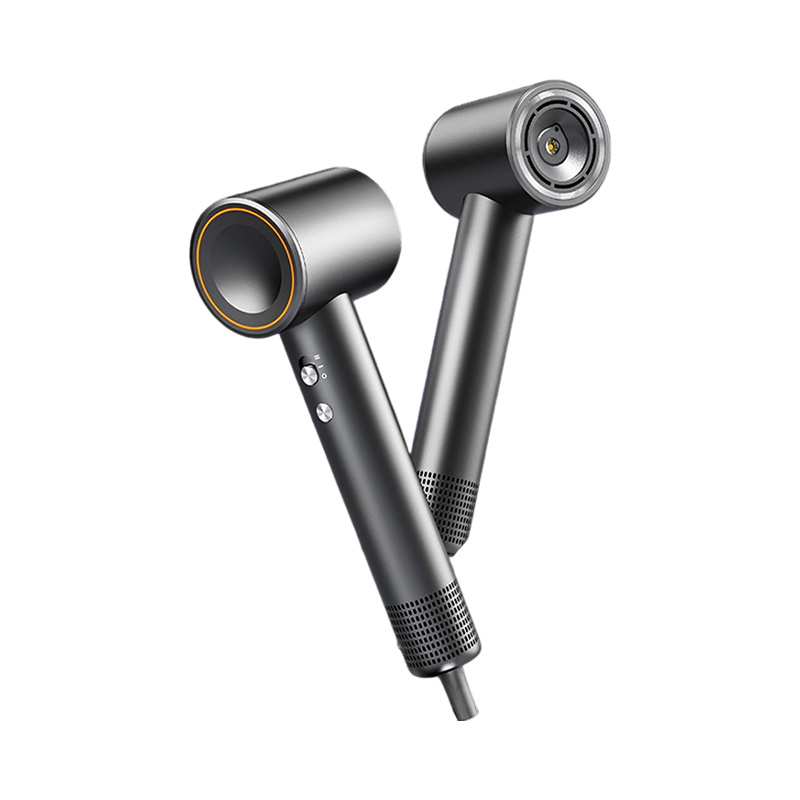 KH-805A Smart Protective Hair DryerSmart protective dryer with real-time temperature monitoring, negative ions, and multi-speed airflow; useful for brand programs needing consistent heat control and gentle hair care.View Product →
Sourcing Notes for OEM and ODM Programs
If you are specifying a dryer for a brand program rather than buying one unit, the technical questions above become contractual ones. Ask for delivered temperature data from the production line, not only from a prototype report, and confirm the control firmware is locked to your specification. Motor quality, heater winding consistency, and ion module placement are the three areas where cost reduction appears first in mass production, and all three change how the product behaves on damaged hair.
A manufacturer with in house tooling, injection molding, and circuit board assembly usually holds a tighter tolerance across long runs than a trading company assembling from mixed components. Ningbo Youming Electrical Appliance, an OEM and ODM hair dryer manufacturer based in Cixi, Zhejiang, builds dryers, stylers, straighteners, and scalp massage combs for brands across North America, South America, Europe, and Asia, working to ISO 9001 quality management in a plant of more than 70,000 square metres. For buyers who need the temperature band honoured on unit 50,000 and not just on unit five, that level of vertical control is the point. If you want a deeper look at how motor and airflow design changes drying behaviour, this comparison of high speed and regular hair dryers is a useful reference.
Choosing a hair dryer for damaged hair comes down to three measurable things: the air temperature that actually reaches the strand, the speed at which air moves across it, and how consistently both hold up through a full drying cycle. Everything else, from attachment counts to display panels, is secondary. Get those three right in the specification, verify them with a thermocouple before the order is placed, and the product will do right by the customer whose hair is already fragile.


 +86-574-63982198
 +86-574-63982197

 No. 933, Lingxu 2nd Road, Binhai Economic Development Zone, Cixi, Zhejiang, China.
