

 English
 中文简体
中文简体 Español
Content
- 1 How a Round Brush Blowout Actually Works
- 2 Step-by-Step Round Brush Blowout at Home
- 3 Airflow Is the Difference Between Frizz and Shine
- 4 Temperature Stability Protects the Cuticle and the Style
- 5 Technique Mistakes That Undo a Blowout
- 6 Choosing the Right Dryer and Brush Pairing
- 7 What This Means for Private Label and OEM Programs
Most people who own a round brush try it once and give up. The brush wraps around the hair, the nozzle blows uneven heat, and the result is a puffy mess instead of a smooth blowout. The problem is rarely the brush itself. It is almost always the interaction between airflow, tension, and heat control. When these three elements work together, the round brush becomes the most versatile styling tool in a bathroom drawer.
How a Round Brush Blowout Actually Works
A round brush blowout works by reshaping the hair while it is mechanically tensioned. As you wrap a section around the barrel, the brush holds the strand smooth and taut. The dryer applies heat, which softens the hydrogen bonds inside the cortex, while airflow removes moisture from the cuticle. When the section cools on the brush, the bonds reform in the curved shape you created. Without tension, heat simply dries the hair in its existing shape, which is why air drying often produces frizz and uneven waves.
The practical part of the technique is simple: break the hair into small sections, dry each section to about 80 percent complete, then cool it before release. The result is root lift at the scalp, a smooth shaft in the middle, and a deliberate bend at the ends. Whether you want a polished finish or loose curls depends on the brush diameter and the direction of the final roll.
Step-by-Step Round Brush Blowout at Home
Prepare the Hair
Wash and condition the hair, then squeeze out excess moisture with a microfiber towel. Do not rub the hair with a cotton towel, because the friction lifts the cuticle and creates roughness. Apply a heat protectant and, if you want root volume, a small amount of mousse or styling lotion at the scalp. Air dry until the hair is about 70 percent dry before picking up the round brush. Using a round brush on soaking wet hair pulls strands, causes breakage, and takes too long.
Section Correctly
Divide the hair into five or six workable sections: the crown, two side panels, the nape, and a top layer. Clip each section out of the way. Work with sections about three to five centimeters wide, depending on your brush size. The section must fit around the barrel without overlapping more than once; wider sections create tension gaps and slower drying.
Roll, Heat, and Cool Each Section
Hold the brush underneath the section, slide it to the root, and roll downward until the hair wraps around the barrel. Keep the nozzle above the brush and angle the air down the length of the hair. Move the dryer in slow sweeps while the brush stays in place, then roll the brush a half turn once the hair is warm. This repeated motion compresses the strand against the barrel and produces a smooth surface.
For long hair, work in one continuous motion: brush down, pause, heat for five to eight seconds, roll the brush toward the scalp, heat the root briefly, then switch to cool air. Do not leave the brush stationary under maximum heat for more than a few seconds, because the surface temperature of the bristles rises quickly.
Finish with a Cool Shot
After releasing each section from the brush, press the cool shot button for three to five seconds if the dryer has one. Cold air rapidly solidifies the reformed hydrogen bonds, which turns a soft wave into a long-lasting blowout curl. If your dryer lacks a cool shot, hold the section wrapped around the brush for ten seconds after removing the heat. Skipping the cool step is the most common reason a round brush blowout falls flat within two hours.
Airflow Is the Difference Between Frizz and Shine
Air velocity determines whether moisture is pulled away from the strand or simply pushed around. Round brush styling requires enough force to separate wet strands and press them firmly against the barrel. Low-powered dryers produce a gentle breeze that floats the hair; high-speed dryers deliver a concentrated column of air that slices through the section and flattens the cuticle.
Figure 1 compares the estimated active drying time for shoulder-length hair at about 70 percent moisture, using a 45 mm round brush and comparable heat settings. At 20 m/s, typical of a basic compact dryer, the section can stay on the brush for as long as 14 minutes. At 60 m/s, a level that high-speed dryers achieve more consistently than conventional models, the same section reaches the same dryness in roughly four minutes. The practical implication is that every minute saved reduces cumulative heat exposure on the cuticle. Faster drying also keeps the hair from curling too early on the brush, so the shape stays smooth and predictable. That is why professional finish work rarely relies on entry-level dryers.
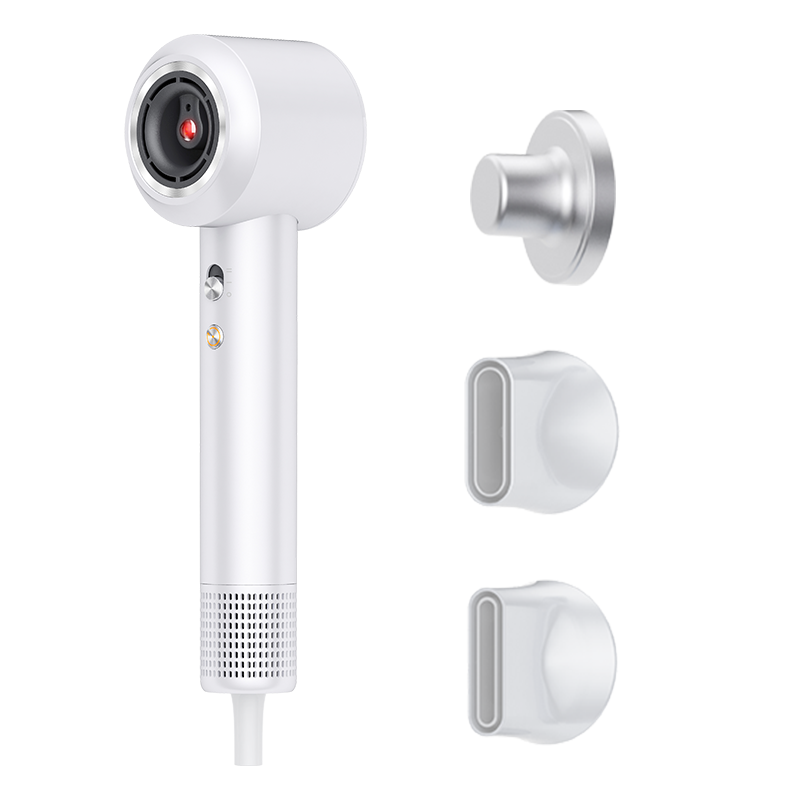
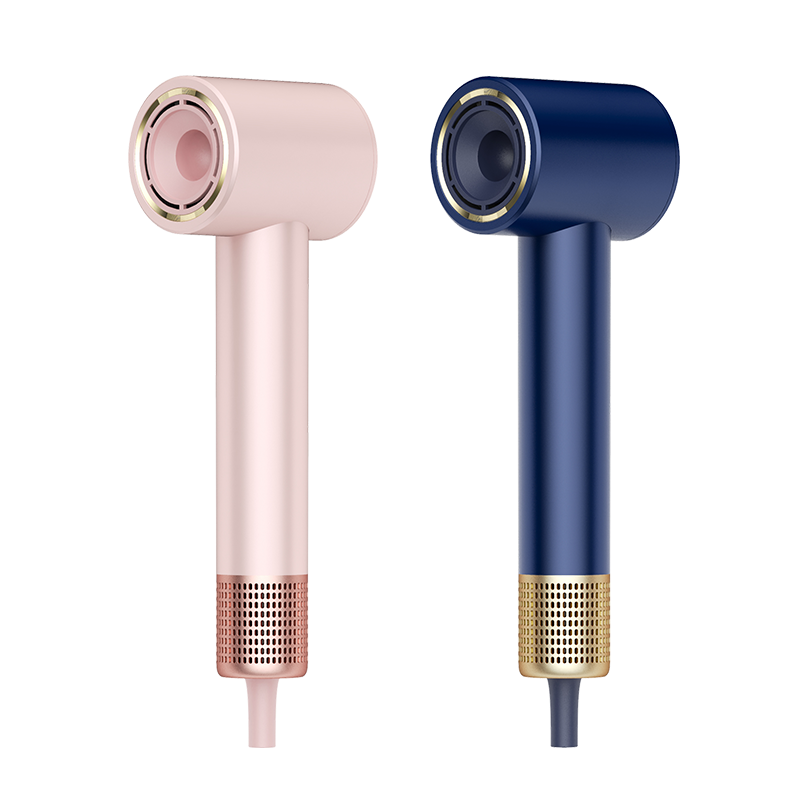
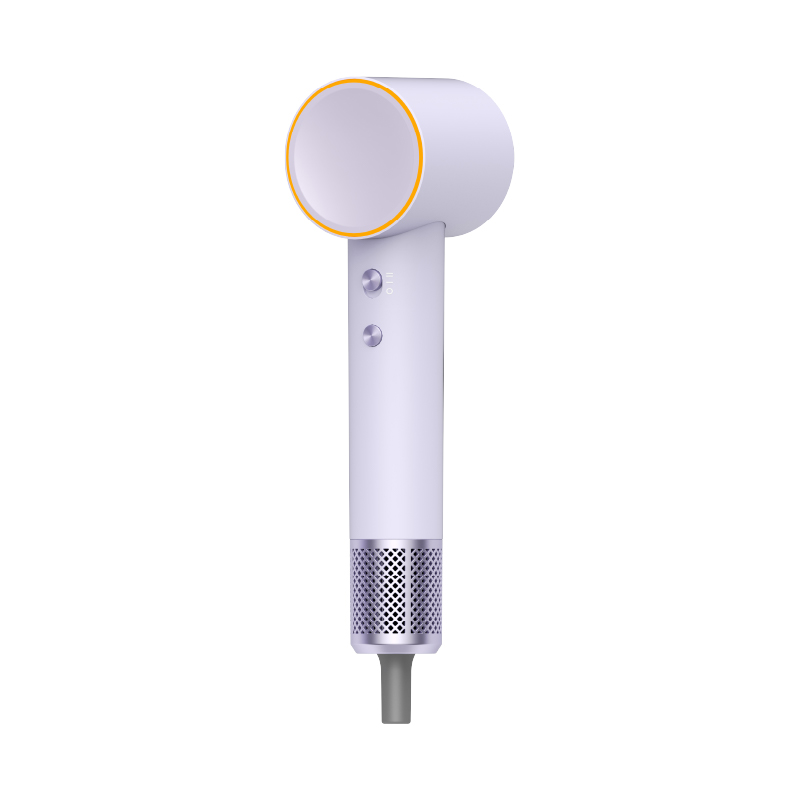
Speed control matters just as much as total airflow. A multifunctional high-speed hair dryer with adjustable speed modes lets the user alternate between a gentle flow for root sections and a stronger flow for the lengths, which is exactly the control round brush styling rewards.
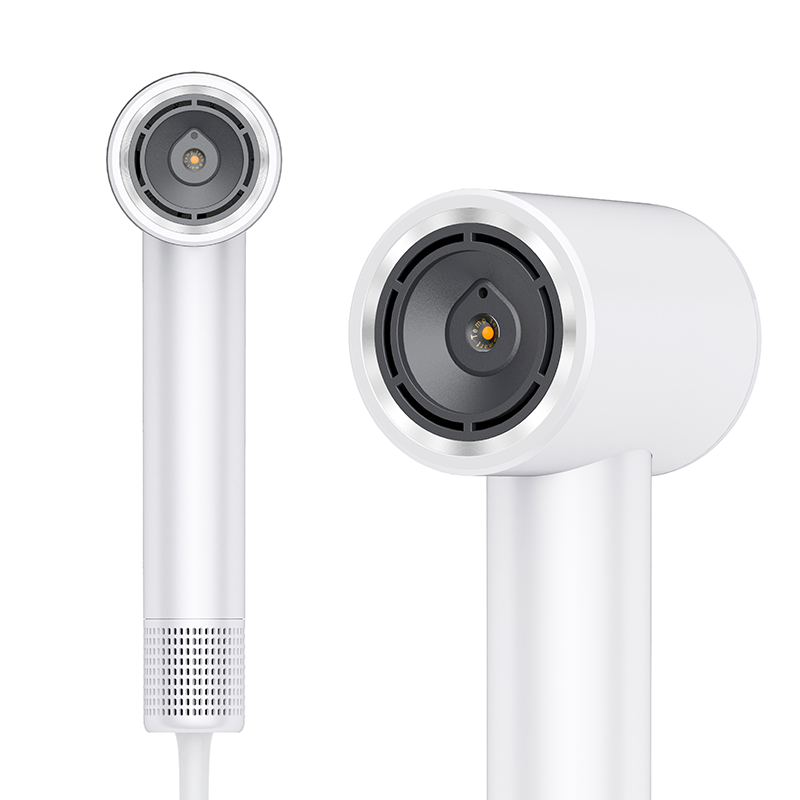
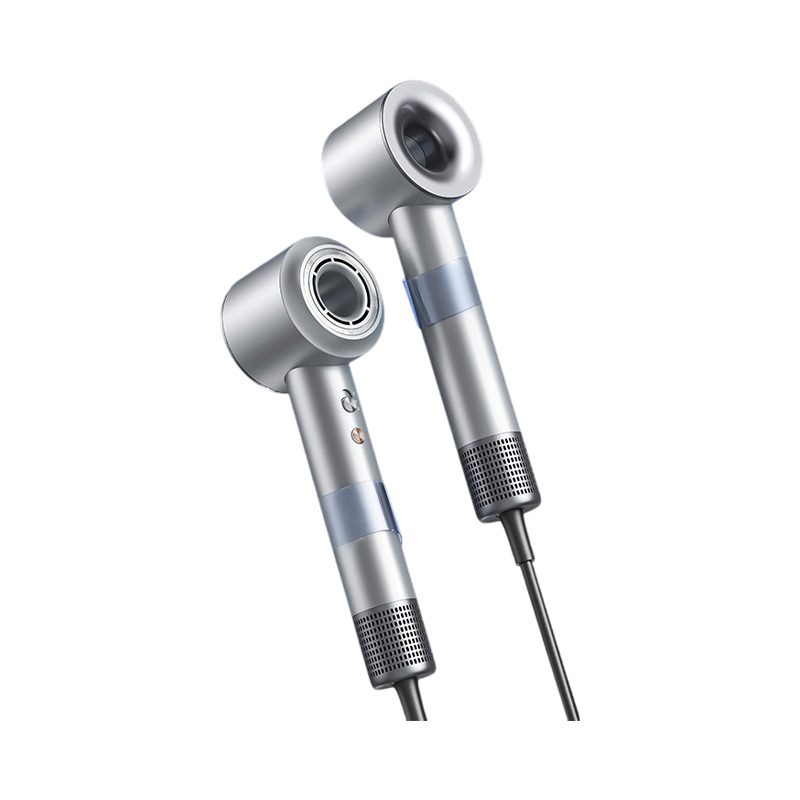 KH-801B Multi-functional high-speed hair dryer Suppliers, Factory - Ningbo YoumiNingbo Youming Electrical Appliance Co., Ltd is China KH-801B Multi-functional high-speed hair dryer suppliers and factory, Customizable,...View Product →
Temperature Stability Protects the Cuticle and the Style
Round brush styling heats each section repeatedly as the nozzle passes up and down the strand. If the heating element cycles aggressively, the hair surface experiences temperature spikes that undo the smoothing effect. Consistent heat is not a luxury here; it is the difference between a gloss finish and a dull one.
Figure 2 tracks the nozzle temperature of two dryers during a six-minute blowout at the medium setting. The conventional dryer swings between about 75 and 105 degrees Celsius as the heating element turns on and off. The smart temperature-controlled model holds a narrow band of 88 to 92 degrees for the entire session. When the temperature spikes above 95 degrees, the cuticle becomes more brittle and the hair loses internal moisture faster than conditioner can replace it. When the temperature drops too low, the hair does not shape properly, which forces an extra pass and more heat exposure. A stable temperature shortens styling time and keeps the cuticle laid flat.
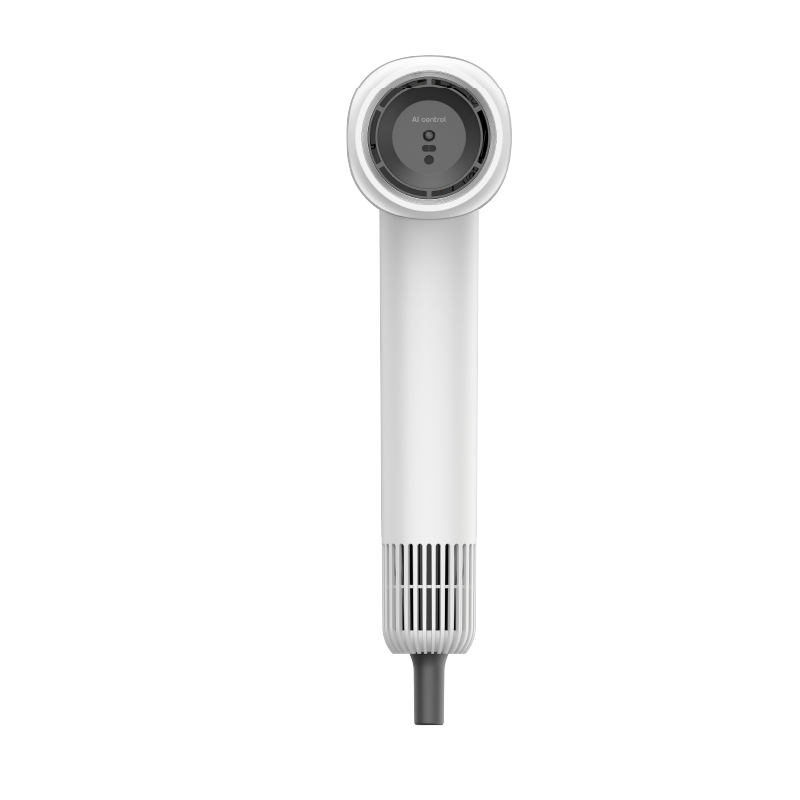
For stylists who work quickly, a dryer with visible temperature feedback such as the smart temperature-controlled hair dryer with LED display removes the guesswork between passes.
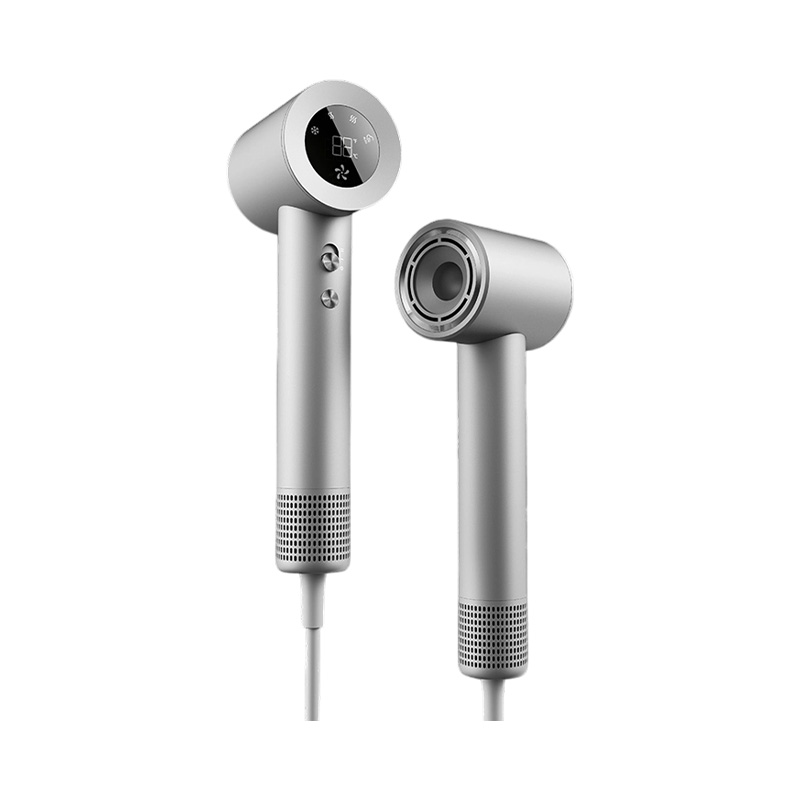 KH-804C LED Display Smart Temperature Control Hair Dryer Suppliers, Factory - NiNingbo Youming Electrical Appliance Co., Ltd is China KH-804C LED Display Smart Temperature Control Hair Dryer suppliers and factory, Cus...View Product →
Technique Mistakes That Undo a Blowout
The step-by-step routine works only when the underlying mechanics are correct. These are the most common failures:
- Sections bigger than the brush barrel. The outer strands dry, the inner strands stay damp, and the finished roll falls apart.
- Tension too light. The brush rides on the surface of the hair instead of gripping it, so the cuticle never flattens.
- Skipping the cool shot. The style looks good for 20 minutes, then drops as residual heat relaxes the curls.
- Passing over the same section more than twice. Every pass strips moisture and adds friction, which makes the hair look dull.
- Choosing the wrong brush size. Small barrels create tight curls, while large barrels create loose volume; the section must match the barrel circumference.
Figure 3 shows the approximate duration of a blowout on fine to medium hair under normal indoor humidity, based on whether the technique includes tight tension and the cool shot. When both are present, the style holds for about 36 hours. Tension without the cool shot holds roughly 24 hours. A cool shot without tension produces a loose wave that lasts about 18 hours. Skipping both leaves the hair mostly flat with residual frizz, fading to straight within 12 hours. This is why professional blowouts always look polished: they apply mechanical tension and thermal shaping together. For a home user, adding a five-second cool step is the cheapest upgrade in the entire routine.
Choosing the Right Dryer and Brush Pairing
Brush selection and dryer selection form one system. A 45 to 55 mm round brush with mixed nylon and boar bristles works well for most medium and long hair; nylon bristles grip the section, while boar bristles polish the cuticle. A ceramic barrel distributes heat more evenly than a plastic barrel, reducing hot spots. For short hair or bangs, a 25 to 35 mm barrel produces tighter curls and a stronger shape.
| Hair length | Brush diameter | Styling outcome |
|---|---|---|
| Short to chin length | 23 to 35 mm | Tight curls, defined root lift |
| Shoulder to chest length | 35 to 50 mm | Bouncy volume, soft waves |
| Longer than chest length | 50 to 60 mm | Sleek blowout, loose ends |
The dryer side of the system needs three features: a concentrator nozzle to direct air into the brush, enough air velocity to dry the section quickly, and responsive heat control so the temperature does not overshoot near the scalp. Multiple speed and heat settings make it easier to adapt to each section.
Figure 4 evaluates three common round-brush blow dry setups across six styling factors, with scores from 1 to 10. The standard dryer with a separate round brush performs acceptably on gloss and volume, but it lags on airflow and heat precision. The high-speed dryer improves airflow and smoothing, while heat control still depends on manual switching. The smart high-speed dryer keeps the airflow advantage and adds accurate temperature management, which reduces the chance of hot spots near the scalp. Comfort and noise also improve because high-speed motors produce less vibration and a steadier sound profile. The pattern matches what most stylists experience in practice: stable heat and strong airflow produce polished results consistently.
For kit development, an 18-in-1 multifunctional hair dryer covers the round brush workflow and several additional styling heads in one package, which simplifies inventory and reduces the number of components a buyer needs to source.
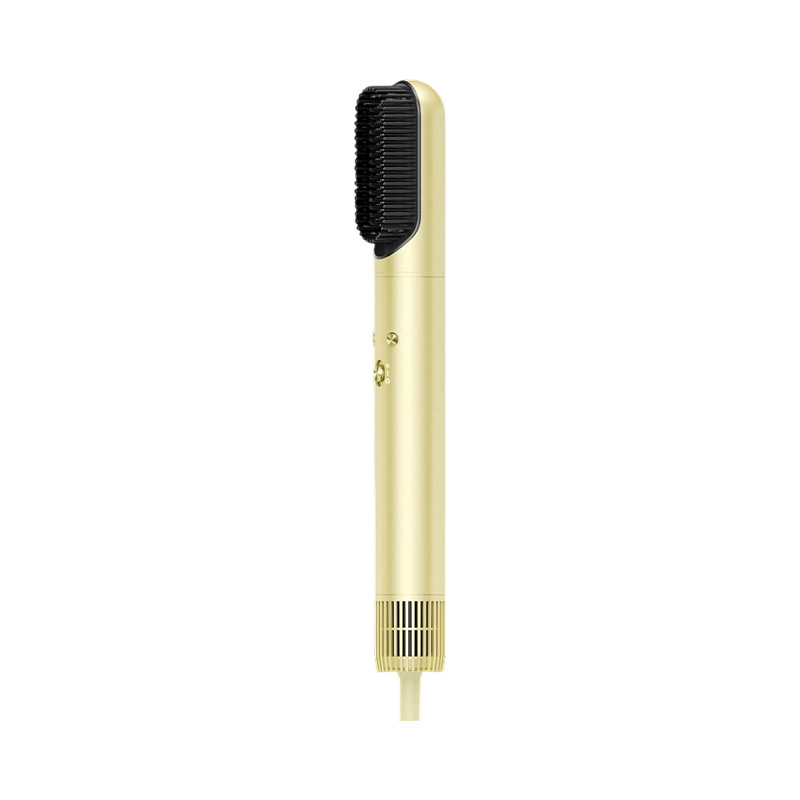 KH-802A 18 IN 1 Multi-functional hair dryer Suppliers, Factory - Ningbo Youming Ningbo Youming Electrical Appliance Co., Ltd is China KH-802A 18 IN 1 Multi-functional hair dryer suppliers and factory, Customizable, K...View Product →
What This Means for Private Label and OEM Programs
For brands planning a round-brush-friendly dryer line, the specification list is straightforward. First, air velocity should sit at or above 40 m/s, because that is where the styling time becomes short enough to feel premium. Second, heat control must include a cool shot and ideally a feedback loop that keeps temperature stable. Third, the kit needs a concentrator nozzle and a round brush attachment, either included or offered as accessories. Fourth, noise level matters: round brush styling keeps the dryer close to the ear for long stretches, so quieter operation is a stronger selling point than most spec sheets suggest.
The dryer range developed by our team covers these requirements across standard, high-speed, and intelligent temperature-control platforms. The OEM process can be adapted around the styling scenarios described above, from attachment selection to control interface and packaging.
 Previous

 +86-574-63982198
 +86-574-63982197
 No. 933, Lingxu 2nd Road, Binhai Economic Development Zone, Cixi, Zhejiang, China.