

 English
 中文简体
中文简体 Español
Content
- 1 Why Cleaning the Hair Dryer Filter Matters
- 2 What You Will Need Before You Start
- 3 Step-by-Step Guide to Cleaning Your Hair Dryer Filter
- 4 How Often Should You Clean the Hair Dryer Filter?
- 5 Cleaning Tips for High-Speed Hair Dryers
- 6 Common Mistakes to Avoid When Cleaning a Hair Dryer Filter
- 7 How to Tell If Your Hair Dryer Filter Needs Replacing Rather Than Cleaning
- 8 Additional Hair Dryer Maintenance Tips to Extend Appliance Life
To clean a hair dryer filter, unplug the appliance, remove the rear filter cover, peel away the lint screen, tap or brush off accumulated dust and debris, and rinse or wipe the filter clean before allowing it to dry completely prior to reassembly. The entire process takes fewer than five minutes and should be performed every two to four weeks for regular users — or more frequently if you use the dryer daily or in a dusty environment.
A blocked filter is one of the most common and preventable causes of hair dryer underperformance, overheating, and premature failure. Lint and dust act as insulation around the motor and heating element, trapping heat that the appliance was designed to expel. Studies on small appliance servicing consistently show that over 60% of hair dryer malfunctions brought in for repair involve some degree of filter or air intake blockage. Keeping the filter clean is the single most effective piece of maintenance you can perform to extend the life of your dryer and protect both your hair and scalp.
Why Cleaning the Hair Dryer Filter Matters
Hair dryers draw air in through a rear or side filter and expel heated air through the nozzle. Every time air passes through the intake, it carries microscopic particles — shed hair, skin cells, dust, and product residue — that gradually accumulate on the mesh filter screen. Over time, this build-up restricts airflow in ways that have a cascade of negative effects:
- Reduced airflow: A partially blocked filter can reduce the volume of air delivered to your hair by 20–40%, meaning longer drying sessions and more heat exposure per unit of drying progress.
- Overheating: Restricted intake causes the motor and heating element to run hotter than their design limits. Most hair dryers include a thermal cut-out fuse that trips when internal temperatures exceed a threshold — a clogged filter is the leading trigger for nuisance thermal cut-outs.
- Scalp and hair damage: When airflow drops, the dryer compensates by running at higher temperature settings to achieve the same drying speed, exposing hair to more damaging heat. This is particularly relevant for high-speed hair dryers that are specifically engineered to dry hair through powerful airflow rather than high temperatures — a blocked filter undermines the core benefit of the technology.
- Loss of negative ion output: Many modern hair dryers incorporate negative ion generators to seal the hair cuticle and retain moisture. These components are sensitive to heat; a clogged filter that causes the dryer to run hot can degrade ion output efficiency over time.
- Shortened appliance life: Motors running above their rated temperature have significantly reduced lifespans. A motor rated for 1,000 hours at design temperature may fail in 300–400 hours if consistently run 15–20°C above that threshold due to airflow restriction.
What You Will Need Before You Start
Cleaning a hair dryer filter requires no specialist tools. Gather the following items before you begin:
- A soft-bristle toothbrush or small cleaning brush
- A can of compressed air or a manual air blower bulb (optional but highly effective)
- A clean, lint-free cloth or paper towel
- Mild dish soap and warm water (for a deeper wash of removable filter covers)
- A small vacuum cleaner with a brush attachment (optional, useful for heavy lint build-up)
Always ensure the hair dryer is completely unplugged from the mains socket before beginning any cleaning. Never attempt to clean the filter while the dryer is plugged in, even if it is switched off. Allow the appliance to cool fully if it has been used recently — internal components can retain heat for several minutes after use.
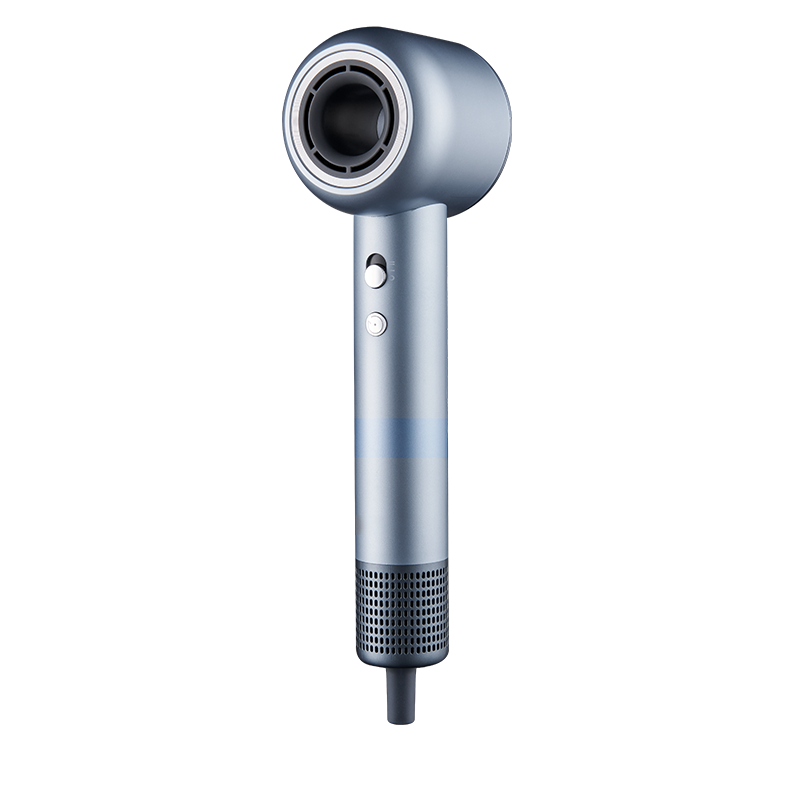
Step-by-Step Guide to Cleaning Your Hair Dryer Filter
Step 1 — Unplug and Cool Down
Disconnect the hair dryer from power and set it on a clean, flat surface. Wait at least 10 minutes after last use to allow internal components to reach a safe handling temperature.
Step 2 — Locate and Remove the Filter Cover
On most hair dryer models, the filter is located at the rear of the handle body — the circular or rectangular grille through which intake air is drawn. Depending on your model, the filter cover may:
- Twist off: Rotate the cover anti-clockwise by approximately 90° until it releases. This is the most common mechanism on round-body dryers.
- Slide off: Push the cover towards the rear and then pull it away from the body. Common on flat-bodied and professional-grade models.
- Clip or snap off: Squeeze the sides of the cover to release retaining clips and lift it free. Common on compact travel dryers.
Consult your model's user manual if you are unsure of the removal method. Never force the cover — excessive pressure can snap retaining clips or crack the housing.
Step 3 — Remove Loose Lint and Debris
With the filter cover removed, hold it over a bin and gently tap it against your palm to dislodge loose lint. Use the soft-bristle brush to sweep debris away from the mesh in outward strokes — always brush away from the centre of the screen, not into it, to avoid pushing debris deeper into the mesh weave.
For heavy build-up, a 2–3 second burst of compressed air directed across the filter surface from the inner side outward is highly effective at dislodging compacted lint without damaging the mesh.
Step 4 — Wash the Filter Cover (If Applicable)
If the filter cover is made of plastic with a moulded mesh (rather than a separate fabric or foam insert), it can typically be washed with warm water and a small drop of mild dish soap. Gently scrub both sides of the mesh with the soft brush, rinse thoroughly under running water, and shake off excess moisture.
Important: Never reattach a wet filter cover to the hair dryer. Allow it to air-dry completely — typically at least 2–3 hours at room temperature, or longer in humid conditions. A damp filter can cause electrical faults and corrosion of internal components.
Step 5 — Clean the Intake Grille on the Dryer Body
With the cover removed, inspect the intake grille on the dryer body itself. Fine dust and hair fibres often accumulate here regardless of how clean the filter cover is. Use the brush or a vacuum with a narrow brush attachment to clean this area gently. Do not insert any object into the grille openings — the motor fan blades sit close behind the intake and can be damaged.
Step 6 — Reassemble and Test
Once the filter cover is completely dry, reattach it to the dryer body by reversing the removal process. Ensure it clicks or locks firmly into position — a loose filter cover can vibrate during operation and may be partially drawn into the intake airstream. Plug the dryer in, switch it on briefly at the lowest airflow setting, and check that the airflow feels noticeably stronger and that the unit does not cut out due to heat.
How Often Should You Clean the Hair Dryer Filter?
Cleaning frequency depends primarily on how often the dryer is used, hair length and texture, and the environment in which it is stored and operated. The following table provides practical guidance:
| Usage Pattern | Recommended Cleaning Frequency | Additional Notes |
|---|---|---|
| Daily use (personal) | Every 2 weeks | Increase to weekly for long or thick hair |
| 3–4 times per week | Every 3–4 weeks | Standard household use |
| Occasional / weekly use | Every 1–2 months | Check visually before each use in dusty environments |
| Salon / professional use | Daily or after every 5–8 clients | High lint load; filter checks are a hygiene requirement |
| Household with pets | Every 1–2 weeks | Pet hair and dander clog filters extremely quickly |
As a quick visual check, hold the dryer up to a light source with the filter cover in place. If you can see visible grey or white lint coating the mesh, or if you cannot see light through the filter evenly, it is time to clean regardless of when you last did so.
Cleaning Tips for High-Speed Hair Dryers
High-speed hair dryers use a brushless motor spinning at 80,000–110,000 RPM — far faster than the 20,000–30,000 RPM of conventional dryers — to generate powerful airflow at lower temperatures. This engineering approach is specifically designed to protect hair and scalp from heat damage by drying through air volume rather than high heat. However, the high-speed motor is also more sensitive to thermal stress, making filter maintenance even more important for these models.
- Higher airflow, faster filter loading: Because high-speed dryers move a greater volume of air per minute, they also draw in more airborne particles per unit of time. Expect to clean the filter approximately 30–50% more frequently than you would with a conventional dryer at equivalent usage.
- Finer mesh screens: Many high-speed dryers feature finer intake mesh to protect the precision motor from larger debris particles. Finer mesh blocks faster — use a soft brush only and avoid metal tools that could deform or tear the screen.
- Magnetic filter attachments: Some high-speed models use a magnetic filter cover for tool-free removal. Simply pull it free, clean it, and align the magnets to reattach. Never substitute with a non-magnetic replacement, as this design ensures a precise seal around the intake.
- Negative ion components: High-speed dryers often incorporate negative ion generators close to the motor housing. Keeping the airflow clean and unrestricted protects these components from heat stress and ensures they continue to deliver the moisture-retention benefits the technology is designed to provide.
Common Mistakes to Avoid When Cleaning a Hair Dryer Filter
A few missteps during filter cleaning can cause more harm than the clogging itself. Be aware of the following pitfalls:
- Reassembling while damp: This is the most common mistake. Even a slightly moist filter can cause electrical arcing or accelerate corrosion inside the motor housing. Always allow a full air-dry before reattaching.
- Using alcohol or solvent-based cleaners: These can degrade the plastic housing, warp the filter mesh, and leave residues that off-gas when the dryer heats up. Warm water and mild soap are sufficient for all routine cleaning.
- Poking objects through the intake grille: Attempting to remove debris from inside the grille with a skewer, pencil, or similar object risks bending fan blades, dislodging wiring, or puncturing insulation — all of which create safety hazards.
- Blowing air into the intake while the dryer is plugged in: Using a second hair dryer or compressed air to blow dust out through the intake while the appliance is connected to power can force debris onto live electrical components.
- Skipping cleaning after a reset: If your dryer has tripped its thermal cut-out and requires a manual reset, a clogged filter is the most likely cause. Always clean the filter before resetting and resuming use — resetting without addressing the root cause will cause the fuse to trip again, and repeated thermal cycling accelerates degradation of the cut-out component itself.
- Using a stiff wire brush: Wire brushes can deform the mesh of finer filter screens, enlarging openings that are designed to block debris from reaching the motor. Always use a soft-bristle brush.
How to Tell If Your Hair Dryer Filter Needs Replacing Rather Than Cleaning
In most cases, cleaning restores the filter to full function. However, the filter cover and mesh screen are wear items that may eventually need replacement. Look for these signs:
- Torn or deformed mesh: Any visible holes, tears, or warping in the filter mesh mean debris can pass directly into the motor. Replace the filter cover immediately.
- Permanent discolouration: Grey or brown staining that does not wash out may indicate product residue baked into the mesh by repeated heat cycles. A stained mesh can harbour bacteria and may partially obstruct airflow even when visually clean.
- Cracked or broken retaining clips: A filter cover that no longer seats securely creates gaps around the intake, allowing large debris particles to bypass the mesh entirely.
- Persistent reduced airflow after cleaning: If airflow remains noticeably weak after a thorough clean, internal components may have accumulated debris beyond what surface cleaning can address. Consult the manufacturer's service guidance.
Replacement filter covers for most models are available directly from the manufacturer or through authorised service centres. Always use the correct replacement part specified for your model — generic substitutes may not seal correctly against the intake housing.
Additional Hair Dryer Maintenance Tips to Extend Appliance Life
Filter cleaning is the most important maintenance task, but a few complementary habits will keep your hair dryer performing at its best for years:
- Store the dryer with the filter end uncovered: Storing the dryer in a sealed bag or drawer can cause humidity to accumulate around the motor housing. Store it in a ventilated space or use a purpose-designed holder that keeps the intake exposed to air.
- Wipe the nozzle and body after each use: A quick wipe with a dry cloth removes product residue from the nozzle and barrel before it bakes on. Warm water on a cloth handles tougher residue — never immerse any part of the dryer in water.
- Avoid wrapping the cord tightly around the body: Tight cord wrapping stresses the cable at the point where it exits the handle, eventually causing internal wire fractures. Loop the cord loosely or hang the dryer by its hanging loop.
- Keep the dryer at least 15 cm from the scalp during use: Holding the dryer too close concentrates heat, accelerates hair damage, and dramatically increases the rate at which hair is drawn towards the intake — compounding filter loading and increasing the risk of hair wrapping around internal components.
- Allow the dryer to cool on a cool-down setting before switching off: Many dryers include a cool-shot or cool-down mode. Using it for the final 30–60 seconds of each session allows the motor and heating element to reach a safer temperature before power is cut, reducing thermal stress on motor windings and solder joints.
 Previous

 +86-574-63982198
 +86-574-63982197
 No. 933, Lingxu 2nd Road, Binhai Economic Development Zone, Cixi, Zhejiang, China.