

 English
 中文简体
中文简体 Español
Content
If you are sourcing a bladeless hair dryer, start with a simple conclusion: the value is not in removing visible blades. It is in controlling airflow, motor speed, heat, noise, and safety at a cost your market will accept. A well-made bladeless model can look premium and feel safer around hair and fingers, but it also puts more pressure on the air path, motor housing, and temperature control than a conventional high-speed dryer. Buyers who treat it as a cosmetic change often end up with weak airflow, high-pitched noise, or a unit that cannot pass certification without redesign.
Ningbo Youming Electrical Appliance Co., Ltd., through highspeedhairdryer.net, has supplied OEM and ODM hair dryers from a manufacturing base in Cixi, Zhejiang. Its catalog covers high-speed hair dryers, intelligent temperature-control models, negative ion dryers, multi-functional stylers, straightener and curler tools, and scalp massage combs. That background matters because a bladeless project is rarely just a shell. It needs a motor platform, heater, sensor, PCB, and plastic tooling that work together.
How a Bladeless Hair Dryer Moves Air
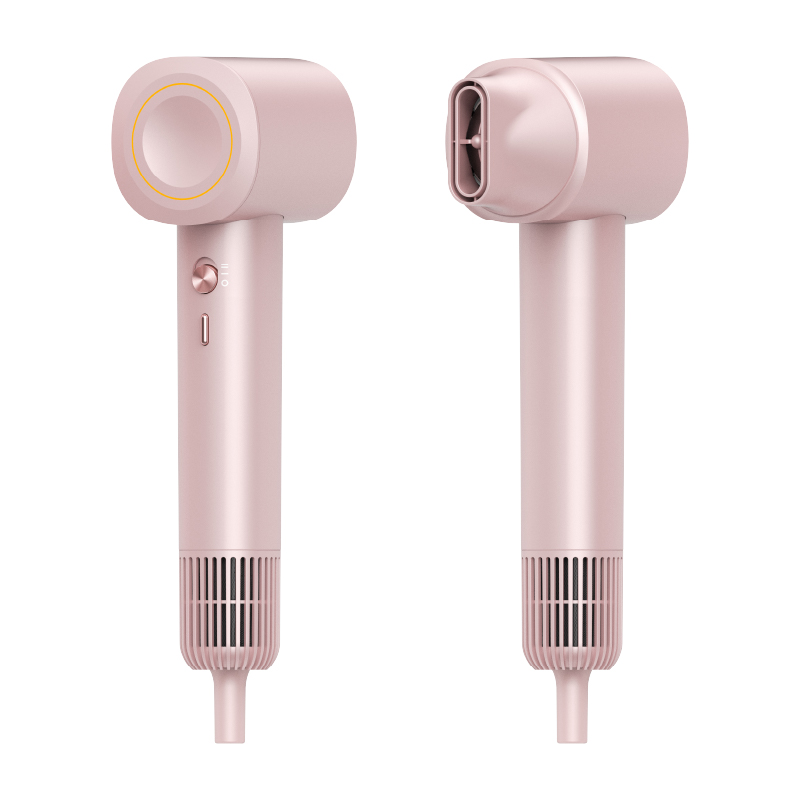
A bladeless hair dryer uses a motor placed in the handle or base to push air through a hidden impeller. The air is then forced through a narrow ring or slot and accelerated. The visible circular opening has no spinning fan blade, so hair cannot wrap around it and fingers cannot touch a fast-moving impeller. The design also gives industrial designers more freedom because the fan does not sit in the outlet.
That architecture has real trade-offs. Moving the motor away from the outlet can reduce some noise, but it can also create a high-frequency tone if the impeller, duct, and housing are not tuned. Airflow can feel concentrated and fast, yet static pressure may drop when the inlet filter gets dusty. Heat control becomes more important because users often hold the dryer closer to the scalp when the airflow feels gentle. For OEM buyers, the practical question is not whether the concept works. It is whether the chosen motor, impeller, heater, and control board can deliver stable performance across 1,000 or 10,000 units.
| Factor | Bladeless design | Conventional high-speed design |
|---|---|---|
| Visible fan | Hidden impeller | Exposed fan and guard |
| Air path | Longer duct, tighter tolerances | Shorter path, simpler tooling |
| Safety | No exposed fast blade | Requires guard and hair protection |
| Noise | Can be tuned but harder to tame | Mature noise-control options |
| Tooling cost | Higher | Lower to moderate |
| Repair | Motor access can be complex | Often easier to service |
Where Bladeless Fits in a Hair Care Line
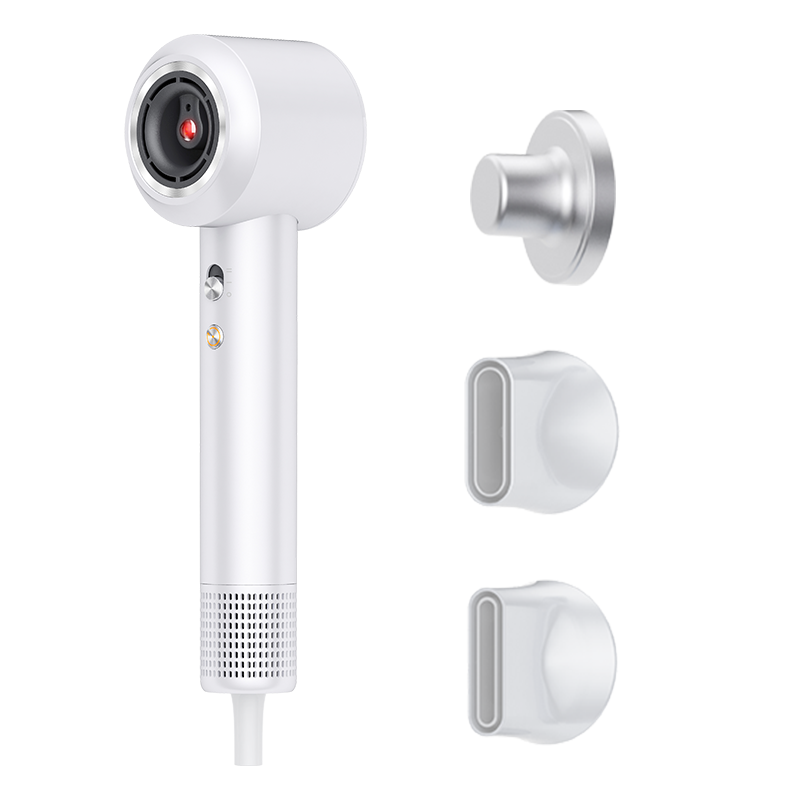
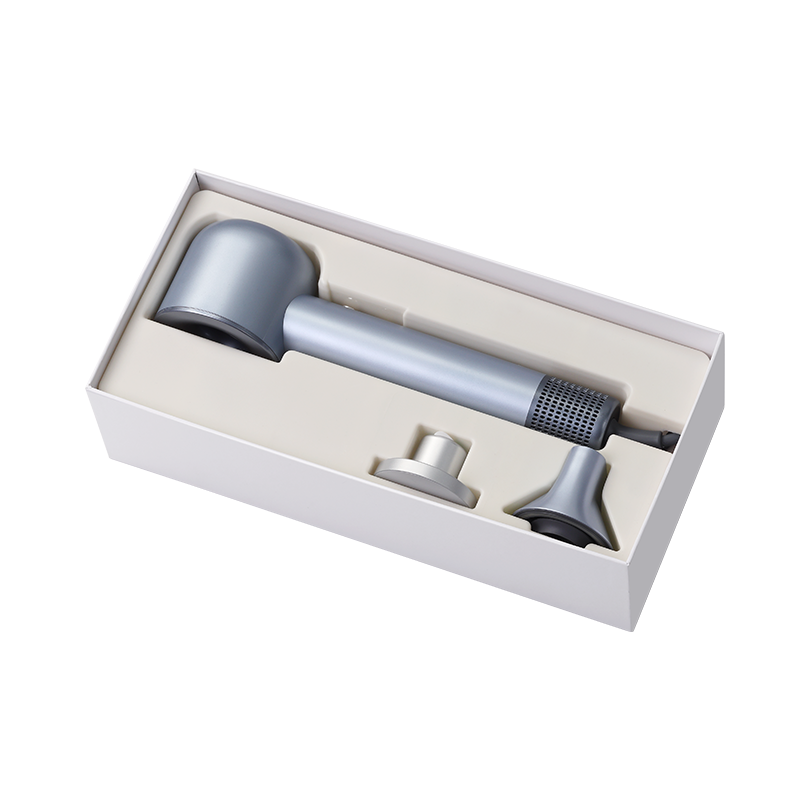 KH-801A Multi-Speed High Speed Hair Dryer with Negative IonAdjustable high-speed dryer with low-noise operation, powerful airflow and 200 million negative-ion output, suited to buyers comparing stable multi-speed drying options.View Product →
Bladeless dryers usually sit above standard dryers in retail positioning. They appeal to shoppers who want a modern look, safer handling, and a premium unboxing experience. They can also fit hotels, salons, and family bathrooms where exposed blades and tangled hair are concerns. But they are not the only route to those benefits. A high-speed dryer with a well-balanced impeller, negative ion generator, and intelligent temperature control can meet many of the same needs with lower tooling risk.
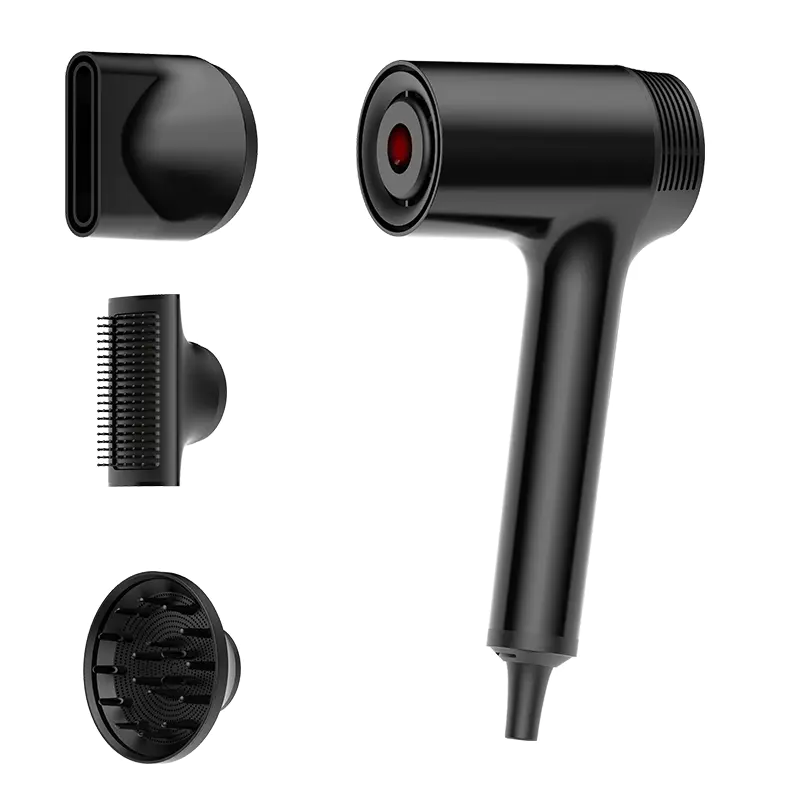
That is why many OEM programs begin with a proven high-speed platform and then decide whether a bladeless variant is worth the investment. Youming, for example, lists models such as the KH800A high-speed noise-reducing hair dryer, the KH801A multi-speed adjustable high-speed hair dryer, and the KH803 series with AI and smart temperature features. These products show the building blocks that matter in any bladeless project: brushless or high-speed motor options, noise reduction, negative ion care, real-time monitoring, and LED or digital feedback.
If your target market is price-sensitive, a bladeless SKU may be hard to support after adding certification, packaging, shipping, and warranty. If your market already accepts premium personal care tools, the higher cost can be justified by design, safety, and brand differentiation. The decision should come from channel data, not from a trend alone.
What OEM Buyers Should Check Before Ordering
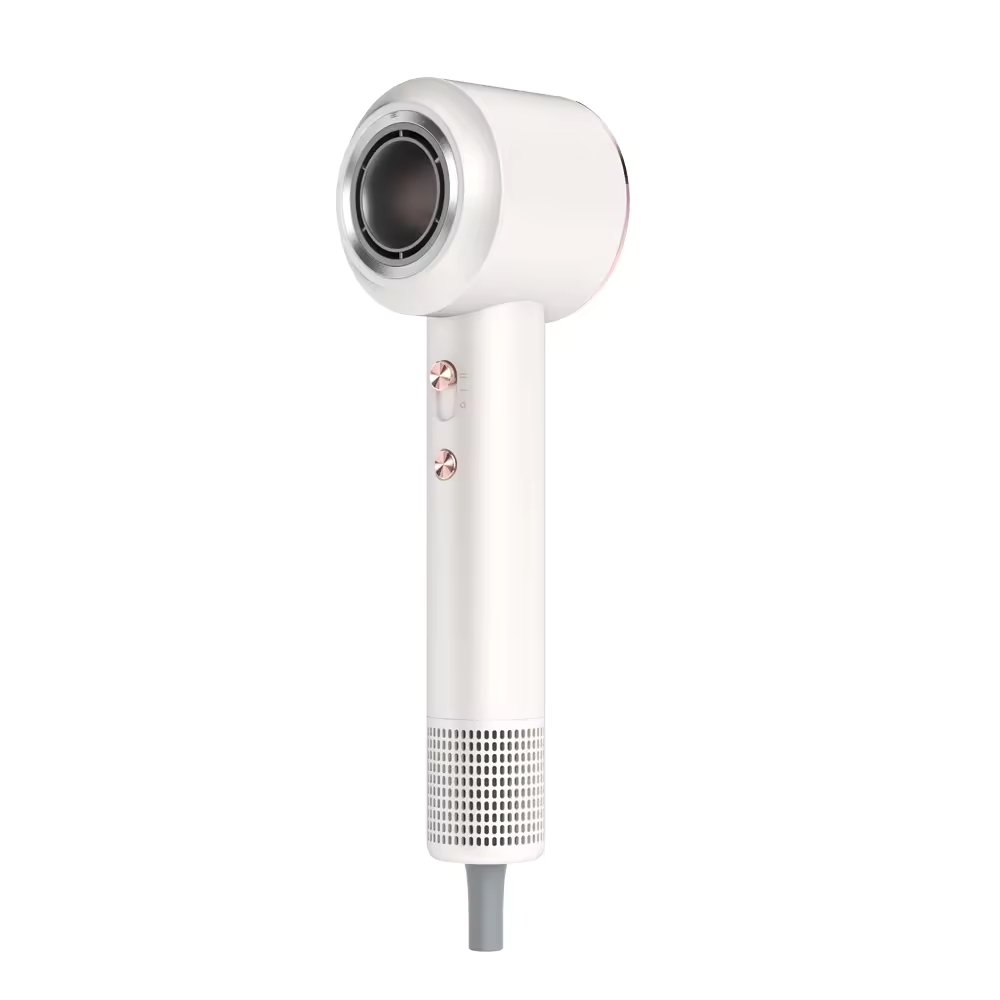
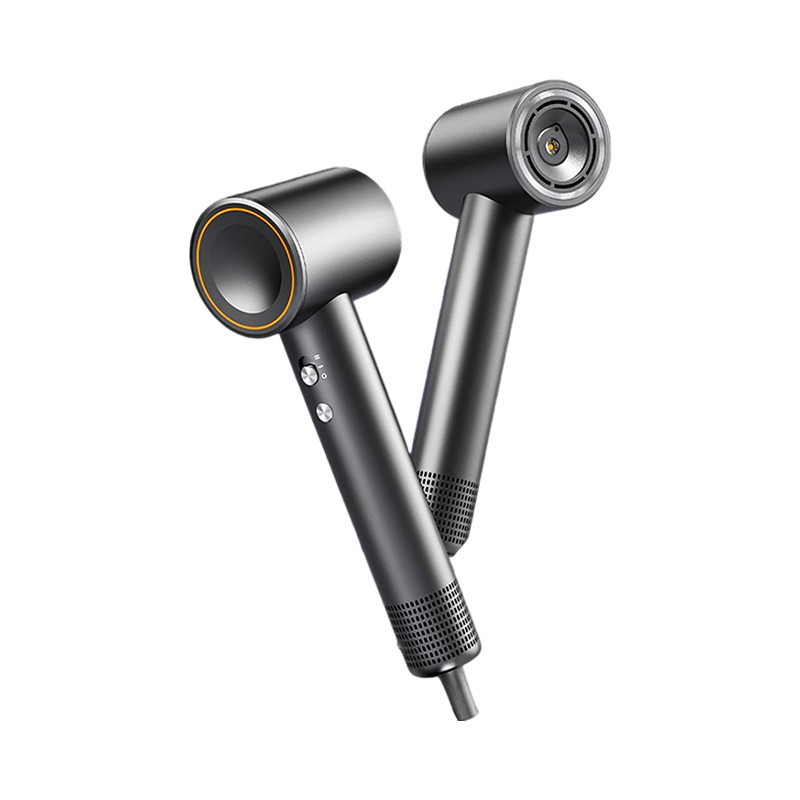 KH-805A Smart Protective Hair Dryer with Real-Time Temperature ControlSmart hair dryer with real-time temperature sensing, negative-ion care and multi-speed airflow; 1000-hour motor life supports sample evaluation for protective drying performance.View Product →
When you evaluate a bladeless hair dryer supplier, ask for the engineering details behind the sample. A smooth-looking prototype can hide weak points that appear only after a few hundred hours of use.
- Motor and impeller life. Request brushless motor specifications, expected life hours, and impeller balance data. A bladeless duct amplifies vibration if the impeller is not balanced.
- Airflow and static pressure. Test airflow in cubic meters per hour and static pressure with a clean filter and a partially blocked filter. Real users do not clean the inlet every day.
- Noise profile. Measure sound pressure at one meter in a quiet room. A weighted decibel level matters, but so does frequency. A high-pitched whine is more annoying than a slightly louder low-frequency sound.
- Heat control. Check outlet temperature stability at low, medium, and high settings. Look for thermal fuses, NTC sensors, and software cutoffs. Smart temperature control is not a marketing word if the heater cycles safely.
- Safety and certification. Confirm the target market requirements before tooling. UL, ETL, CE, GS, RoHS, and REACH are common checkpoints, but the exact list depends on the channel and country.
- Tooling and mold ownership. Clarify who owns the mold, how many shots it is rated for, and what maintenance is included. Bladeless housings often need tighter tolerances than standard dryers.
- MOQ and lead time. Ask for a realistic schedule for samples, pilot runs, mass production, and spare parts. A low MOQ is not helpful if the motor or sensor has a long lead time.
Youming's product pages show several relevant control features, including negative ion care, smart monitoring, LED display, and low-noise operation. Those features can be adapted to a bladeless concept, but the supplier should be able to explain how the air path and heater are matched to the motor.
Common Pitfalls in Bladeless Hair Dryer Projects
The first pitfall is copying a shell without copying the air system. A bladeless housing that looks similar but uses a different impeller, duct angle, or inlet can deliver weak airflow and loud noise. The second is testing only with a clean filter. In real bathrooms, dust, hair spray, and lint build up quickly. A design that depends on perfect airflow will fail in the field.
The third pitfall is ignoring the user's hand position. Bladeless dryers often have a different weight balance from conventional models. If the center of gravity is wrong, users will feel fatigue or point the outlet too close to the scalp. The fourth is treating temperature control as a single sensor. Good control uses sensor feedback, heater power management, and software logic. For more on how smart dryers balance efficiency, quiet operation, and hair care, see this discussion of smart hair dryer performance.
Finally, do not underestimate after-sales cost. A bladeless dryer may need special tools for motor or impeller access. If the design is not serviceable, a small failure can become a full replacement. Ask for a teardown review before you approve the final tooling.
A bladeless hair dryer can be a strong premium product if the project is managed as an engineering challenge, not a styling exercise. The winning formula is stable airflow, controlled heat, acceptable noise, safe materials, and a bill of materials that still leaves room for margin. For OEM and ODM buyers, the supplier should bring motor knowledge, tooling discipline, quality systems, and the ability to adapt proven high-speed platforms to a new outer form.
Ningbo Youming Electrical Appliance Co., Ltd. operates as a national high-tech enterprise with more than 70,000 square meters of manufacturing space and products exported to North America, South America, Europe, and Asia. Its catalog includes high-speed and intelligent hair dryers, stylers, straightener and curler tools, and scalp massage combs, with OEM and ODM support. If you are planning a bladeless model, start with the air path, the motor, and the certification plan. The rest of the product will follow from those decisions.


 +86-574-63982198
 +86-574-63982197
 No. 933, Lingxu 2nd Road, Binhai Economic Development Zone, Cixi, Zhejiang, China.