

 English
 中文简体
中文简体 Español
Content
A wash-day blowout on tightly coiled hair can run 45 minutes or longer, and most of that time is not spent drying. It is spent holding a weak stream of hot air against the same section of hair, waiting for water to leave the middle of the coil while the outside slowly overheats. If you are choosing a dryer for natural hair, the short answer is this: airflow does most of the work, heat control protects the strand, and attachments decide whether you finish with stretched, smooth hair or a tangled puff. Wattage printed on the box tells you very little about any of it.
Why Natural Hair Dries Differently
Type 3C and type 4 textures have more bends per inch and a denser packing of strands, so water sits in the core of each coil long after the surface feels dry. A dryer that runs hot but moves little air forces you to keep reapplying heat to the same patch, and that is where damage accumulates.
Air leaving the nozzle of a typical dryer can be hotter than 100 degrees Celsius, well above the point where repeated exposure leaves hair brittle and rough. The practical goal is not maximum heat but maximum air movement at a temperature your hair tolerates. Strong airflow at a lower heat setting finishes the section faster, and less time under heat means less cumulative damage. A longer comparison of motor types and drying behavior is covered in this look at high-speed versus regular hair dryers.
The Specifications That Actually Matter
Ignore the adjectives on the packaging and compare six measurable things side by side.
| Specification | Why it matters | What to look for |
|---|---|---|
| Airflow | Moves water out of dense coils, so drying time drops | Stated airflow in meters per second or cubic feet per minute, not just wattage |
| Heat range | Low settings let you dry slowly without losing speed | At least three heat steps plus a genuine cool shot |
| Temperature feedback | Prevents hot spots when you hold the dryer in one position | NTC sensor or real-time monitoring, ideally with a readable display |
| Attachments | Diffuse, stretch, or smooth the same head of hair | Deep diffuser bowl, wide-tooth comb, narrow concentrator |
| Ionic output | Cuts static and surface frizz on porous strands | A stated negative ion generator rather than a label alone |
| Weight and balance | Wash day means holding the dryer for half an hour | Light body with the weight close to the handle, not the barrel |
High-Speed Motors and Real Drying Time
A brushless digital motor spinning at roughly 100,000 rpm drives far more air through a narrow barrel than a conventional motor of the same wattage. The air multiplier design pulls in surrounding air and pushes it forward, which is why a high-speed dryer can dry a dense section on a medium heat setting. High airflow plus moderate heat is the single biggest reason drying time falls.
Heat control matters just as much. Sensor-based models sample the outgoing air and adjust the element, keeping nozzle temperature inside a narrow band instead of letting it drift. When a supplier claims smart temperature control, ask for the sampling interval, the tolerance band, and how the reading is verified, because a display alone is not proof of stability.
Attachments Make or Break the Blowout
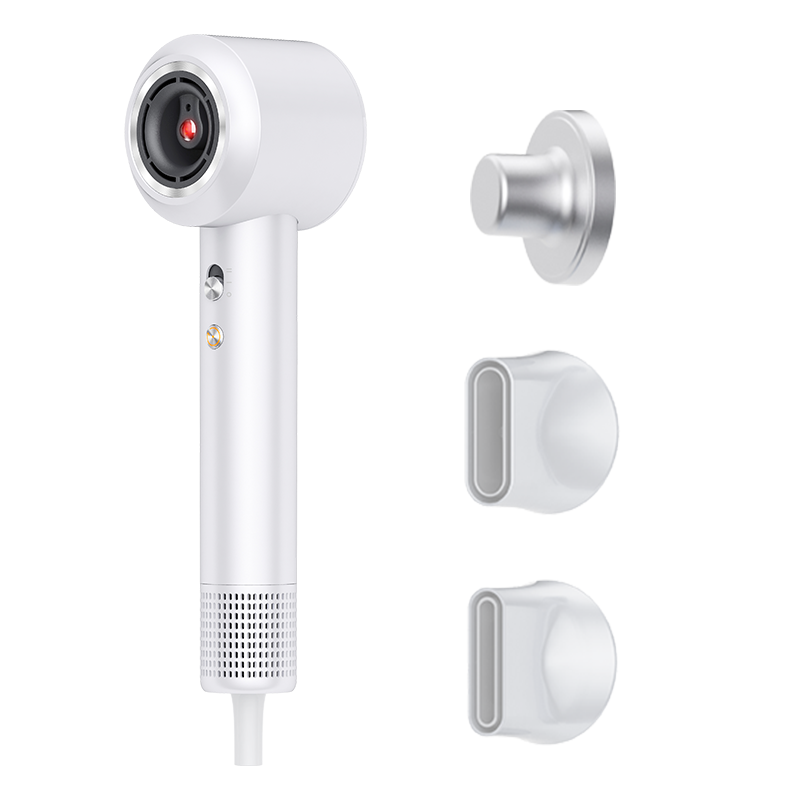
Attachments change the finish more than any setting on the dial. A deep diffuser bowl with long prongs spreads air across the coil and keeps the nozzle away from the scalp, which is what a wash-and-go needs. A wide-tooth comb attachment tames shrinkage and stretches hair into a blowout shape while you dry. A narrow concentrator focuses air for a smoother, sleeker finish at the roots and ends.
Check the fit as carefully as the shape. A diffuser that pops off mid-section costs you ten minutes, and a stiff comb that snags is worse than no attachment at all. Multi-tool kits suit natural hair because one dryer then covers diffusing, stretching, and smoothing without a drawer full of separate tools.
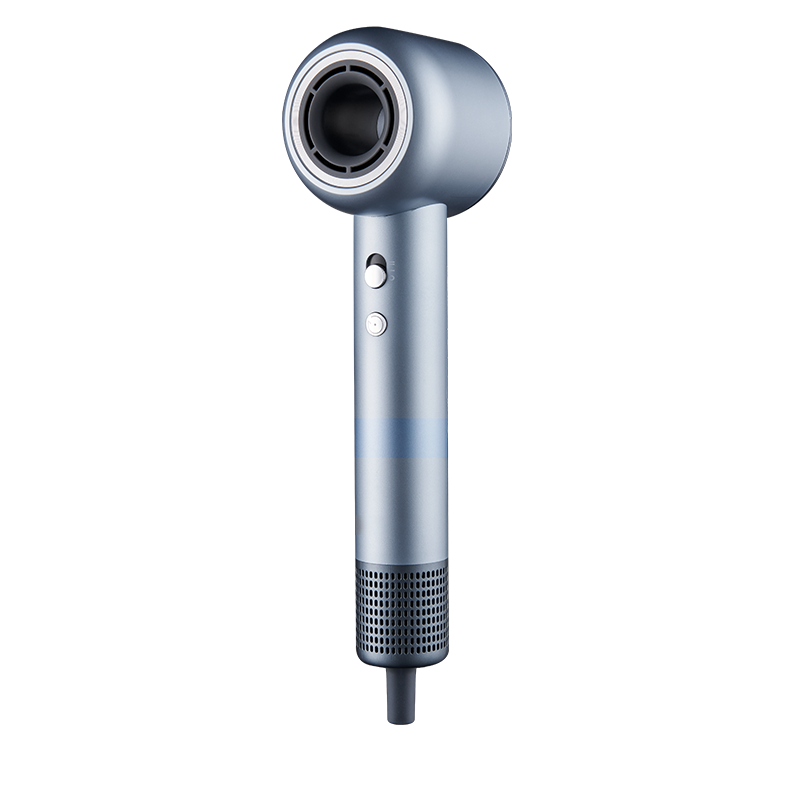
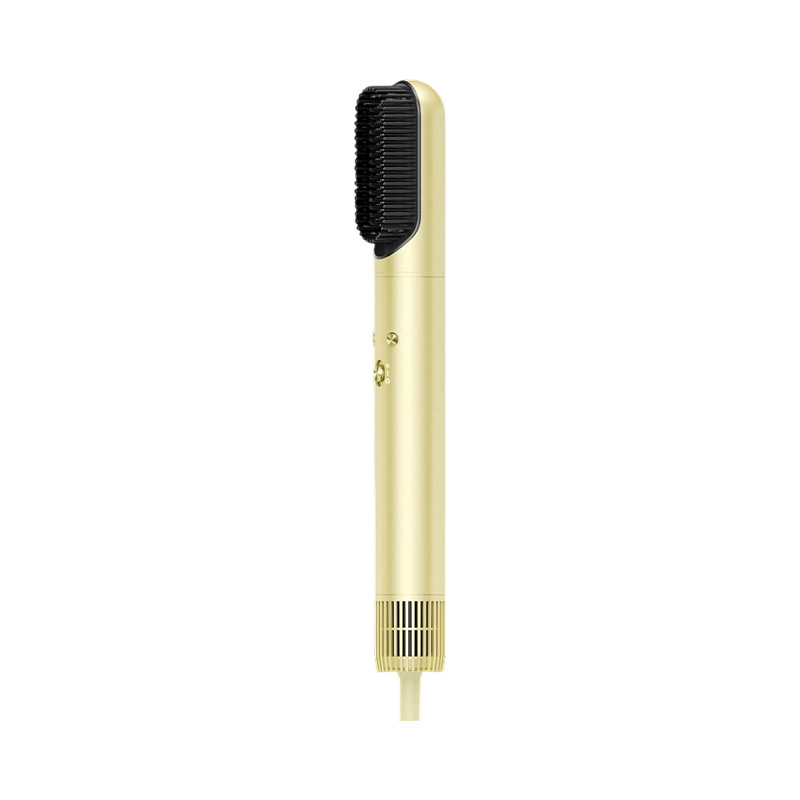 KH-802A 18 IN 1 Multi-functional hair dryerKH-802A 18 IN 1 Multi-functional Hair Dryer comes with 18 interchangeable attachments, covering drying, styling, volumizing, and smoothing needs for different hair len...View Product →
Ionic Technology and Frizz
Dry, porous hair builds up static easily, and static shows up as frizz the moment you stop drying. A negative ion generator feeds charged particles into the airflow, which neutralises that static and helps the cuticle lie flatter. The effect is most visible on hair that has been coloured, heat styled, or is naturally high porosity.
Ionic output is not a replacement for temperature control. Ion technology reduces surface frizz, but it does nothing to protect the cortex from prolonged heat. Treat it as a finishing advantage rather than a safety feature.
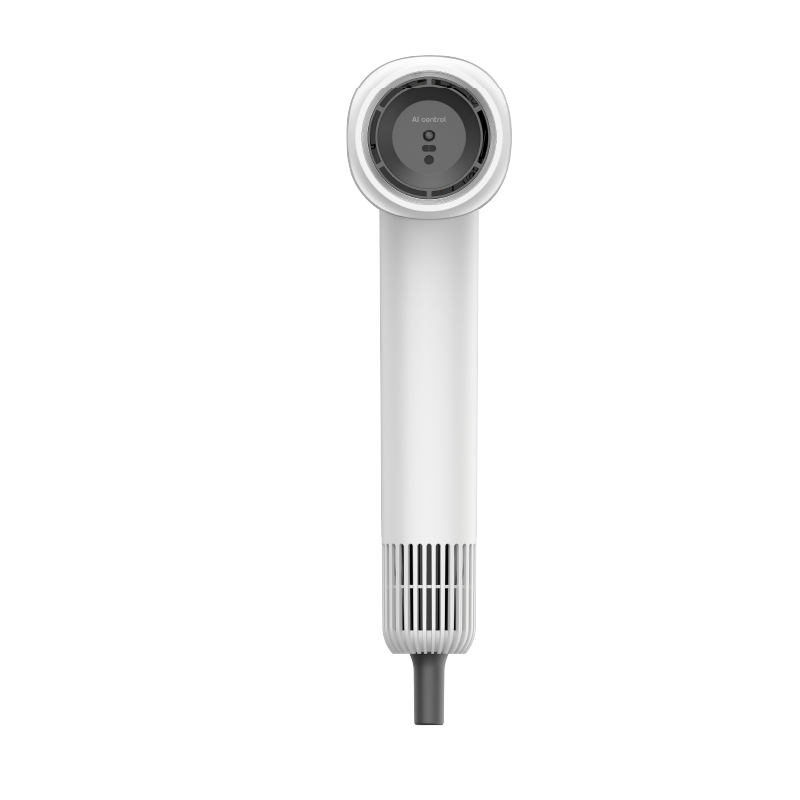
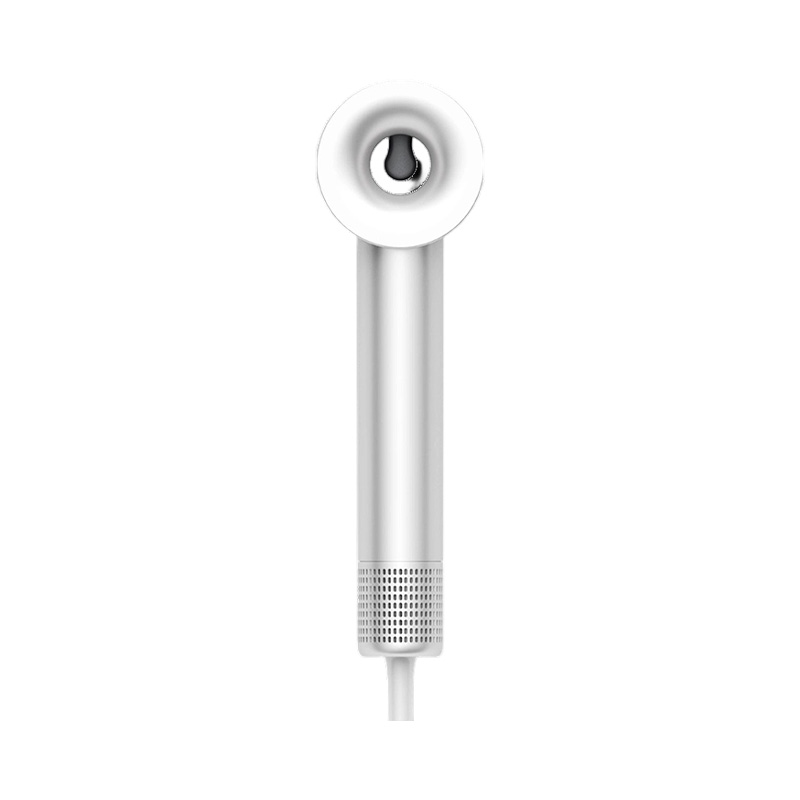 KH-803B Smart and efficient negative ion hair dryerThe KH-803B Smart and efficient negative ion hair dryer integrates intelligent temperature control and optimized air flow design to address common pain points in hair ...View Product →
Noise, Portability, and Travel
Noise matters more than most buyers expect. Wash day can mean 30 to 45 minutes with the dryer running close to your ear, so compare decibel ratings taken at the same distance instead of trusting a quiet label on the box.
Travel is the other scenario worth planning for. A compact dryer used to mean weak airflow and long drying times, but small high-speed motors have closed much of that gap. If you travel with natural hair, a portable unit that still produces real airflow and monitors its own temperature is more useful than a full-size dryer that never leaves the bathroom.
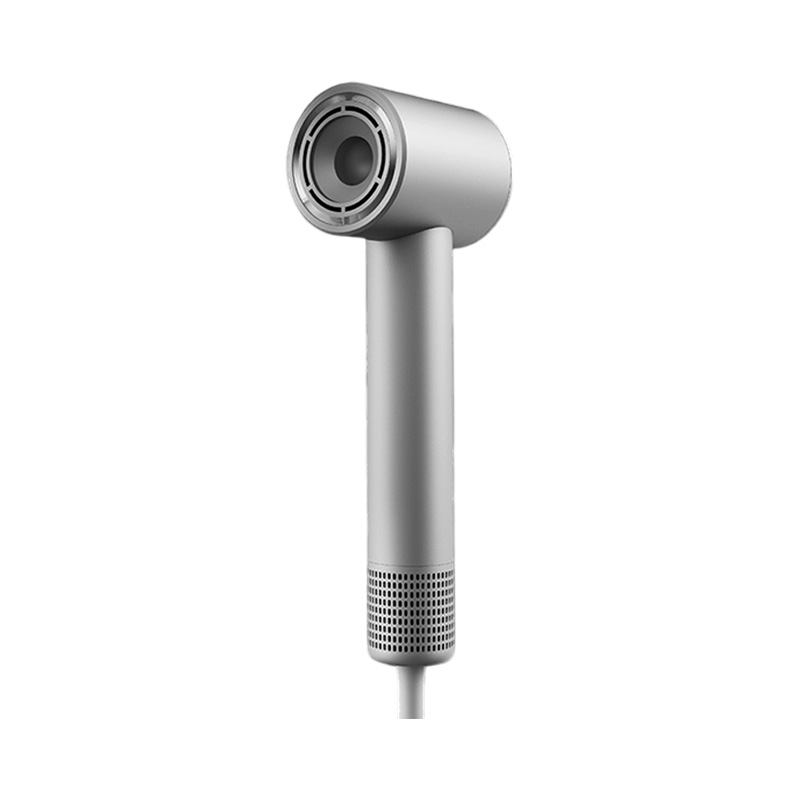
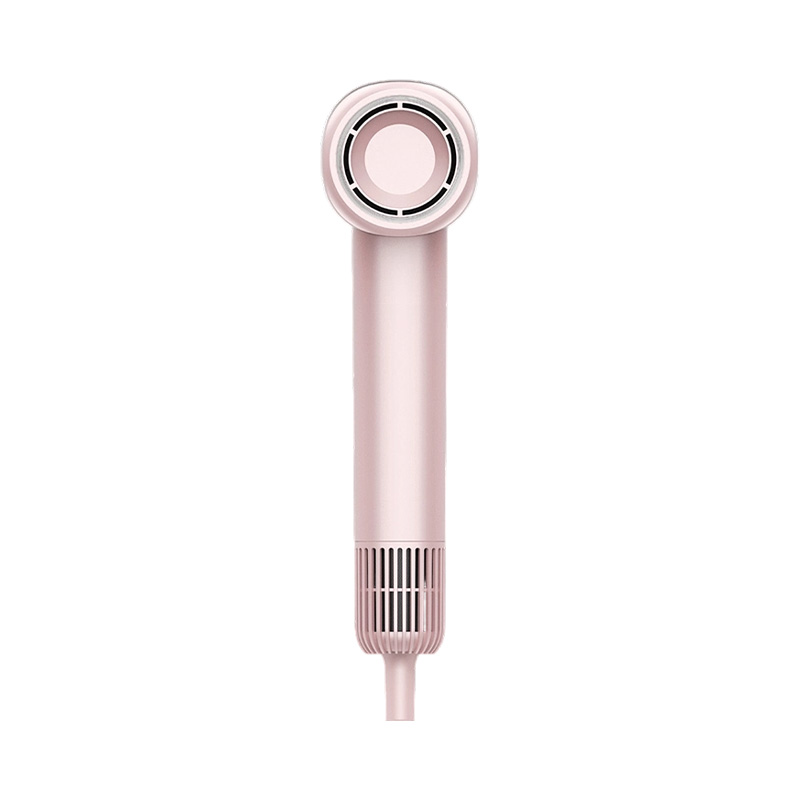 KH-807 Mini-high speed real-time monitoring of smart hair dryerThis compact smart hair dryer integrates high-speed airflow technology and real-time monitoring functions, which enables dynamic tracking of temperature, wind speed an...View Product →
For Buyers: What to Verify Before You Order
If you are sourcing dryers rather than buying one, the specification list above becomes a supplier questionnaire. The parts that decide whether a private-label program succeeds are usually invisible in a single sample: motor supplier and consistency, calibration of the temperature sensor, the tolerance your factory holds in mass production, attachment fit after repeated use, and the cord, plug, and voltage variants each market requires.
Certification and documentation carry equal weight. Ask for the quality management system certificate, safety reports for the destination market, and a clear statement of who owns the tooling and the electronics design. A manufacturer that has been building small appliances since 2010 and runs its own injection moulding, stamping, and SMT lines can usually absorb a change of sensor or attachment without resetting the whole project, which is what protects your launch date.
The hair dryer range from Ningbo Youming Electrical Appliance covers noise-reduced, multifunctional, AI-controlled, and portable high-speed models built for OEM and ODM programs, with exports reaching North America, South America, Europe, and Asia.
A Short Checklist Before You Buy
- Confirm the dryer offers real airflow data, not only wattage.
- Check that the lowest heat setting is genuinely low and that a cool shot exists.
- Look for sensor-based temperature control if you dry dense sections slowly.
- Match attachments to your routine: diffuser for wash-and-go, comb for stretching, concentrator for smoothing.
- Hold the dryer for 30 seconds before deciding, because wash day is a long hold.
- For private label, verify calibration, production tolerance, attachment durability, and market-specific voltage and plug options.
None of this depends on a specific brand or a specific price. A dryer that moves a lot of air at a temperature you can hold against your hair will beat a hotter, slower machine every time, and the attachments you actually reach for decide how the finished hair looks. Compare the specifications, test the hold, and check the manufacturer behind the label. That is what separates a good wash-day tool from a drawer ornament.


 +86-574-63982198
 +86-574-63982197
 No. 933, Lingxu 2nd Road, Binhai Economic Development Zone, Cixi, Zhejiang, China.