

 English
 中文简体
 Español

Content
- 1 Set heat by texture, not by habit
- 2 Section horizontally, not vertically
- 3 The curl itself, step by step
- 4 Direction decides whether the bob looks styled or set
- 5 Why short curls drop, and how to keep them
- 6 What a bob demands from a straightener
- 7 Prep and finish: the two minutes that decide the result
- 8 Notes for salons and private label buyers
A chin-length bob hides nothing. A clamp mark near the root, a flat patch at the front, or a wave that has collapsed by lunchtime all show up immediately, which is why so many people give up and reach for a curling wand instead. The straightener is actually the more controllable tool for short hair, as long as three variables are managed: plate temperature, section size and the direction of the turn.
Here is the working method in one line. Set the plates to 150 C to 170 C, take sections no wider than 2.5 cm, clamp once close to the root, glide slowly and rotate the iron a half turn two thirds of the way down, then let the curl cool completely before you touch it. Everything below explains why each of those numbers matters, where the technique usually fails, and what to check in the tool itself.
Set heat by texture, not by habit
Most advice stops at medium heat, which is not useful when one person's medium is 140 C and another's is 200 C. A bob also changes the math: because each section holds very little hair, heat transfers quickly and the margin between a shape that holds and a ribbed, over-pressed surface is narrow.
A practical starting point is fine or limp hair at 140 C to 150 C, medium hair at 150 C to 165 C, and coarse or resistant hair at 165 C to 180 C. Colour-treated hair and dry ends belong at the lower end regardless of thickness, because the cuticle is already under stress. If you need a second pass on the same section, drop the temperature rather than repeating at full heat.
One detail separates a reliable result from a lucky one: temperature accuracy. A tool rated at 160 C with a tolerance of plus or minus 10 C may be running at 170 C at the same dial position, which is enough to flatten a fine bob. Specification sheets that state tolerance, warm-up time and plate recovery are worth more than a wide temperature range with no accuracy figure attached.
| Hair type | Plate temperature | Section width | Passes per section |
|---|---|---|---|
| Fine, limp or freshly layered | 140 C to 150 C | 2 cm | 1 |
| Medium, normal density | 150 C to 165 C | 2.5 cm | 1 |
| Coarse or resistant | 165 C to 180 C | 2.5 to 3 cm | 1, or 2 at lower heat |
| Colour-treated or dry ends | 140 C to 150 C | 2 cm | 1 |
Section horizontally, not vertically
Long hair tolerates vertical sections because the length stays roughly constant from root to tip. A bob does not. The hair length changes by several centimetres within a few centimetres of scalp, so a vertical section forces the iron to travel across different lengths at the same time and produces uneven tension.
Divide the head into four working areas: two at the back, one at each side. Within each area, take horizontal subsections no taller than 2 to 3 cm, and no wider than the plate. Clip everything else out of the way so the iron is never dragging loose hair along the surface. Keep the nape sections smallest, because that hair is short and wraps around the barrel faster than the eye expects.
The curl itself, step by step
- Work only on completely dry hair. Any residual moisture turns into steam and sets a kink rather than a curve.
- Comb a horizontal subsection smooth and hold it out from the head at a slight angle so the roots get tension.
- Clamp the plates 2 to 3 cm below the root, closed and flat, without tugging the scalp.
- Glide downward at roughly one centimetre per second. Speed is where most kinks come from, not temperature.
- Two thirds of the way down, rotate the iron a half turn and keep the tail of the section inside the barrel so it forms a smooth curve rather than a folded end.
- Release the section as the iron leaves the hair. Do not pull the iron through the ends.
- Catch the finished curl in your palm, press it gently against the head and hold it there while you load the next section.
- Leave the shapes to cool for at least 30 seconds, then separate them with your fingers. A brush too early removes most of the volume you just built.
Direction decides whether the bob looks styled or set
At the front, curl away from the face on both sides. That single rule opens the eye area and creates the soft frame that a blunt bob needs, and it also keeps the ends from flicking into the cheek. In the back, alternate the direction of the turn from one subsection to the next so the waves interlock instead of running in parallel lines.
The nape needs a lighter hand than the sides. Because the hair is short there, a full half turn can produce a tight ring. A quarter turn with a slower release reads as movement rather than as a curl, which is usually what a bob wearer actually wants.
Why short curls drop, and how to keep them
Short hair carries less weight, so it releases a shape quickly. The fix is not more heat; it is better setting. Three habits make the difference:
- Cool the curl in the palm and hold it for a count of ten before moving on. The shape sets as the hair cools, not as it is pressed.
- Apply a light setting spray or mousse to damp hair before drying, never a heavy oil on finished curls.
- Finish with a small amount of serum on the ends only, then a single smoothing pass at 140 C over the outside of the shape if it looks too separated.
Humidity and a fresh haircut both shorten wear time. If the bob was cut within the last week, expect the ends to be sharper and reduce the temperature by 10 C.
What a bob demands from a straightener
Plate width matters more on short hair than on long hair. A 25 mm plate fits a bob subsection cleanly; anything wider makes it hard to clamp without catching neighbouring hair. The outer edge of the housing should be rounded, because on a bob the iron is often rolled rather than pulled, and a square edge leaves a visible line where it turns.
Floating plates and consistent hinge tension help hold slight tension without pinching. For salon use, check heat-up time under 40 seconds, a locking switch for transport, a swivel cord of at least 2.5 metres and a stated plate temperature tolerance. If you are comparing models, the straightener and curler range lists plate sizes and temperature bands side by side.
Prep and finish: the two minutes that decide the result
Rough-dry the hair to about 80 percent, then lift the root at the crown for a few seconds with a round brush while the hair is still warm. That lift is what stops a bob from sitting flat against the head once the curls are separated. Direct the airflow down the shaft so the cuticle lies flat before the iron ever touches it.
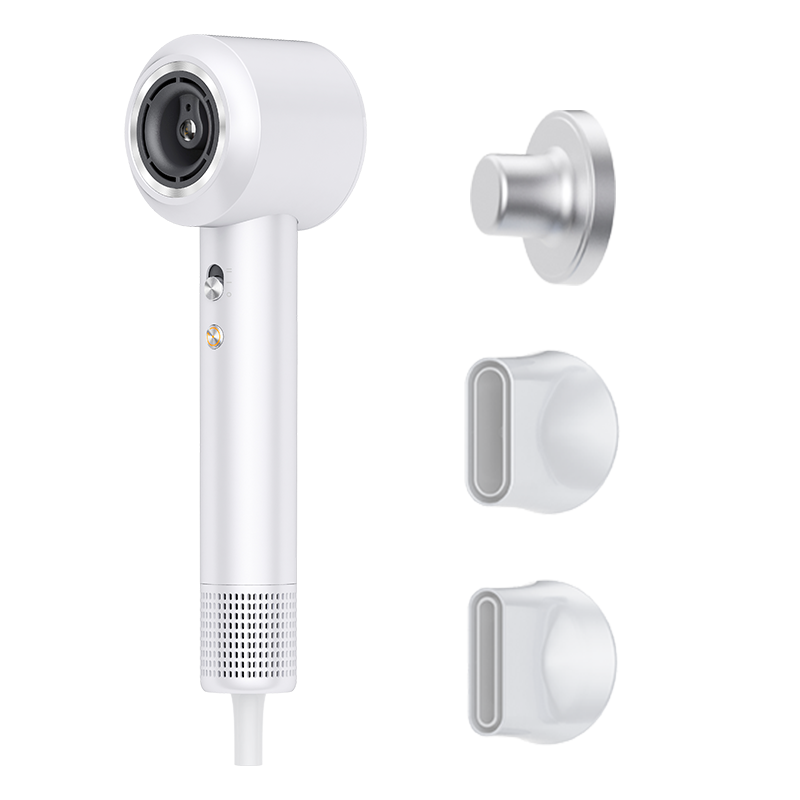
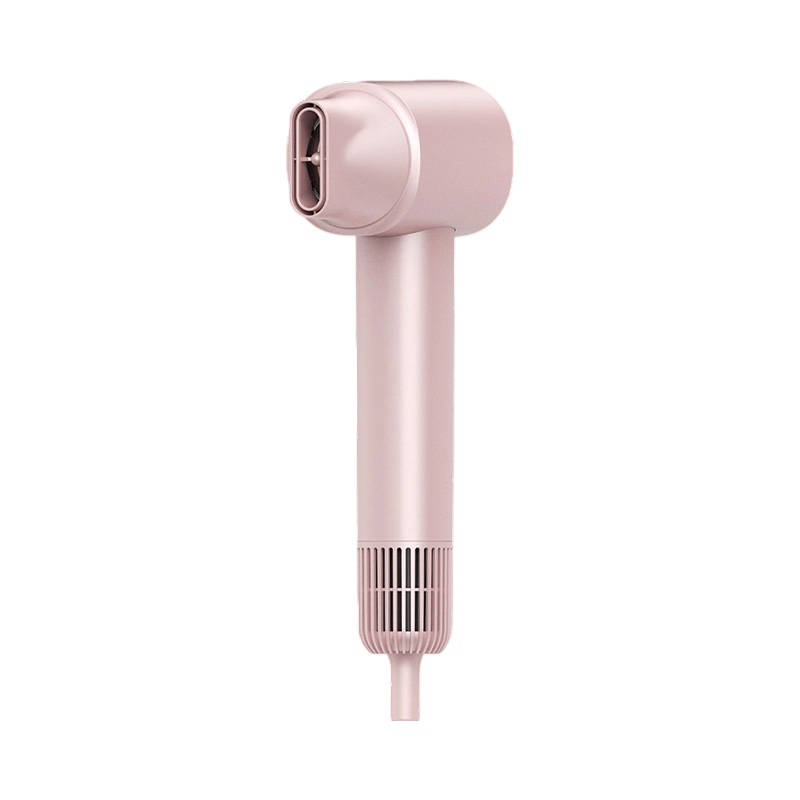
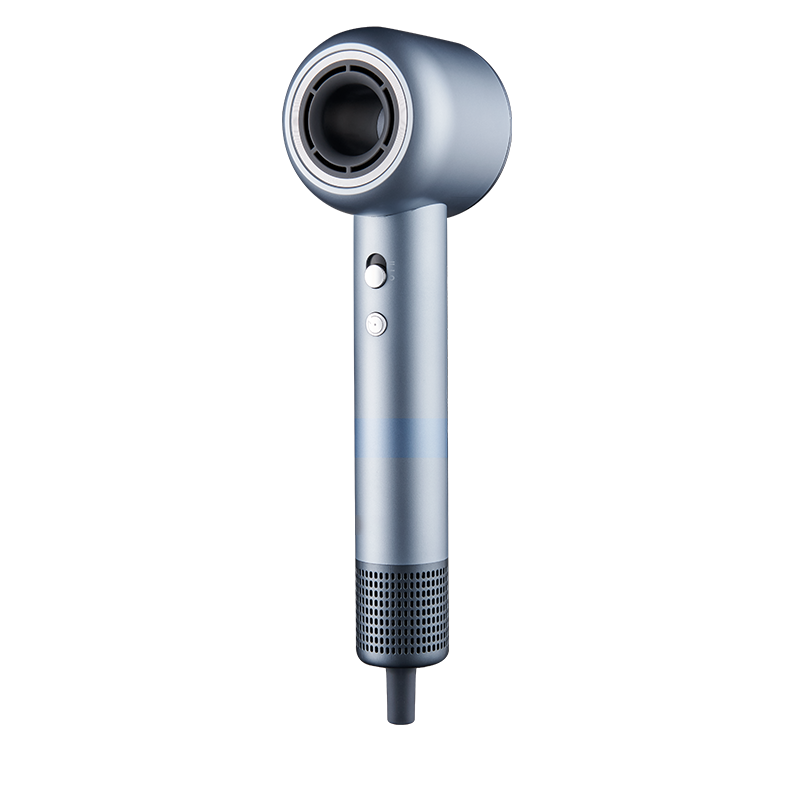
For travel, backstage work or a small bathroom where a full-size dryer is awkward, a compact high-speed unit reaches drying temperature quickly and still has the airflow to shape a root. That is the case for the portable format rather than for extra wattage.
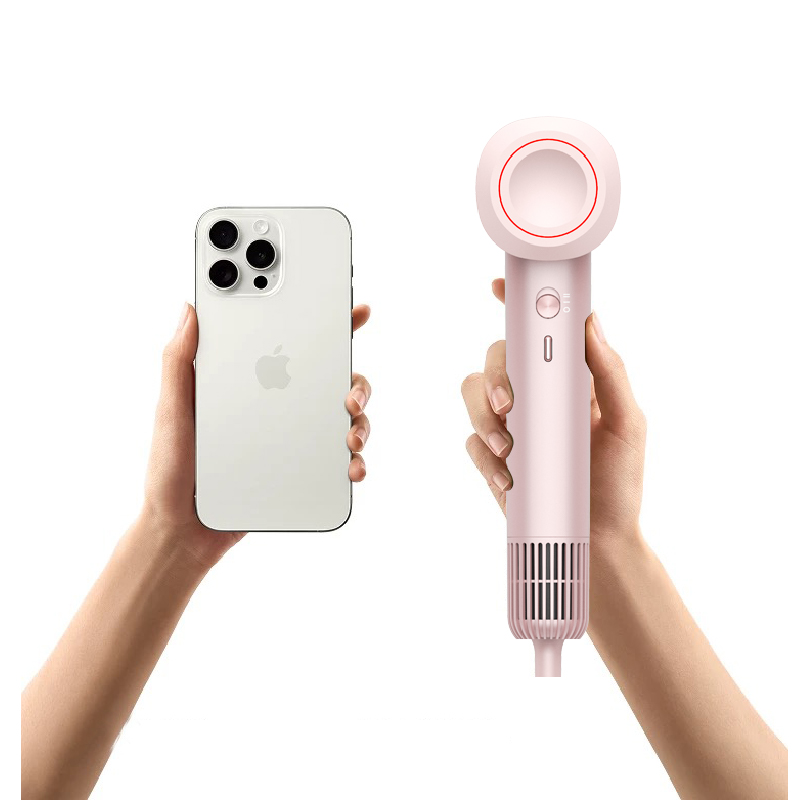 KH-807 Portable High Speed Hair DryerA compact 1400 W high-speed dryer suited to travel, backstage work, or small bathrooms where full-size dryers are awkward.View Product →
Finish with the head tilted slightly forward, working fingers through from underneath, then stand upright and check the outline in a mirror. Adjust single sections rather than re-curling the whole head.
Notes for salons and private label buyers
When a straightener is specified for bob work, four figures appear in almost every brief: temperature range with tolerance, plate coating and thickness, heat-up time, and cord length. A fifth is often missed, which is whether the tool holds temperature during a pass on damp-feeling sections. Recovery under load is the difference between a stylist trusting the dial and continuously testing it on the back of the hand.
Volume matters too. Bob services are frequent, low-heat and repetitive, so hinge life and switch durability show up long before plate wear. This is also the question behind our note on whether one styling tool can cover a full routine, which is worth reading before a product line is narrowed to a single device.
Curl a bob with straighteners and the technique is really a set of small tolerances: 10 C of excess heat, a section 1 cm too wide, or a curl released before it cools. Get those three right and the same tool that seemed to flatten short hair becomes the fastest way to give it shape.


 +86-574-63982198
 +86-574-63982197

 No. 933, Lingxu 2nd Road, Binhai Economic Development Zone, Cixi, Zhejiang, China.
