

 English
 中文简体
 Español

Content
- 1 The Short Answer: Typical Hair Dryer Temperatures
- 2 Why Wattage and Setting Labels Do Not Tell the Whole Story
- 3 How Hot Is Too Hot for Hair?
- 4 How to Choose the Right Heat Setting
- 5 Smart Temperature Control and Safety Features
- 6 What This Means for Daily Users and Buyers
- 7 Practical Checks Before You Buy or Specify
A hair dryer does not have one fixed temperature. A typical household model delivers air at roughly 50 to 90 degrees Celsius (120 to 195 degrees Fahrenheit) on normal settings, while high settings and compact high-speed models can reach 100 to 140 degrees Celsius (212 to 285 degrees Fahrenheit) at the nozzle. Some compact or salon-style dryers can exceed that range for short periods. The heating element inside runs hotter, often well above 200 degrees Celsius, but airflow, thermostat control, and distance from the head decide what your hair actually feels. That is why two dryers with similar wattage can behave very differently.
The Short Answer: Typical Hair Dryer Temperatures
Across consumer models, published outlet temperatures usually fall between 50 and 150 degrees Celsius (122 and 302 degrees Fahrenheit). Everyday low and medium settings sit at the lower end. Maximum or boost settings sit at the upper end and are best used for short bursts, not for holding close to the scalp.
| Setting | Typical air at nozzle | Feel | Best use |
|---|---|---|---|
| Cool shot | 20 to 35 C (68 to 95 F) | Room temperature to slightly warm | Finishing, setting a style, cooling the scalp |
| Low | 30 to 50 C (86 to 122 F) | Barely warm | Fine, damaged, or sensitive hair; children |
| Medium | 55 to 75 C (131 to 167 F) | Warm and comfortable | Everyday drying for most hair types |
| High | 80 to 100 C (176 to 212 F) | Hot near the scalp | Thick hair, quick drying, continuous movement |
| Max or boost | 100 to 140 C (212 to 284 F) | Very hot | Rough drying or salon speed, short bursts only |
These numbers describe air temperature, not heater temperature. A dryer with a 1500 W motor and heater can reach 100 to 125 degrees Celsius on high, while a 2000 W model may not be much hotter if its airflow is stronger or its thermostat cuts the heater sooner. Wattage tells you how much power is available. It does not tell you the exact temperature at the nozzle.
Why Wattage and Setting Labels Do Not Tell the Whole Story
Wattage is often mistaken for heat. A 1875 W dryer does not automatically run hotter than a 1500 W dryer. The heater and fan share that power budget, and the design decides how much heat reaches the air. If the fan moves more air, the outlet temperature can read lower while drying faster. If the airflow is weak, the same heater can create a hot spot. Thermostats also cycle the heater on and off, so a thermometer often shows a range rather than one fixed number.
Distance matters just as much. Air cools quickly as it leaves the nozzle. A dryer that reads 120 degrees Celsius at the outlet may feel much cooler at 15 to 20 centimeters from the scalp. Holding the same dryer 5 centimeters away changes the experience completely. Attachments, room temperature, blocked filters, and the amount of water in the hair also shift the reading. Airflow design is central to that difference, and this comparison of high-speed versus regular hair dryer performance explains why drying speed and outlet heat do not always move together.
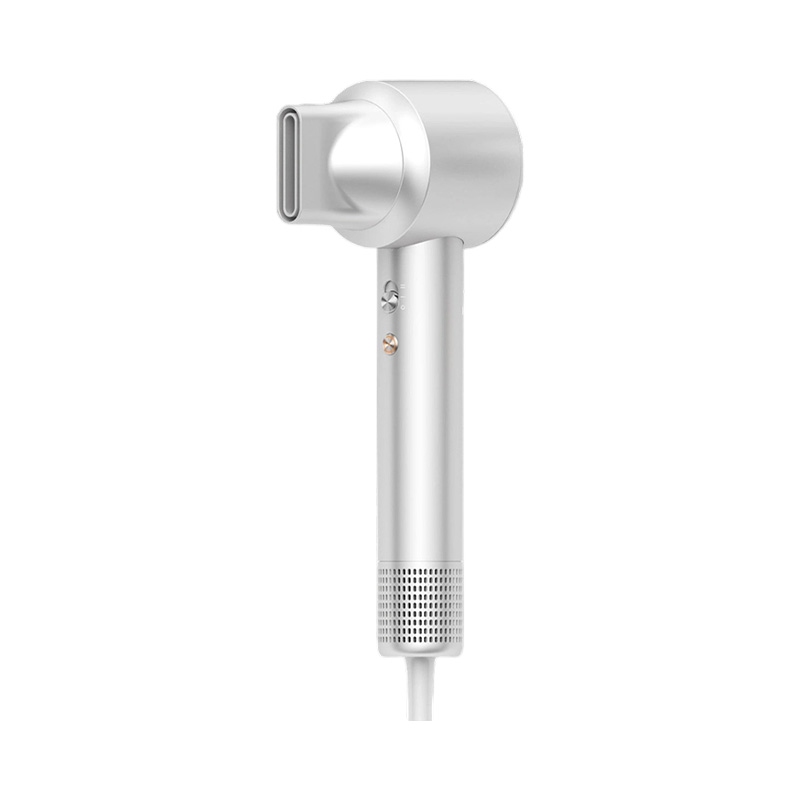
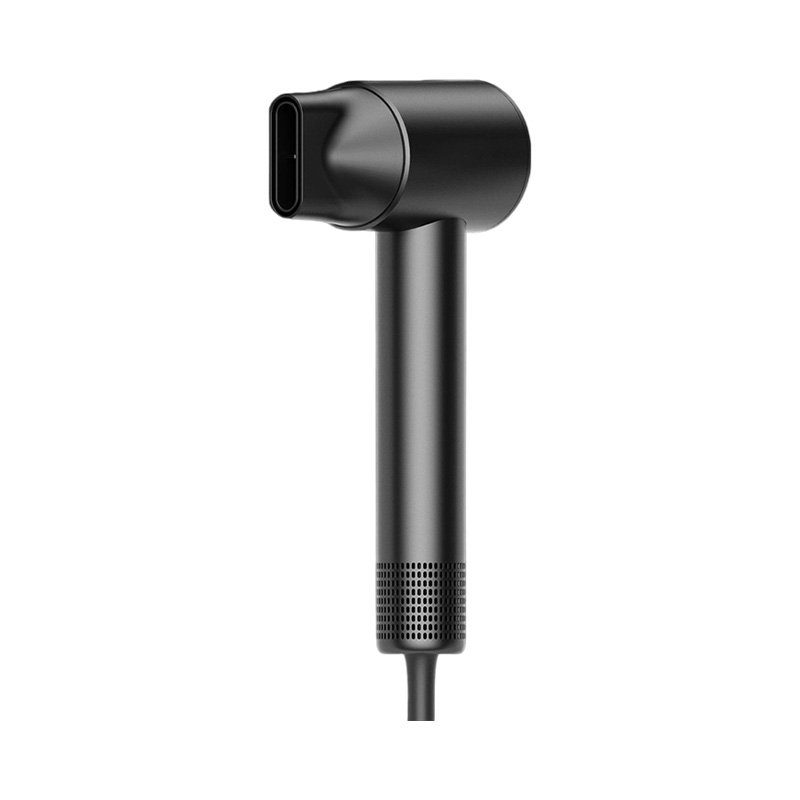
For a specification that prioritizes airflow and stable heat, the KH801C high-performance high-speed hair dryer is one example in this product range.
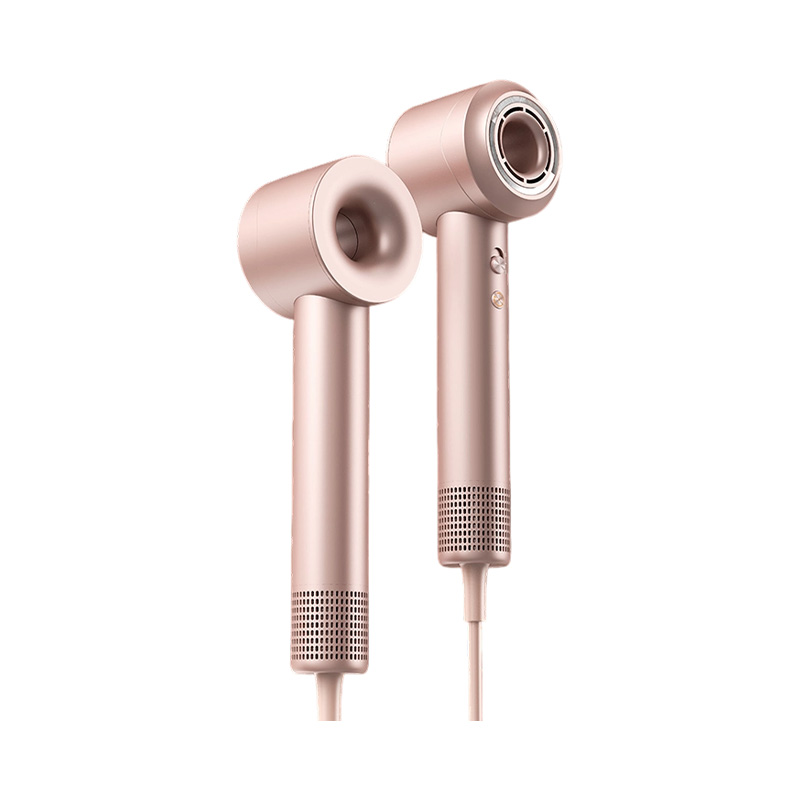 KH-801C High-Performance High-Speed Hair DryerThis model pairs a brushless DC motor with stable multi-layer temperature control, making it relevant where airflow and controlled heat are prioritized.View Product →
How Hot Is Too Hot for Hair?
There is no single safe temperature for every head of hair. Risk rises with temperature, exposure time, and closeness to the scalp. Research on hair shaft damage from heat and drying time shows that repeated high heat exposure can crack the cuticle, reduce moisture content, and make hair feel brittle. The same 100 degrees Celsius air can be tolerable on wet hair for a few seconds and risky on dry hair held in one spot for too long.
Do not compare a hair dryer directly with a flat iron. Flat irons and curling irons press against hair at roughly 150 to 230 degrees Celsius, and their contact heat behaves differently from moving air. A blow dryer usually sits farther away and relies on airflow, so the hair surface stays cooler than the setting number suggests. Even so, long exposure at close range can still cause discomfort and damage.
A practical check is the wrist test. Hold the nozzle about 15 centimeters from your inner wrist for a few seconds. If the air feels painfully hot, it is too hot for scalp-level drying. During use, keep the dryer moving, section the hair, and stop when the hair is dry. Scalp stinging, steam, and a dry, rough feel are signs to increase distance or lower the heat.
How to Choose the Right Heat Setting
Start with the lowest setting that dries the hair in a reasonable time. More heat is not always faster if it forces you to keep the dryer in one place or stop because the scalp feels uncomfortable. Use these guidelines as a starting point:
- Fine, bleached, relaxed, or damaged hair: use low to medium heat with moderate airflow. Pre-dry with a towel and use a heat protectant.
- Thick or coarse hair: use medium to high heat with strong airflow. Keep the nozzle 15 to 20 centimeters away and keep it moving.
- Curly or coily hair: use low heat and low speed with a diffuser. Stop when the hair is about 80 to 90 percent dry and let it finish naturally.
- Children and sensitive scalps: use the lowest heat setting and test the air on your wrist first.
- Finishing: switch to cool shot once the hair is dry to reduce frizz and set the style.
Angle also matters. Point the airflow down the hair shaft rather than directly at the scalp. Keep the inlet clear so the motor and heater receive enough air. A blocked filter raises internal temperature, reduces airflow, and can shorten the dryer's life.
Smart Temperature Control and Safety Features
Smart temperature control uses a sensor near the outlet and a controller to adjust the heater many times per second. It does not make a dryer cold. It prevents overshoot and helps hold a stable temperature. Stability is often more important than a low number on the box. A dryer that swings from 70 to 120 degrees Celsius is less comfortable than one that holds a steady 90 degrees Celsius.
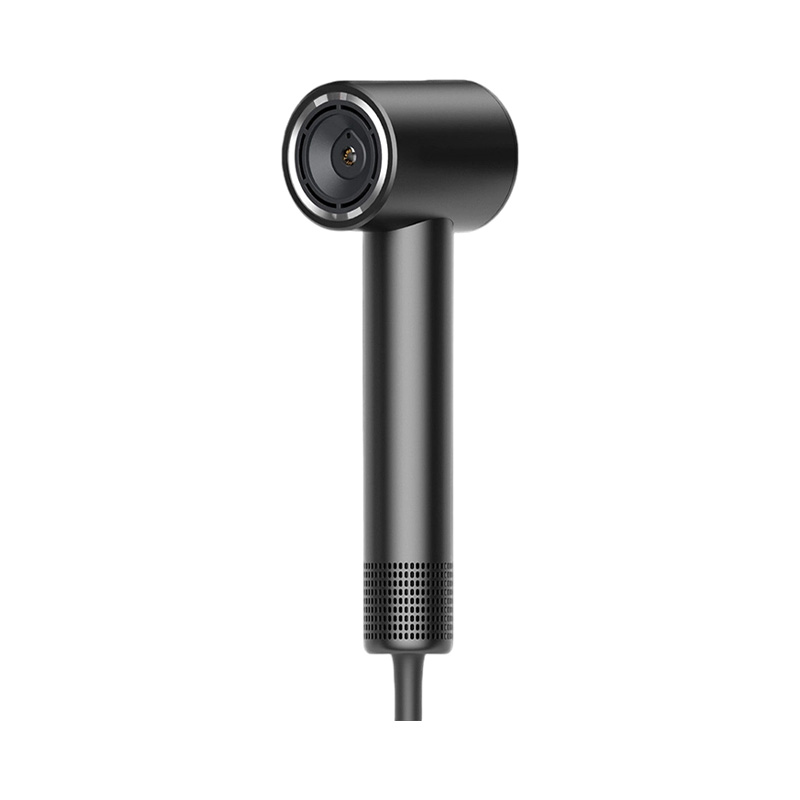
For OEM and ODM programs, look for independent thermal cutout, a fuse, clear setting markings, and a filter that is easy to remove and clean. Ask for the test method behind any temperature claim. The same dryer can produce different readings at 5, 10, and 20 centimeters from the nozzle. A useful specification states the distance, room temperature, airflow setting, and warm-up time. For a controlled heat platform, the KH803C smart temperature control hair dryer is one model that fits this type of requirement.
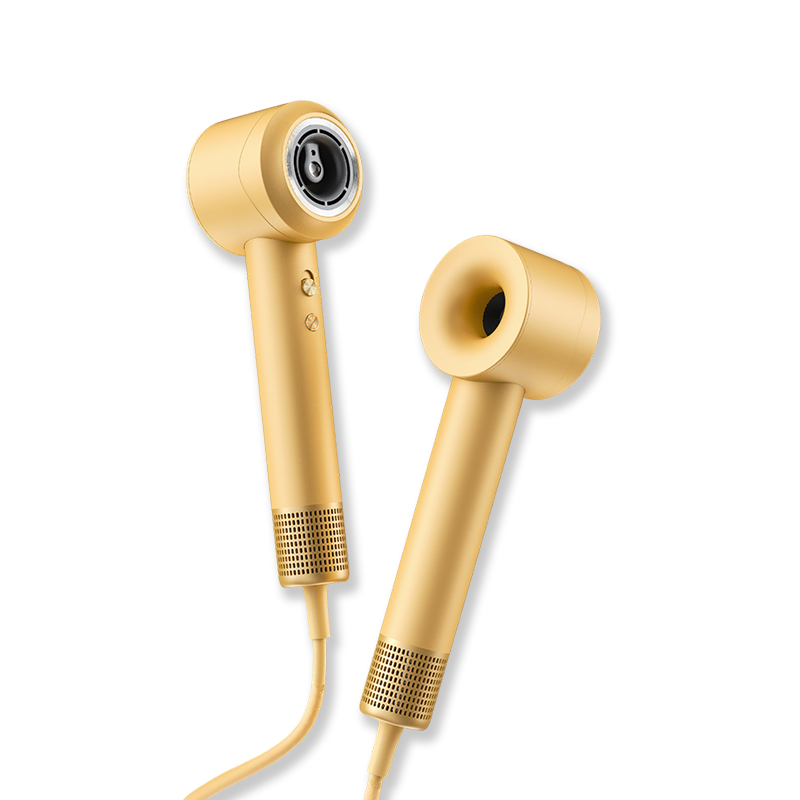 KH-803C Smart Temperature Control Hair DryerIts closed-loop temperature control adjusts heat using real-time hair surface temperature, fitting requirements for a controlled heat platform with stable output.View Product →
What This Means for Daily Users and Buyers
For daily users, the goal is not the highest possible temperature. It is fast, comfortable drying with enough airflow and a cool shot for finishing. A dryer that reaches 140 degrees Celsius is not automatically better than one that reaches 100 degrees Celsius. If the lower-temperature model moves air well and holds heat steadily, it can dry hair quickly with less scalp discomfort.
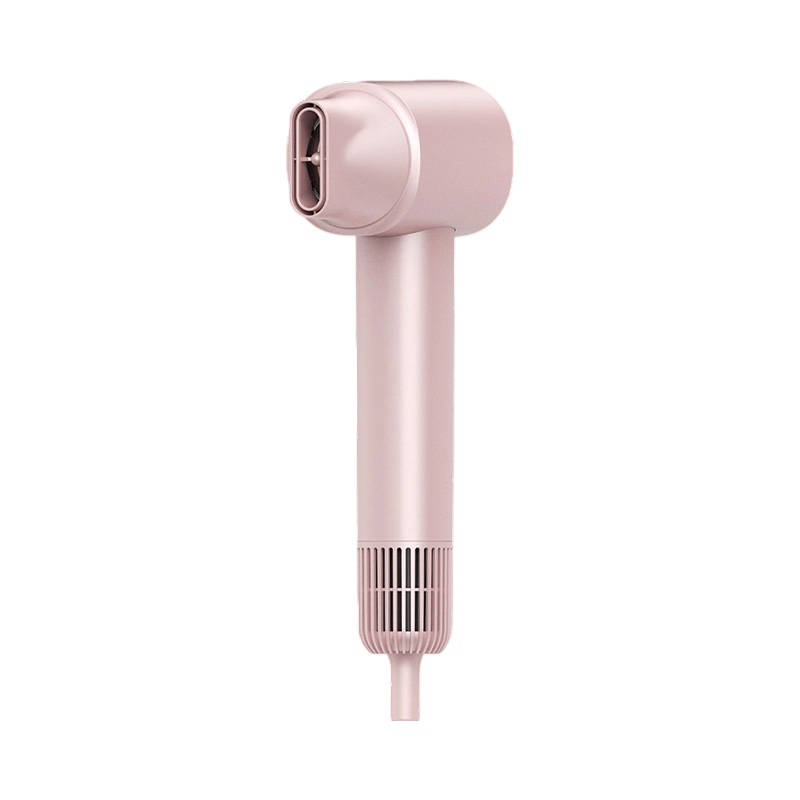
For buyers, write the temperature requirement in measurable terms. Ask for outlet temperature at low, medium, and high settings, measured at a stated distance. Confirm the thermostat cut-off, overheat protection, and filter design. Check noise and airflow alongside heat, because a dryer that is too hot but weak may take longer overall. Compact dryers need extra care because small nozzles can concentrate heat. A portable high-speed model such as the KH807 can shorten drying time, but users should still keep it moving and avoid blocking the inlet.
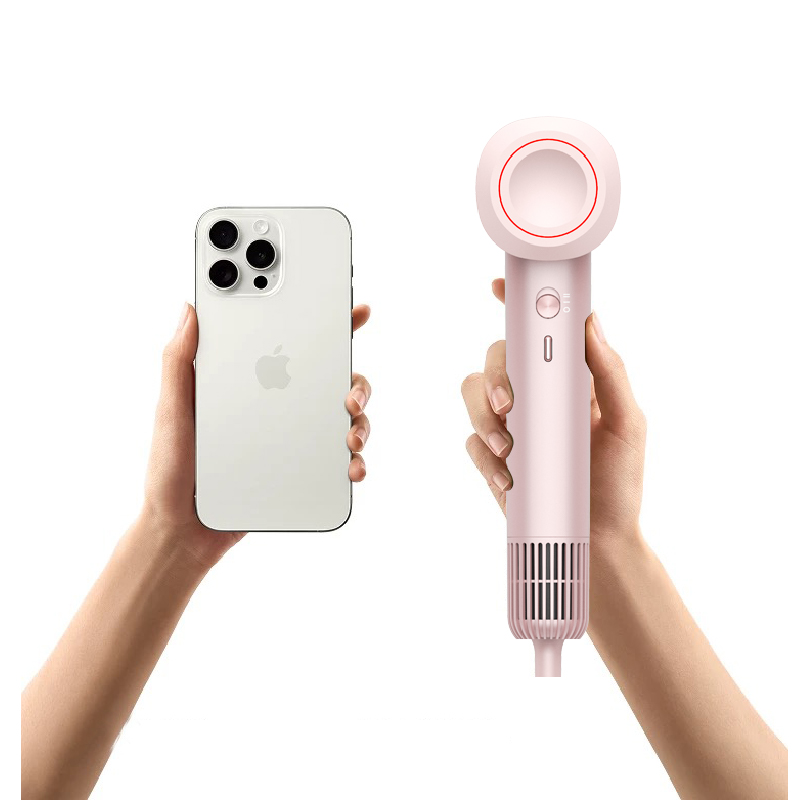 KH-807 Portable High-Speed Hair DryerA portable high-speed option with adjustable speed and high airflow, suited to buyers weighing faster drying against careful heat exposure.View Product →
Practical Checks Before You Buy or Specify
- Check whether the heat settings are clearly marked and whether a true cool shot is available.
- Ask for measured outlet temperatures at 10, 15, and 20 centimeters from the nozzle.
- Confirm overheat protection, thermal cut-off, and a cleanable air inlet filter.
- Test airflow and noise, not only heat. Strong airflow can dry faster at a lower temperature.
- For OEM orders, put the test distance, warm-up time, and tolerance in the product specification.
The short answer is that a hair dryer usually blows 50 to 90 degrees Celsius on everyday settings and can reach 100 to 140 degrees Celsius on high. The safest choice is not simply the lowest number on a box. It is a dryer with stable control, enough airflow to dry quickly, and a user who keeps it moving. Consumers should start low and increase heat only when needed. Buyers should define the temperature test method so the number on the specification means something in real use.


 +86-574-63982198
 +86-574-63982197

 No. 933, Lingxu 2nd Road, Binhai Economic Development Zone, Cixi, Zhejiang, China.
