

 English
 中文简体
中文简体 Español
Content
- 1 Start With Your Hair Type: The Foundation of Every Styling Decision
- 2 Understanding Attachments: What Each One Does and When You Need It
- 3 Negative Ion Technology: Why It Matters and What to Look For
- 4 Wattage and Heat Performance: Matching Power to Your Hair's Needs
- 5 Temperature Control: Why Precision Matters More Than Maximum Heat
- 6 Barrel and Plate Materials: How Coating Affects Hair Quality
- 7 Practical Design Features That Make Everyday Styling Easier
- 8 Matching Styler Type to Styling Goals
- 9 Multi-Function Stylers vs. Individual Tools: Which Is the Better Choice?
- 10 Common Mistakes to Avoid When Choosing a Hair Styler
- 11 Quick Decision Guide: Choosing Your Hair Styler by Priority
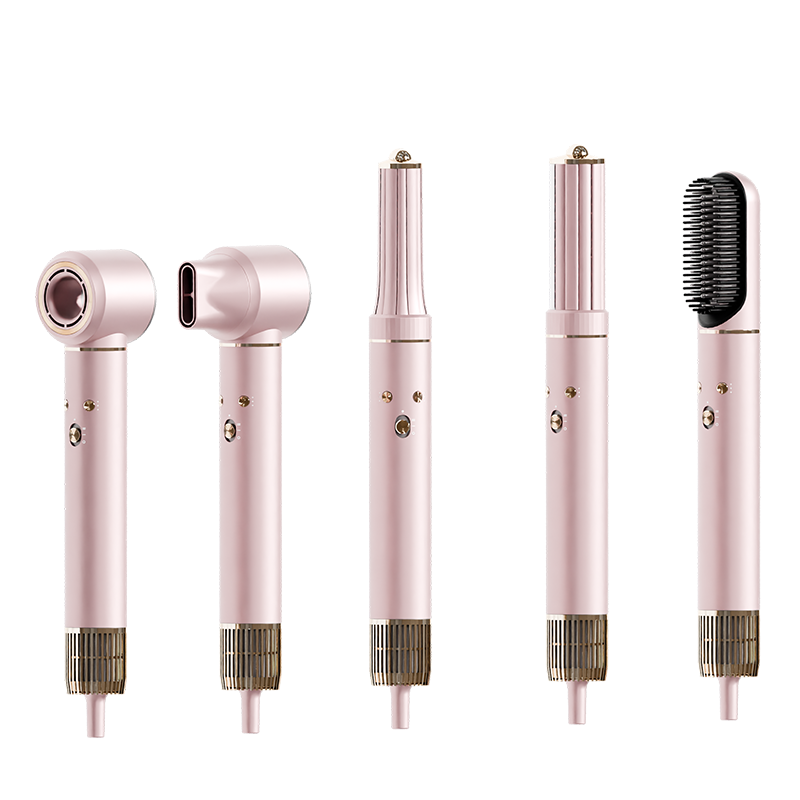
Choosing the right hair styler comes down to three core decisions: your hair type, the styles you want to create, and the attachments the device includes. A multi-functional hair styler that combines a drying nozzle, styling nozzle, curling barrels, and a straightening comb — along with negative ion technology — can handle the full range of styling needs for most hair types in a single tool. Match the device's features to your specific hair texture, thickness, and styling goals, and you will have a tool that delivers salon-quality results at home without requiring multiple separate appliances.
But the full picture involves more than picking any multi-styler off the shelf. Heat settings, barrel size, wattage, ionic technology quality, cord length, and attachment design all affect whether a styler genuinely works for your hair — or works against it. This guide walks through every factor in practical detail so you can make a confident, informed choice.
Start With Your Hair Type: The Foundation of Every Styling Decision
No single hair styler specification matters more than whether it is appropriate for your specific hair type. Using a tool designed for thick, coarse hair on fine, delicate strands can cause irreversible heat damage within a single session. Starting here prevents every other mistake.
Fine and Thin Hair
Fine hair has a smaller diameter per strand and lower heat tolerance than coarse or thick hair. It reaches its internal temperature threshold faster, meaning high heat settings that are safe for thick hair can cause protein breakdown and cuticle damage in fine strands. For fine hair, look for a styler with a minimum temperature starting at 130°C or lower and precise temperature increments of 10°C or less. Negative ion technology is especially beneficial for fine hair — the ions neutralize static electricity that makes fine hair flyaway and frizzy after styling.
Medium and Normal Hair
Medium-thickness hair is the most versatile category and is compatible with the widest range of hair stylers. A styler with a temperature range of 150°C to 210°C and multiple heat settings gives medium hair the flexibility to style at lower temperatures for everyday use and higher temperatures for styles that require more hold. Most multi-functional stylers on the market are optimized for this hair type.
Thick and Coarse Hair
Thick or coarse hair has more mass per strand and requires higher heat to achieve and hold a style. Stylers for thick hair should reach at least 220°C to 230°C at their maximum setting, with adequate wattage (1,800W or above for drying functions) to deliver and maintain that heat consistently throughout a full styling session. Insufficient heat on thick hair leads to styles that drop within hours and requires multiple passes that cumulatively increase heat exposure — more damaging than a single pass at the correct temperature.
Curly and Coily Hair
Curly and coily hair textures (Type 3 and Type 4) are typically drier than straight hair because the curl pattern prevents scalp sebum from distributing along the full length of the strand. This makes moisture retention and heat protection critical concerns. A styler with negative ion output is particularly valuable for curly hair — ions help seal the hair cuticle and lock in moisture, reducing the frizz that results from humidity exposure after styling. Temperature control precision and a cool-shot function to set styles without additional heat are important features for curly hair users.
Color-Treated and Chemically Processed Hair
Bleached, colored, permed, or relaxed hair has structurally compromised protein bonds and a raised or damaged cuticle layer, making it significantly more vulnerable to heat damage than untreated hair. Color-treated hair should generally be styled at 10–20°C lower temperatures than the equivalent untreated hair type would require. A styler with precise digital temperature display — not just a dial with three or four settings — gives color-treated hair users the control needed to protect their investment.
| Hair Type | Recommended Temp Range | Key Feature Priority | Ionic Technology Need |
|---|---|---|---|
| Fine / Thin | 130°C – 180°C | Low minimum temp, precise control | High — reduces static and flyaway |
| Medium / Normal | 150°C – 210°C | Versatile range, multiple attachments | Moderate — adds smoothness and shine |
| Thick / Coarse | 180°C – 230°C | High max temp, high wattage | Moderate — tames frizz on coarse strands |
| Curly / Coily | 160°C – 220°C | Ionic output, cool shot, moisture seal | Very high — essential for frizz control |
| Color-Treated | 130°C – 200°C | Digital temp display, gentle settings | High — cuticle sealing protects color |
Understanding Attachments: What Each One Does and When You Need It
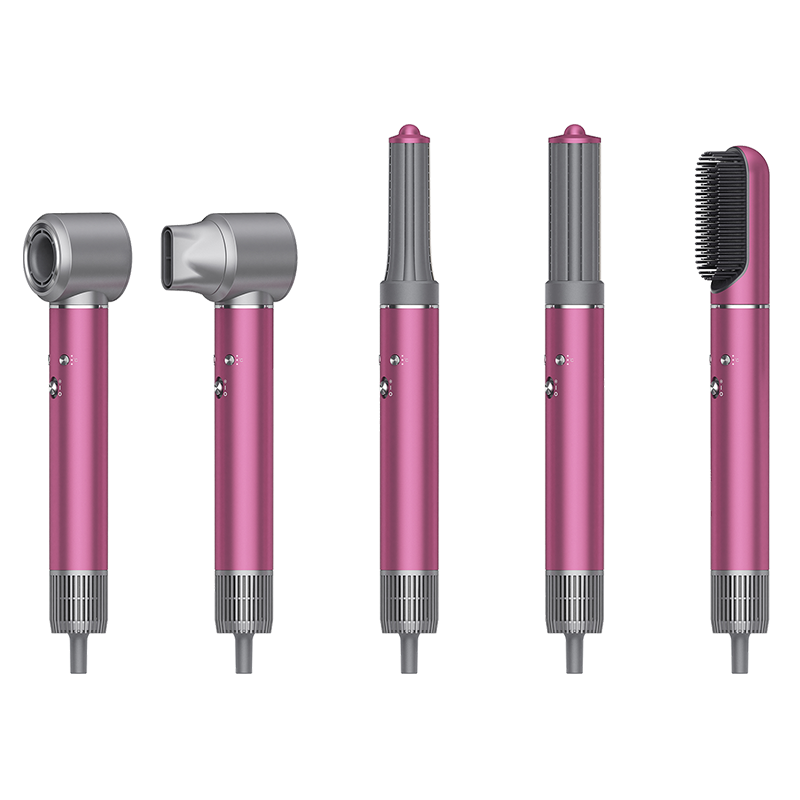
The attachments included with a multi-functional hair styler determine what styles are achievable and how well they suit different hair types. A quality multi-styler includes several key attachments, each engineered for a specific styling function. Understanding what each one does helps you evaluate whether a given styler truly meets your needs — or whether it includes attachments you will never use and is missing ones you will.
Hair Dryer Nozzle (Concentrator Nozzle)
The drying nozzle channels airflow into a narrow, concentrated stream directed at a specific section of hair. This attachment is used to blow-dry hair while smoothing it section by section — directing airflow downward along the hair shaft encourages the cuticle to lie flat, which increases shine and reduces frizz. The concentrator nozzle is the workhorse attachment for achieving a smooth, polished blow-dry finish. For best results, it should be used with a round brush to add volume and direction simultaneously. A good concentrator nozzle typically measures 30 to 50mm in width, giving enough control for sectioned drying without being too narrow to cover reasonable amounts of hair per pass.
Styling Nozzle (Diffuser)
A diffuser attachment disperses airflow across a wide surface area, drying hair gently and evenly without disturbing the natural curl or wave pattern. It is the essential attachment for curly and wavy hair types — using a concentrator nozzle on curly hair creates frizz by breaking up the curl clumps. The diffuser's finger-like projections cradle curls and encourage them to dry in their natural shape, maintaining definition and volume. If you have curly or wavy hair, the presence and quality of the diffuser attachment should be a top priority in your styler selection.
Curling Barrels
Curling barrel attachments allow the styler to function as a curling iron, wrapping hair around a heated cylindrical barrel to create curls or waves. Barrel diameter determines curl size — this is one of the most important and overlooked factors when choosing a multi-styler:
- 19mm – 22mm barrels create tight, defined ringlet curls suitable for shorter hair or highly defined spiral styles.
- 25mm – 32mm barrels produce classic, medium-sized curls — the most versatile size for shoulder-length to long hair, creating styles that range from bouncy curls to relaxed waves depending on technique.
- 38mm – 50mm barrels create large, loose waves and soft curls — ideal for the popular "beachy wave" and "Hollywood wave" looks on longer hair.
Multi-stylers that include two or more barrel sizes offer the most styling versatility. Conical (tapered) barrels, which narrow from one end to the other, create a natural-looking mix of curl sizes from a single barrel — an advantage for achieving an effortlessly textured look rather than uniform ringlets.
Straightening Comb Attachment
A straightening comb — sometimes called a hot comb or styling comb — attachment combines the detangling and smoothing action of a comb with direct heat application. It is particularly effective for naturally curly, coily, or kinky hair textures (Type 3C–4C) where achieving a smooth result requires both detangling and heat straightening simultaneously. The comb teeth guide individual strands through a heated contact surface, aligning them progressively from root to tip without the grip pressure of flat iron plates, making it gentler on fragile curl patterns.
For naturally straight or lightly wavy hair seeking a super-smooth finish, flat plate attachments (where the styler includes a paddle or flat iron-style attachment rather than a comb) are generally more effective — they cover more surface area per pass and create a flatter, sleeker result. Check whether a styler includes a comb attachment, flat plate attachment, or both, and match your choice to your hair texture and desired outcome.
Volumizing Brush Attachment
Many multi-stylers include a round or paddle brush attachment that combines the heat of the device with the tension of a brush to add volume, lift, and shape while drying. This attachment replaces the need for a separate round brush during blow-drying and is particularly useful for adding root lift to fine, flat hair or creating a voluminous blowout on medium-length styles. Brush attachment bristles are typically a combination of nylon and boar bristle (or all-nylon in entry-level products) — natural boar bristle distributes scalp oils along the hair shaft, enhancing shine alongside the heat styling effect.
Negative Ion Technology: Why It Matters and What to Look For
Negative ion technology is now a standard feature in quality hair stylers, but it is not equally effective across all products. Understanding how it works helps you identify genuine ionic performance from marketing claims.
Heat styling tools generate positive ions as they warm the hair, which cause the hair's moisture molecules to cluster together and evaporate unevenly — creating frizz, static, and a rough, dull surface. Negative ions generated by the styler neutralize these positive ions through a process called ionic recombination. The result is that moisture evaporates more uniformly and efficiently, the hair cuticle lies flatter, and static charge is eliminated. In practical terms, this means:
- Faster drying time — ionic drying can reduce blow-dry time by up to 30% compared to non-ionic equivalents by accelerating moisture evaporation from inside the hair shaft outward.
- Smoother finish — the sealed cuticle reflects light more evenly, producing a visibly shinier result with less effort.
- Reduced frizz — particularly noticeable in humid environments where non-ionic styling results tend to collapse within hours, while ionically styled hair maintains its form.
- Lower required heat — because ionic drying is more efficient, you can achieve the same styling result at a lower temperature, reducing cumulative heat damage over time.
When evaluating ionic claims, look for stylers that specify the ion output source — tourmaline or ceramic-infused components that generate ions passively as they heat up tend to produce more consistent and higher-volume ion output than basic ionizer chips. Tourmaline ceramic plates and barrel coatings generate significantly more negative ions per square centimeter than standard ceramic or metal surfaces, making them the preferred choice for hair types most affected by frizz and static.
One practical note: for very fine, limp hair, extremely high ionic output can occasionally over-smooth hair to the point of reducing volume. If you have fine hair and struggle with flatness rather than frizz, look for a styler with adjustable ionic output — allowing you to reduce ion generation when styling for volume and increase it when smoothing.
Wattage and Heat Performance: Matching Power to Your Hair's Needs
Wattage in a hair styler primarily governs the drying power of the device — its ability to generate and sustain airflow and heat through a full styling session. Higher wattage does not automatically mean better styling, but insufficient wattage for your hair type leads to extended styling time and repeated heat exposure that causes more damage than a quicker session at appropriate wattage.
- 1,000W – 1,400W: Suitable for fine or thin hair that dries quickly, short hair, or travel use where voltage limitations apply. Not recommended for thick, coarse, or long hair as drying time will be excessive.
- 1,500W – 1,800W: The standard range for at-home use on medium to moderately thick hair. Provides adequate drying power for most shoulder-length to mid-back styles within a reasonable time frame.
- 1,800W – 2,200W: Professional-grade power appropriate for thick, coarse, or very long hair. Achieves styling results quickly, minimizing cumulative heat exposure. Also the appropriate range for salon-use multi-stylers.
For the heating elements in curling and straightening attachments, wattage is less directly relevant than heat-up time and temperature stability. Look for attachments that reach their target temperature in under 30 seconds and maintain that temperature consistently during use — temperature fluctuation during a curling or straightening pass produces inconsistent results and may require additional passes to correct.
Temperature Control: Why Precision Matters More Than Maximum Heat
The ability to precisely control styling temperature is one of the most important — and most often undersold — features in a quality hair styler. Maximum temperature is frequently marketed as a premium feature, but for most users, the ability to set and maintain an accurate lower temperature is far more valuable for hair health outcomes.
Hair protein (keratin) begins to show structural damage at temperatures above 155°C with prolonged or repeated exposure. The cuticle — the protective outer layer of each hair strand — starts to crack and lift at temperatures above 180°C when exposed repeatedly. This does not mean these temperatures should never be used, but it means using the lowest temperature that achieves your styling goal is always the better choice for long-term hair health.
Digital vs. Analog Temperature Controls
Digital temperature displays show the exact set temperature in degrees, allowing you to select 170°C rather than choosing between a "medium" and "high" dial position of unknown actual temperature. This precision matters most for color-treated or fine hair users who need to stay within a specific temperature window. Analog dials with labeled positions (Low / Medium / High) are less precise but perfectly adequate for users with resilient hair types who are less concerned about the exact temperature.
Cool Shot Function
The cool shot button delivers a burst of cool air that sets a blow-dry or heat-styled look in place by rapidly closing the hair cuticle after styling. This function is more than a convenience feature — it genuinely extends style longevity by locking the cuticle in its smooth, flat position before the style can relax. A good cool shot delivers genuinely cool (not just cooler) airflow, noticeably dropping the temperature at the hair surface. If cool shot longevity matters to you, test it before purchasing if possible — some entry-level stylers deliver barely lukewarm "cool" air that has minimal effect.
Automatic Shut-Off
Many quality hair stylers include an automatic shut-off timer — typically activating after 30 to 60 minutes of inactivity — that cuts power to the heating elements when the device is left on but not in use. This is both a safety feature and a device protection feature, preventing overheating of the heating elements when the styler is accidentally left unattended. For users who frequently style in a rush, automatic shut-off is a genuinely useful safety net worth prioritizing.
Barrel and Plate Materials: How Coating Affects Hair Quality
The surface material of curling barrels, straightening plates, and comb teeth directly affects heat distribution, friction on the hair shaft, ion output, and durability over time. This is an area where product specifications frequently vary significantly even within similar price ranges.
| Material | Heat Distribution | Ionic Output | Friction on Hair | Best For |
|---|---|---|---|---|
| Tourmaline Ceramic | Excellent — very even | Very High | Very Low | All types, especially fine and color-treated |
| Ceramic Coated | Good — mostly even | Moderate | Low | Medium and normal hair types |
| Titanium | Excellent — heats fast | Low | Low–Moderate | Thick, coarse, or resistant hair |
| Gold / Rose Gold Coated | Good | Low–Moderate | Low | Normal to thick hair; smooth glide |
| Bare Metal / Chrome | Uneven — hot spots | None | High | Not recommended for regular styling |
A note on ceramic coatings: the quality and thickness of ceramic coatings varies considerably between price tiers. Thin ceramic coatings on low-cost stylers can chip or wear off after several months of regular use, exposing the bare metal beneath — which distributes heat unevenly and increases friction. When investing in a styler, solid ceramic or tourmaline ceramic construction (rather than a coating over metal) provides significantly better longevity and more consistent performance over the tool's life.
Practical Design Features That Make Everyday Styling Easier
Beyond the heating and ionic technology specifications, the physical design of a hair styler significantly affects how comfortable and efficient it is to use in a real-world morning routine. These practical features are easy to overlook in product specifications but matter considerably in daily use.
Weight and Balance
A hair styler used daily for 15–30 minutes places cumulative strain on the wrist and forearm. A device that is too heavy — particularly one that is top-heavy with the weight concentrated toward the barrel or nozzle end — will cause fatigue and may lead to rushed, careless styling that results in heat damage. Quality multi-stylers weigh between 400g and 600g for the main unit; heavier than this becomes noticeably tiring for longer styling sessions. Test the balance point if possible — a well-balanced styler feels lighter in use than its actual weight suggests.
Cord Length and Swivel Design
Cord length directly affects how freely you can move around your head during styling. A minimum cord length of 2.5 to 3 meters is recommended for comfortable use at a bathroom mirror without constantly pulling against cord tension. More important than length is swivel design — a 360° rotating cord attachment at the handle end prevents the cord from tangling and wrapping during styling, which is one of the most frequently reported frustrations with hair tools used at home. A non-swivel cord on an otherwise excellent styler will quickly become annoying in daily use.
Attachment Mechanism and Security
Multi-function stylers rely on secure, easy attachment changes between the drying, curling, and straightening components. Look for attachment mechanisms that click positively into place and do not wobble during use — a loose attachment on a hot curling barrel is both a styling problem and a burn risk. Magnetic attachment systems, where available, offer particularly quick and secure swapping. Heat-resistant attachment surfaces are important, as some multi-stylers require detaching and reattaching accessories while the device is hot.
Heat-Resistant Storage Features
After styling, the device and its attachments remain hot for several minutes. Stylers that include a heat-resistant pouch, stand, or hanging loop allow safe storage immediately after use without waiting for full cooling — relevant if your morning routine is time-constrained. A hanging loop on the handle is a particularly practical feature that keeps the styler stored neatly and accessible without requiring a dedicated stand or drawer space.
Dual Voltage for International Travel
Travelers should confirm whether a styler is dual-voltage compatible — capable of operating on both 110–120V (North American standard) and 220–240V (European and Asian standard). A single-voltage styler used in the wrong voltage environment without a transformer will either underperform or be permanently damaged. Most quality modern hair stylers include automatic dual-voltage switching, but this should be explicitly confirmed in the specifications before purchasing if international use is anticipated.
Matching Styler Type to Styling Goals
Different styling objectives require different tools and techniques. The following table maps common styling goals to the relevant attachment, temperature range, and technique to achieve the best results with a multi-function styler.
| Styling Goal | Best Attachment | Recommended Temp | Key Technique Note |
|---|---|---|---|
| Smooth, straight blowout | Concentrator nozzle + round brush | 160°C – 190°C | Direct airflow down the shaft; finish with cool shot |
| Defined curls (tight) | 19mm – 25mm curling barrel | 170°C – 200°C | Hold 8–10 seconds; release into palm to cool |
| Loose, beachy waves | 32mm – 45mm barrel or conical | 160°C – 190°C | Alternate curl direction; leave ends straight |
| Sleek, poker straight | Flat plate or straightening comb | 180°C – 220°C | Work in thin sections; single slow pass |
| Volume and body | Volumizing brush attachment | 150°C – 180°C | Lift at roots; roll under at ends; cool shot at peak |
| Defined natural curls | Diffuser attachment | Low heat + low airspeed setting | Cup curls upward; avoid disturbing curl clumps |
Multi-Function Stylers vs. Individual Tools: Which Is the Better Choice?
The choice between a multi-function hair styler and a collection of individual specialized tools — a separate dryer, curling iron, and flat iron — is a genuine trade-off that depends on your priorities, storage constraints, styling frequency, and budget.
- Multi-function stylers offer: Fewer devices to store, lower total purchase cost than buying three quality individual tools, simplified travel packing, and consistent heating element quality across all styling functions from a single unit. They are the best choice for users who style regularly but do not exclusively focus on a single technique.
- Individual specialized tools offer: Potentially higher performance within each specific function (a dedicated professional curling iron may outperform the curling attachment of a multi-styler at the same price point), independent use of multiple tools simultaneously, and the ability to upgrade individual tools without replacing the entire kit. Best for users who have a consistent, specific styling routine or who style professionally.
For most at-home users who style 3–7 times per week across a variety of looks, a high-quality multi-function styler with a well-designed attachment set delivers the best combination of versatility, value, and storage efficiency. The key is ensuring the multi-styler chosen has genuine quality across all its attachments — not simply a premium dryer function paired with lower-grade curling and straightening accessories.
Common Mistakes to Avoid When Choosing a Hair Styler
Even well-intentioned purchases go wrong when buyers focus on the wrong specifications or overlook key practical considerations. The following are the most common and costly mistakes in hair styler selection.
- Prioritizing maximum temperature over temperature range. The maximum temperature of a styler matters far less than whether it can accurately set and hold the temperature appropriate for your hair. A styler with a maximum of 230°C but only three coarse temperature steps is less useful for fine or color-treated hair than one with a maximum of 210°C but 10°C precision increments.
- Choosing barrel size based on aesthetics rather than desired curl size. Many buyers choose barrel size based on what looks appealing in product photos rather than matching it to the curl size they actually want to achieve. Use the 19/25/32/45mm reference guide above to select the correct barrel for your intended style.
- Ignoring attachment quality in favor of attachment quantity. A styler advertised as "9-in-1" with poor-quality attachments will deliver worse results than a "4-in-1" with well-engineered, properly coated attachments. Count the quality of what is included, not just the number of pieces.
- Underestimating wattage for thick or long hair. Buyers with thick or very long hair frequently purchase mid-range wattage stylers and then struggle with extended drying times. The extra few minutes each session adds up to significantly more total heat exposure per week — and more damage — than simply using an adequately powerful tool.
- Not accounting for styling frequency in budget allocation. A buyer who styles their hair every day has a fundamentally different cost-per-use calculation than someone who styles twice weekly. Daily users benefit significantly from investing in better materials and build quality — a premium ceramic tourmaline styler used daily lasts longer and protects hair better than a budget alternative used at the same frequency.
- Skipping the heat protectant regardless of styler quality. No styler — however advanced its ionic technology or precise its temperature control — completely eliminates the cumulative effect of heat on hair protein over time. A heat protectant product applied before every styling session is the single most effective way to extend the health and longevity of styled hair, regardless of the tool used.
Quick Decision Guide: Choosing Your Hair Styler by Priority
Use this summary checklist to quickly identify the most important features for your specific situation before making a final selection.
- Identify your hair type (fine, medium, thick, curly, color-treated) and confirm the styler's temperature range starts low enough and reaches high enough for your hair's needs.
- List the styles you want to achieve — smooth blowout, curls, waves, straight, volume — and verify the styler includes the specific attachments required for each of those styles.
- Check the barrel sizes included against your desired curl size using the diameter reference guide above. Do not assume a "curling attachment" is the right size for the look you want without checking the millimeter specification.
- Confirm negative ion technology is present and assess whether tourmaline ceramic, ceramic, or another material is specified as the ion source — more relevant if frizz and smoothness are priorities for your hair type.
- Check the wattage against your hair thickness and length using the wattage guide above. Do not underbuy on wattage for thick or long hair.
- Assess practical design features: cord length, swivel, weight, attachment security, heat-resistant storage, and dual voltage if you travel internationally.
- Factor in styling frequency when setting your budget — daily users should invest more in build quality and material specification than occasional users, as the cost-per-use economics justify the premium over time.
A well-chosen hair styler — matched to your hair type, equipped with the attachments for your desired styles, and built with quality ionic and heat technology — is a tool that saves time, protects your hair health, and delivers consistent results for years. The investment in getting the selection right the first time pays dividends in every styling session that follows.
 Previous

 +86-574-63982198
 +86-574-63982197
 No. 933, Lingxu 2nd Road, Binhai Economic Development Zone, Cixi, Zhejiang, China.