

 English
 中文简体
中文简体 Español
Content
- 1 Dual-Function vs. Separate Tools: Which Approach Is Right for You?
- 2 Plate and Barrel Material: The Most Important Technical Specification
- 3 Temperature Range and Precision Control: Matching Heat to Hair Type
- 4 Heating Speed and Temperature Stability: Why They Matter Equally
- 5 Plate Width and Barrel Diameter: Matching the Tool to Hair Length and Desired Style
- 6 Safety Features: Protecting Your Hair and Your Home
- 7 Portability and Travel Compatibility
- 8 Hair Type Compatibility Guide: Choosing the Right Combination of Features
- 9 Practical Checklist: What to Confirm Before Purchasing
The best hair straightener and curling iron combination depends on five core factors: plate or barrel material, temperature range and precision control, heating speed, hair type compatibility, and whether you want a dual-function device or separate dedicated tools. For most users, a 2-in-1 device with intelligent temperature control that covers both straightening and curling functions eliminates the need for multiple tools, saves storage space, and significantly reduces styling time — provided it heats evenly, holds a stable temperature, and suits your specific hair type. Getting these decisions right protects your hair from heat damage while delivering professional-quality results at home or on the go.
Dual-Function vs. Separate Tools: Which Approach Is Right for You?
The first decision when choosing a hair styling tool is whether to invest in a single 2-in-1 straightener and curling iron, or buy separate dedicated devices for each function. Both approaches have genuine merit, and the right choice depends on your styling habits, storage space, and budget.
| Factor | 2-in-1 Dual Function Device | Separate Dedicated Tools |
|---|---|---|
| Storage space required | One tool, compact | Two tools, more drawer space |
| Travel convenience | Single device to pack | Two devices to carry |
| Styling versatility | Both functions in one | Each tool optimised for its function |
| Styling speed | Faster — no switching between tools | Can use both simultaneously |
| Cost | Single purchase | Two separate purchases |
| Best for | Everyday home use, travel, versatile stylists | Specialists, salon professionals, frequent high-volume styling |
For the majority of home users who want both straight and curled styles without cluttering their bathroom cabinet or travel bag, a well-specified 2-in-1 device with intelligent temperature control is the most practical choice. The key is selecting one with a lock mechanism for safe compact storage and a cord length of at least 1.8–2.5 metres to allow comfortable use without being tethered to the wall socket.
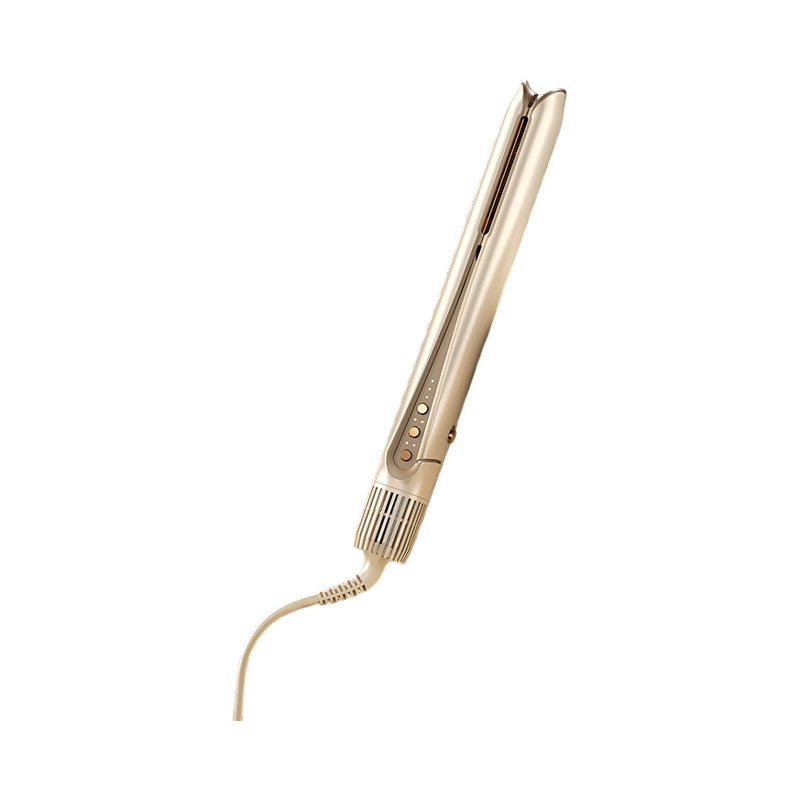
Plate and Barrel Material: The Most Important Technical Specification
The material that contacts your hair during styling has the greatest influence on heat distribution, friction, and overall hair health. Choosing the wrong plate or barrel material for your hair type is one of the most common causes of heat damage, frizz, and breakage.
Ceramic and Ceramic-Coated Plates
Ceramic plates heat evenly across their entire surface, eliminating the hot spots that cause localised heat damage. They also emit gentle far-infrared heat that warms the hair from the inside out rather than applying surface heat alone, reducing the risk of exterior heat damage while still effectively reshaping the hair's hydrogen bonds. Ceramic is the recommended material for fine, damaged, colour-treated, or chemically processed hair where gentle, even heat is essential. Ceramic-coated steel plates offer similar benefits at a lower cost, but the coating wears over time with heavy use — eventually exposing the harder steel beneath.
Tourmaline Ceramic
Tourmaline is a semi-precious mineral that, when crushed and infused into ceramic plates or barrels, generates negative ions during heating. These negative ions break down water molecules on the hair's surface more efficiently, reducing drying time and sealing the hair cuticle flat — which eliminates frizz and creates a smoother, shinier finish than standard ceramic alone. Tourmaline ceramic is the premium choice for frizzy, coarse, or dry hair that needs both heat styling and surface smoothing simultaneously.
Titanium Plates
Titanium heats faster than ceramic, reaches higher maximum temperatures, and maintains extremely stable heat under the resistance of thick, dense hair. These properties make titanium the preferred material for thick, coarse, or naturally very curly hair that requires higher temperatures and sustained heat to achieve a lasting style. The trade-off is that titanium transfers heat more rapidly to the hair than ceramic, meaning it carries a higher risk of damage if used at incorrect temperatures on fine or already-damaged hair.
Gold and Rose Gold Coatings
Gold-coated plates distribute heat evenly, reduce friction as hair passes through the plates, and have a naturally smooth surface that minimises snagging. While primarily a premium aesthetic choice, quality gold-coated plates genuinely reduce drag on the hair compared to uncoated surfaces, resulting in a smoother styling pass and less mechanical damage.
Temperature Range and Precision Control: Matching Heat to Hair Type
Temperature is the single most critical variable in determining whether a styling session improves or damages your hair. Too low and the style won't hold or set effectively, requiring multiple passes that increase cumulative heat exposure. Too high and the hair's protein structure is permanently denatured, causing brittleness, breakage, and loss of natural elasticity.
The recommended temperature ranges by hair type are:
- Fine, thin, or damaged hair: 130°C–160°C. Fine hair has a smaller diameter and less protein mass to buffer heat, making it the most vulnerable to damage. Staying below 160°C prevents the cuticle scales from lifting permanently.
- Normal or medium-thickness hair: 160°C–185°C. The most versatile temperature range, effective for both straightening and creating defined curls on average-thickness hair in good condition.
- Thick, coarse, or highly textured hair: 185°C–230°C. Thick hair requires higher temperatures to penetrate the hair shaft and break and reform the structural bonds responsible for the hair's natural texture. Temperatures above 230°C provide no styling benefit and cause rapid structural damage regardless of hair type.
- Colour-treated or chemically processed hair: 130°C–170°C maximum. Chemical processes open and weaken the cuticle, making treated hair significantly more vulnerable to heat damage than its natural thickness would suggest.
This is why multi-level precise temperature adjustment — rather than simple low/medium/high settings — is a critical feature in a quality straightener and curling iron. An intelligent temperature control chip that allows adjustments in 5°C or 10°C increments across a range from approximately 130°C to 230°C gives users genuine control over the heat they apply, reducing the risk of accidental overheating that single-setting or basic dial devices cannot prevent.
Heating Speed and Temperature Stability: Why They Matter Equally
Fast heating reduces the time from switching on to being ready to use — a convenience benefit that most users recognise. But temperature stability after reaching the set point is arguably more important and significantly less discussed.
Heating Speed
Quality hair straighteners and curling irons with ceramic or titanium plates reach operating temperature in 15–30 seconds from cold — significantly faster than older nichrome-element designs that took 1–2 minutes. Fast heating is beneficial not only for convenience but also because it reduces the period during which the tool is partially heated and inconsistently hot across its surface, a condition that can cause uneven heat application during the first pass.
Constant Temperature Technology
When hair is placed between the plates or wrapped around the barrel, it absorbs heat rapidly — causing a measurable temperature drop at the plate surface. In tools without active temperature compensation, this drop means the subsequent passes are applied at a lower temperature than the set point, requiring more passes to achieve the same result and increasing total heat exposure time.
Constant temperature technology — implemented through a PTC (positive temperature coefficient) heating element or a microprocessor-controlled feedback circuit — detects the temperature drop caused by hair contact and immediately increases power output to restore the set temperature within 1–3 seconds. The result is that every section of hair receives the same precise temperature regardless of hair thickness or section size, producing more consistent styling results with fewer passes and less cumulative heat exposure.
Plate Width and Barrel Diameter: Matching the Tool to Hair Length and Desired Style
Plate width (for straighteners) and barrel diameter (for curling irons) determine the size of the hair section that can be styled in each pass and the nature of the curl or wave produced.
Straightener Plate Width
- 19–25 mm narrow plates: Best for short hair (above the chin), fringe styling, and precision work around the hairline. Also useful for creating tight waves or defined S-bends using a curving technique with the straightener.
- 28–38 mm medium plates: The most versatile width for shoulder-length to mid-length hair. Suitable for both straightening and creating loose waves by curling sections around the plates.
- 40–50 mm wide plates: Designed for long, thick hair where larger sections can be processed per pass, significantly reducing total styling time. Less effective for detailed work or shorter hair.
Curling Iron Barrel Diameter
- 9–16 mm small barrel: Creates tight, defined spiral curls. Best for short hair or for adding texture and volume to fine hair. Also used for creating uniform ringlets on longer hair.
- 19–25 mm medium barrel: Produces classic bouncy curls and defined waves. The most popular size for shoulder-to-mid-length hair and the standard choice for everyday curl styling.
- 28–38 mm large barrel: Creates loose, flowing waves and soft body curls. Ideal for long hair and for achieving the popular "beachy wave" aesthetic. Also used to add subtle movement to hair rather than defined curls.
Safety Features: Protecting Your Hair and Your Home
Hair styling tools operate at temperatures high enough to cause severe burns on skin contact and fire risks if left in contact with flammable materials. Safety features are not optional extras — they are fundamental specifications that separate quality products from those that create real hazard risks.
- Auto shut-off: The most important safety feature on any hair styling tool. Quality devices automatically power off after 30–60 minutes of inactivity — preventing fire risks from tools left on accidentally. Look for models where the auto-off timer is clearly specified rather than vaguely described as "automatic safety shut-off."
- Cool-tip handle and barrel: The grip area and any non-heating section of the barrel should remain cool to the touch during operation. A cool-tip design prevents accidental burns when the user adjusts grip or positions the curl.
- Heat-resistant storage pouch or lock mechanism: Tools that can be folded, locked, or stored in a heat-resistant pouch immediately after use reduce the risk of burns to surfaces and skin from residual heat. A locking mechanism that secures the plates together also protects the plate surface during storage and travel.
- Swivel cord: A 360° swivel cord prevents the power cable from twisting during use — a common cause of cord damage that eventually exposes bare wires and creates an electrical hazard.
- Safety certifications: Confirm the device carries relevant safety certification for the destination market — CE marking for Europe, UL or ETL listing for North America, or equivalent. Uncertified styling tools may not have been independently tested for electrical safety or temperature accuracy.
Portability and Travel Compatibility
For users who travel frequently or want to maintain their styling routine away from home, portability specifications are as important as performance specifications.
- Dual voltage (100–240V): Essential for international travel. A dual voltage device works on any mains supply worldwide with only a plug adapter required — a single-voltage 220V device used in a 110V country without a transformer will not heat correctly, while the same device used in the opposite direction may overheat and cause a fire.
- Compact dimensions and integrated lock: A compact device with a physical lock that holds the plates or barrel closed during transit is far easier to pack and protects the plate surface from scratching against other items in a bag. Look for dimensions under 30 cm folded length and a total weight under 400 g for genuinely travel-friendly performance.
- Extended cord length: A power cord of at least 1.8 m is required for comfortable use in hotel bathrooms or home settings where the socket is some distance from the mirror. A swivel cord attachment at the device end prevents tangling during use.
Hair Type Compatibility Guide: Choosing the Right Combination of Features
Bringing all the above considerations together, the following guide matches hair type to the most important specifications to prioritise when choosing a straightener and curling iron combination:
| Hair Type | Recommended Plate Material | Ideal Temperature Range | Priority Features |
|---|---|---|---|
| Fine / thin | Ceramic or tourmaline ceramic | 130°C–160°C | Precise low-temp control; even heat distribution |
| Normal / medium | Ceramic or tourmaline ceramic | 160°C–185°C | Multi-level temperature adjustment; fast heat recovery |
| Thick / coarse | Titanium or ceramic titanium | 185°C–230°C | Constant temperature technology; wide plate or large barrel |
| Colour-treated / chemically processed | Tourmaline ceramic | 130°C–170°C max | Low maximum temperature; negative ion emission; gentle heat ramp |
| Frizzy / dry | Tourmaline ceramic | 160°C–185°C | Negative ion technology; smooth plate surface; float plate design |
| Natural / highly textured | Titanium or titanium ceramic | 200°C–230°C | Constant temperature; wide plates; high maximum temp |
Practical Checklist: What to Confirm Before Purchasing
Before finalising any hair straightener and curling iron purchase, use the following checklist to confirm all critical specifications are met:
- Plate or barrel material: Confirmed as appropriate for your hair type — ceramic for fine/damaged; tourmaline ceramic for frizzy/colour-treated; titanium for thick/coarse hair.
- Temperature range: Minimum temperature low enough for your hair's most sensitive state; maximum temperature appropriate for your hair's thickest or most resistant sections.
- Temperature precision: Multi-level incremental adjustment (ideally in 5°C–10°C steps) rather than basic high/medium/low settings.
- Constant temperature technology: Active heat recovery that restores set temperature within seconds of hair contact — not just fast initial heating.
- Auto shut-off: Confirmed auto power-off after 30–60 minutes, with the timeout period clearly stated in the product specification.
- Lock mechanism: Physical lock for safe, compact storage and travel, protecting plates or barrel from damage and preventing accidental opening in a bag.
- Dual voltage: 100–240V compatibility if you travel internationally — confirm this is built-in, not available only with a separate adapter purchase.
- Cord length and type: Minimum 1.8 m with a 360° swivel at the device end to prevent twisting and cable damage.
- Safety certification: CE, UL, ETL, or equivalent market-specific certification visibly displayed and verifiable on the manufacturer's documentation.
- Warranty period: A minimum 12-month warranty covering manufacturing defects in the heating element and temperature control system confirms the manufacturer's confidence in product quality.
 Previous

 +86-574-63982198
 +86-574-63982197
 No. 933, Lingxu 2nd Road, Binhai Economic Development Zone, Cixi, Zhejiang, China.