

 English
 中文简体
中文简体 Español
Content
- 1 Motor Technology: High-Speed vs. Traditional
- 2 Negative Ion Technology: Moisture Retention Science
- 3 Intelligent Heat Control: Preventing Thermal Damage
- 4 Hair Type Matching: One Size Does Not Fit All
- 5 Ergonomics and Daily Usability
- 6 Attachment Systems and Styling Versatility
- 7 Durability and Long-Term Value
- 8 Final Selection Checklist
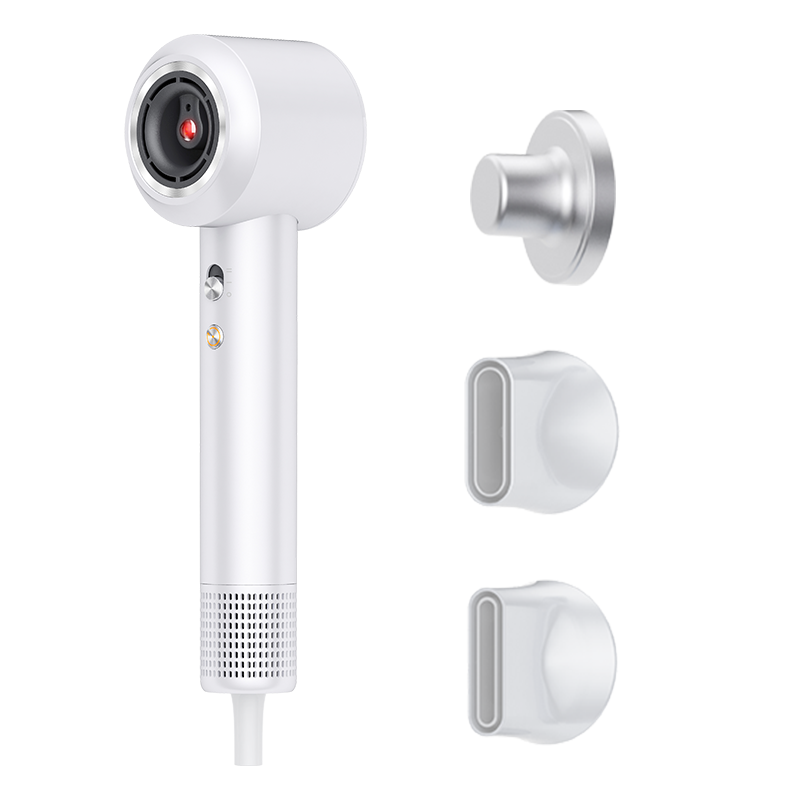
The best hair dryer is one that dries hair quickly through powerful airflow rather than extreme heat, minimizing thermal damage while preserving natural moisture. A high-speed motor operating at 100,000+ RPM, combined with negative ion technology, represents the current gold standard. For daily users, prioritize models with intelligent heat control and scalp protection features. Occasional users may focus on portability and basic ionic output. The ideal choice balances drying speed, hair health protection, and ergonomic design tailored to your specific hair type and styling routine.
Motor Technology: High-Speed vs. Traditional
The fundamental difference between premium and basic hair dryers lies in the motor. Traditional dryers use brushed motors spinning at approximately 20,000 to 25,000 RPM, relying heavily on high temperatures to evaporate water. High-speed dryers employ brushless digital motors that reach 100,000 to 110,000 RPM, generating airflow velocities exceeding 20 meters per second.
Performance Comparison
| Feature | Traditional Motor | High-Speed Brushless Motor |
|---|---|---|
| Motor Speed | 20,000 - 25,000 RPM | 100,000 - 110,000 RPM |
| Airflow Velocity | 8 - 12 m/s | 20 - 25 m/s |
| Drying Time (Shoulder-Length) | 12 - 18 minutes | 3 - 5 minutes |
| Primary Drying Method | High temperature | High-velocity airflow |
| Scalp Heat Exposure | High risk of burns | Minimal, comfortable |
| Motor Lifespan | 500 - 800 hours | 1,000+ hours |
The shift from heat-dependent to airflow-dependent drying is transformative. When a dryer relies on airflow velocity rather than temperature, the surface temperature of the hair shaft remains significantly lower. Research indicates that prolonged exposure to temperatures above 60°C causes irreversible damage to the hair cuticle. High-speed dryers operating at optimal airflow can achieve comparable drying efficiency at surface temperatures below 47°C, well within the safe zone for hair protein preservation.
Negative Ion Technology: Moisture Retention Science
Negative ion generators have become a standard feature in quality hair dryers, but their effectiveness varies significantly. These devices emit negatively charged ions that neutralize the positive static charge naturally present in wet hair. The result is measurable: ionic dryers reduce drying time by an additional 30-40% while leaving hair significantly smoother and less frizzy.
How Negative Ions Protect Hair Structure
Water molecules carry a positive charge when bonded to hair strands. Negative ions break these bonds at the molecular level, allowing water to evaporate more efficiently without forcing the hair cuticle to open excessively. This mechanism preserves the hair's natural moisture barrier — the hydrolipidic film that protects the cortex. Hair with intact moisture barriers exhibits 78% less breakage during combing and styling compared to heat-damaged strands.
Ion Output Benchmarks
- Basic ionic dryers: Output 1 to 3 million ions per cubic centimeter — adequate for short, straight hair
- Advanced ionic systems: Output 10 to 20 million ions per cubic centimeter — effective for medium to long hair
- Premium ionic generators: Output 50+ million ions per cubic centimeter — optimal for thick, curly, or chemically treated hair
For maximum benefit, look for dryers that combine negative ion emission with controlled heat distribution. Ions alone cannot compensate for excessive thermal exposure. The synergy of high-velocity airflow, moderate temperature, and dense ion output creates the optimal drying environment for healthy hair.
Intelligent Heat Control: Preventing Thermal Damage
Uncontrolled heat is the primary cause of hair dryer-related damage. The hair shaft begins to suffer structural degradation at sustained temperatures above 60°C. At 80°C, the keratin proteins that form hair's structural backbone begin to denature. At 100°C and above, water trapped inside the hair cortex turns to steam, creating microscopic bubbles that permanently weaken the strand — a phenomenon known as "bubble hair".
Temperature Monitoring Technologies
| Technology | Measurement Method | Response Time | Protection Level |
|---|---|---|---|
| Basic Thermostat | Heating element temperature | 5 - 10 seconds | Low |
| NTC Thermistor | Exit air temperature | 1 - 2 seconds | Moderate |
| Infrared Sensor Array | Hair surface temperature | 0.1 - 0.5 seconds | High |
| AI Adaptive Control | Multi-point hair and air temp | Real-time | Very High |
The most advanced systems use microprocessor-controlled algorithms that adjust heating element output up to 40 times per second based on real-time temperature readings. This precision prevents the temperature spikes that occur when airflow is momentarily blocked — such as when styling sections close to the head. For daily users, this technology is not a luxury but a necessity for maintaining hair integrity over months and years of regular drying.
Hair Type Matching: One Size Does Not Fit All
Hair thickness, texture, and condition dramatically influence dryer selection. Using a high-heat dryer designed for thick hair on fine, damaged strands accelerates breakage. Conversely, an underpowered dryer on dense, curly hair extends drying time and increases cumulative heat exposure.
Recommended Specifications by Hair Type
- Fine or thinning hair: Prioritize low-temperature settings below 50°C, lightweight design under 400 grams, and high ion output to minimize mechanical stress during styling
- Medium straight hair: A balanced dryer with three heat settings and two speed settings provides sufficient versatility for everyday styling without over-engineering
- Thick or coarse hair: Requires minimum 1,800 watts of power, high airflow velocity above 20 m/s, and wide nozzle attachments to distribute heat across larger sections efficiently
- Curly or textured hair: Benefits from diffuser attachments with long prongs, cool shot buttons for set-and-hold styling, and dryers that maintain consistent temperature to prevent disrupting curl patterns
- Color-treated or chemically processed hair: Demands maximum heat protection with intelligent temperature control, ceramic or tourmaline-coated components for even heat distribution, and ionic technology to seal the lifted cuticle
A dryer with scalp protection mode is particularly valuable for users with sensitive skin or those experiencing hair loss. This feature automatically reduces temperature when the dryer is held close to the roots, preventing the discomfort and potential follicle damage associated with concentrated hot air.
Ergonomics and Daily Usability
A technically superior dryer becomes burdensome if it causes arm fatigue or is difficult to maneuver. The average drying session lasts 5 to 15 minutes, during which the user performs hundreds of repetitive motions. Ergonomic design directly impacts both comfort and styling precision.
Ergonomic Design Priorities
- Weight distribution: The ideal dryer weighs between 300 and 500 grams with the motor positioned to balance the unit in the hand, reducing wrist strain during extended use
- Handle geometry: A non-slip, slightly textured grip with a circumference between 10 and 12 centimeters accommodates most hand sizes comfortably
- Cord length and flexibility: A 2.5 to 3 meter cord with 360-degree swivel rotation prevents tangling and provides adequate reach for bathroom setups
- Noise levels: High-speed motors can produce sound levels of 75 to 85 decibels. Look for models with aerodynamic noise reduction if you dry hair early in the morning or share living space
- Filter accessibility: A removable, washable rear filter extends motor life by preventing lint and dust accumulation — a feature that should require no tools for cleaning
The center of gravity is an often-overlooked factor. Dryers with motors mounted in the handle rather than the head feel lighter during use because the weight sits closer to the pivot point of the wrist. This design choice can reduce perceived weight by up to 25% without changing the actual mass of the unit.
Attachment Systems and Styling Versatility
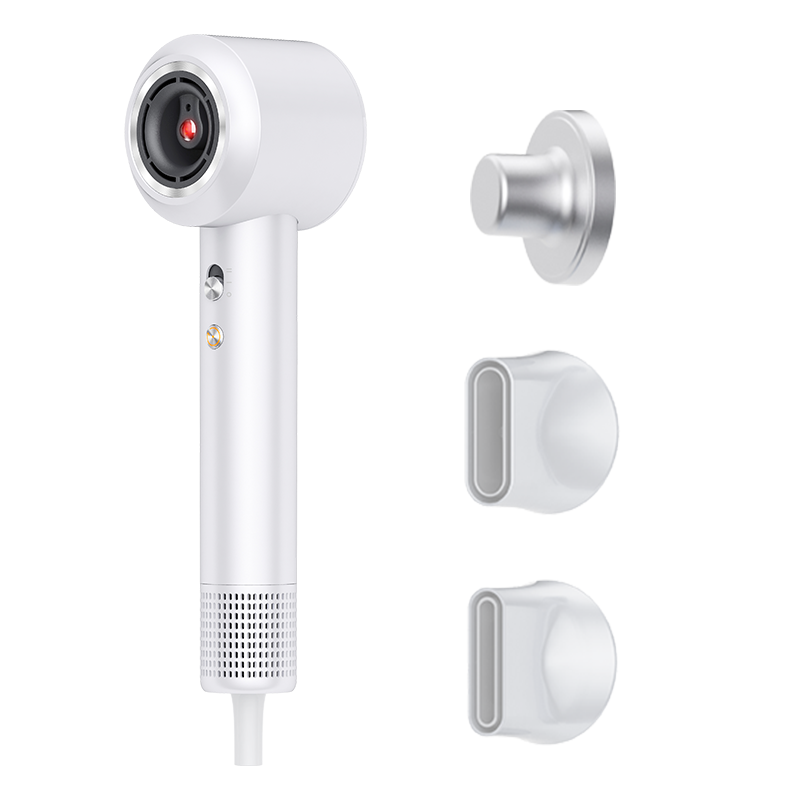
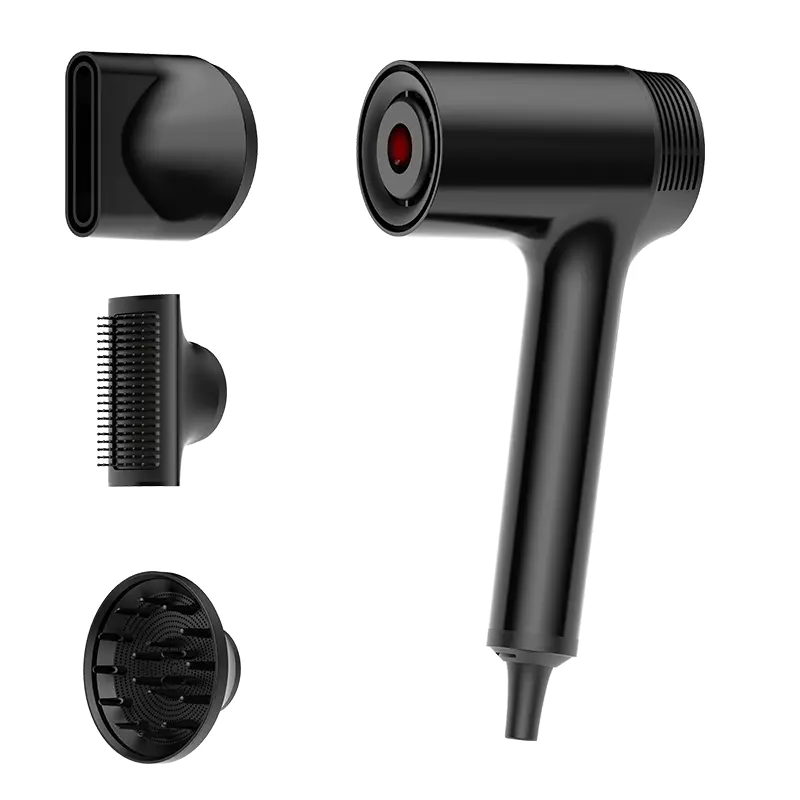
Nozzle and diffuser attachments are not mere accessories — they fundamentally alter how airflow interacts with hair. Magnetic attachment systems have largely replaced clip-on or screw-on mechanisms, offering secure, tool-free connection that withstands the vibration of high-speed motors.
Essential Attachments and Their Functions
| Attachment | Airflow Effect | Best For |
|---|---|---|
| Concentrator Nozzle | Narrows airflow to a focused stream | Precision styling, straightening, smoothing |
| Wide Diffuser | Spreads airflow across a broad area | Enhancing natural curls and waves |
| Gentle Air Attachment | Diffuses and softens airflow velocity | Fine hair, sensitive scalps, finishing |
| Comb Attachment | Directs airflow through teeth | Stretching and detangling textured hair |
The cool shot button deserves particular attention. This feature blasts room-temperature air to set hairstyles by rapidly cooling the hair shaft, which helps hydrogen bonds reform in the desired shape. A truly effective cool shot should reduce air temperature to under 30°C within 2 seconds of activation. Delayed or weak cool shots fail to provide the setting power needed for lasting styles.
Durability and Long-Term Value
A quality hair dryer should last 5 to 10 years with regular use. The most common failure points are the motor bearings, heating element connections, and power cord strain relief. Brushless motors eliminate carbon brush wear — the primary failure mode in traditional dryers — extending operational life by 3 to 5 times.
Indicators of Build Quality
- Reinforced power cord: A thick, double-insulated cord with strain relief at both ends resists the daily bending and pulling that causes internal wire fractures
- Thermal cutoff protection: Automatic shutoff when internal temperatures exceed safe thresholds prevents fire hazards and motor damage
- Sealed motor housing: Prevents moisture and hair product residue from entering the motor chamber, which is the leading cause of premature failure in bathroom environments
- Removable filter design: Allows regular cleaning that maintains airflow efficiency and prevents the motor from working harder than necessary
While initial cost is a consideration, the cost-per-use calculation often favors premium models. A dryer used daily for 5 years will operate approximately 1,800 times. Spreading the investment over this usage cycle reveals that durability and hair protection features provide substantial long-term value compared to replacing cheaper units every 12 to 18 months.
Final Selection Checklist
Before making your final decision, verify that your selected model meets these non-negotiable criteria:
- Does the motor achieve 100,000+ RPM for airflow-based drying rather than heat-dependent evaporation?
- Does it include negative ion generation with measurable output levels appropriate for your hair type?
- Is there an intelligent heat control system that prevents temperatures from exceeding 60°C at the hair surface?
- Does the weight and balance allow for comfortable 10+ minute styling sessions without arm fatigue?
- Are the attachments and filter designed for tool-free operation and easy maintenance?
A hair dryer that satisfies all five criteria will not only dry your hair faster but will actively protect your hair and scalp with every use. The best hair dryer is ultimately an investment in hair health — delivering professional results while preserving the natural strength, moisture, and shine that heat damage gradually destroys.
 Previous

 +86-574-63982198
 +86-574-63982197
 No. 933, Lingxu 2nd Road, Binhai Economic Development Zone, Cixi, Zhejiang, China.