

 English
 中文简体
中文简体 Español
Content
- 1 Where the Difference Comes From: Motor Architecture
- 2 Brushless vs Traditional: A Practical Comparison
- 3 Why Air Speed Matters More Than Heat
- 4 Noise, Weight and the Details Users Notice After a Month
- 5 Matching the Dryer to the User
- 6 What to Verify Before You Buy or Source
- 7 Common Mistakes to Avoid
- 8 Where a Brushless Hair Dryer Fits in a Product Line
- 9 Questions Buyers Ask
Take a stopwatch to a shoulder length head of wet hair and the numbers separate quickly. A conventional AC hair dryer moves air at roughly 8 to 12 meters per second and needs six to nine minutes to finish the job, most of that time with the heater running. A brushless hair dryer spins its impeller between 90,000 and 110,000 rpm and pushes 20 to 26 meters per second of air, which brings the same job down to three to five minutes and lets the heater work less.
The conclusion first: if hair is dried daily, if heat damage is a real concern, or if the dryer runs for hours a day in a salon or hotel, a brushless model is the better purchase. If the tool is used twice a month and the budget is fixed, a conventional dryer still does the job. Everything below explains where the difference comes from, which specifications decide real performance, and what to check before buying or sourcing one.
Where the Difference Comes From: Motor Architecture
A brushed motor conducts current through carbon brushes that press against a rotating commutator. That contact is mechanical, so it wears. Friction, sparking and brush dust all shorten service life, and the brushes eventually need replacing. Efficiency typically sits in the 50 to 70 percent range, with the rest leaving the tool as heat and noise.
A brushless motor removes the contact entirely. The rotor carries permanent magnets, and the stator windings are switched electronically by a driver board, so the magnetic field rotates without anything physically touching. Efficiency often climbs above 85 percent, which means more of the electrical input becomes airflow instead of waste heat, and the same output can come from a smaller, lighter motor.
Two details decide whether that theory survives real use. The first is the bearing arrangement; ball bearings tolerate speed and heat better than sleeve bearings and are the usual choice above 80,000 rpm. The second is the driver board. In practice a brushless dryer fails more often from a voltage spike or dust on the electronics than from the motor itself, so potted boards, conformal coating and a sealed air path matter as much as the motor rating on the label.
Brushless vs Traditional: A Practical Comparison
The ranges below are the ones that appear most often in published specifications for handheld dryers. Treat them as planning numbers rather than guarantees, and always test a sample before committing to a production order.
| Factor | Brushed AC dryer | Brushless dryer | What it means in use |
|---|---|---|---|
| Motor drive | Carbon brushes on a rotating commutator | Electronic commutation, no contact | Fewer wear parts and no brush dust |
| Impeller speed | About 13,000 to 25,000 rpm | About 90,000 to 110,000 rpm | Speed converts to air pressure instead of heat |
| Air speed at nozzle | 8 to 12 meters per second | 20 to 26 meters per second | Water is pushed off the hair rather than evaporated |
| Drying time, shoulder length hair | 6 to 9 minutes | 3 to 5 minutes | Less cumulative heat exposure per session |
| Noise at one meter | 78 to 85 dBA | 62 to 72 dBA | Conversation stays possible; tone is higher but less harsh |
| Handheld weight | 500 to 650 grams | 350 to 500 grams | Less wrist fatigue during long styling sessions |
| Quoted motor life | 300 to 1,000 hours | 1,000 to 2,000 hours or more | Lower service cost for salons and hotels |
| Unit cost | Lower | Higher | Justified when the tool is used often or professionally |
Why Air Speed Matters More Than Heat
Water on wet hair does not need high heat to leave; it needs moving air. Raising air speed shortens drying time, and that shortens the period during which the cuticle stays hot and swollen. A brushless dryer can usually finish the job on a medium heat setting that a conventional dryer can only reach at maximum, and it is that repeated maximum heat setting, not the motor, that causes most of the damage people complain about.
Temperature control is where the two architectures separate clearly. A sensible target is an outlet temperature that stays between roughly 60 and 80 degrees Celsius at the nozzle, with the heater cycling rather than running at full power for the whole session. Smart models sample the outlet temperature many times per second and correct it, keeping variation within a couple of degrees. If a supplier cannot state a tolerance for that figure, treat the temperature claim as marketing copy.
Whether a high speed dryer is genuinely better for hair is a question worth reading up on separately, because the answer depends on how the tool is used rather than on the motor alone. A closer look at high speed versus regular hair dryers covers that comparison in more detail.
Noise, Weight and the Details Users Notice After a Month
Noise comes from three places: motor whine, turbulence at the impeller tips, and vibration transmitted into the housing. A brushless motor turns far faster than a brushed one, so its tone sits higher in frequency. Perceived loudness still drops, because the higher tone is less harsh than the low growl of a brushed motor under load, and because a balanced impeller and a smooth internal air path reduce turbulence.
In published figures, a well designed brushless unit lands around 62 to 72 dBA at one meter, against 78 to 85 dBA for a typical AC dryer measured the same way. Motor mounts, an insulated inner shell and a short air path do most of that work, which is why two dryers with identical motors can differ by five decibels or more.
Weight follows the motor. Brushless outer rotor designs are compact and light, so handheld weights settle between roughly 350 and 500 grams, and the balance point moves toward the handle. For anyone drying long hair, that matters more than the top speed figure on the box.
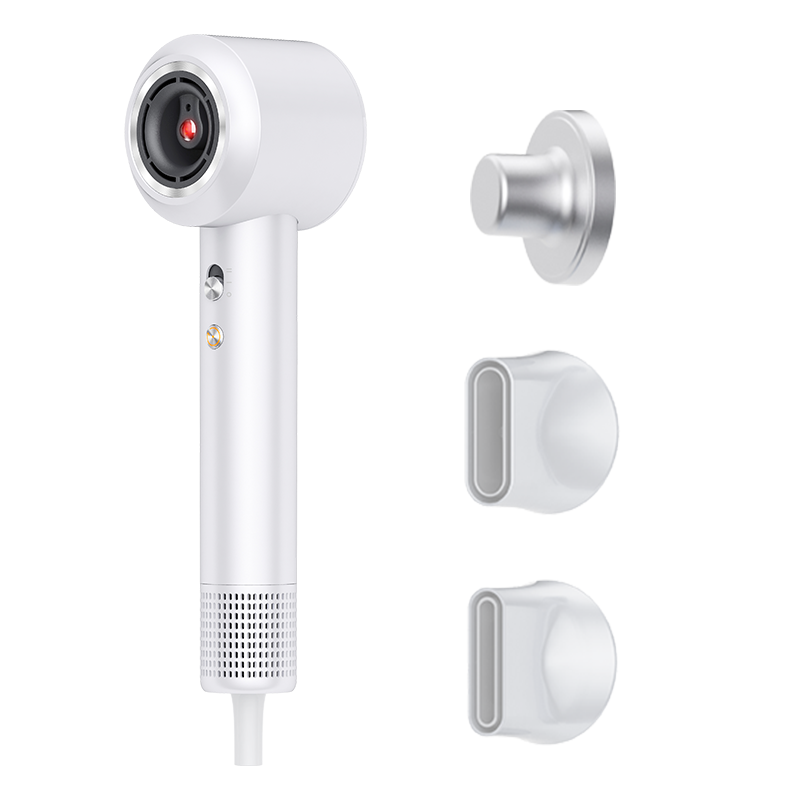
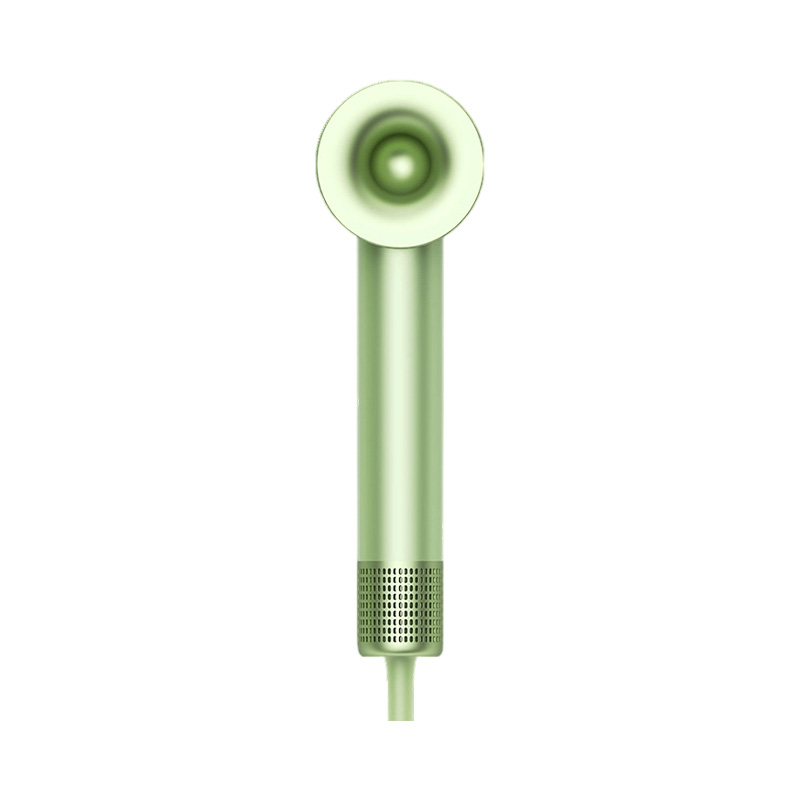 KH-800A High-Speed Noise-Reducing Hair DryerA 380g lightweight model with a 110,000 RPM motor, NTC monitoring and 600 million negative ions, matching the lightweight high-speed focus discussed here.View Product →
Matching the Dryer to the User
Most manufacturers now organise their catalogue around airflow rather than wattage, and the high speed hair dryer range here follows the same logic. The right configuration depends on how the tool will actually be used.
- Daily home drying: medium heat with high airflow, a body between 350 and 450 grams, and a magnetic nozzle for quick direction changes without burning a hand.
- Salon and multi-client use: motor life and cable length matter more than peak speed; a 1,000 hour or higher rating and a removable filter keep the tool in service between clients.
- Travel: a short folding body, a compact nozzle and dual voltage, with the whole unit staying under 400 grams in a bag.
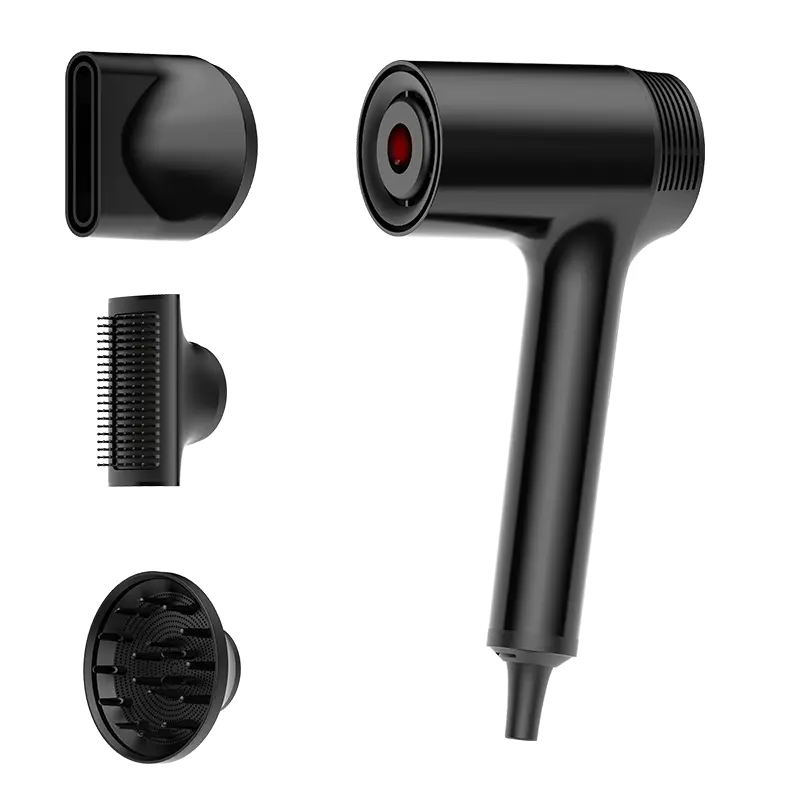
- Styling in one tool: one handle with a concentrator, a diffuser and two barrel sizes replaces three or four separate appliances for users short on shelf space.
- Care routines: a fixed low setting around 50 to 60 degrees Celsius for the finishing pass, plus scalp massage after drying to work the roots.
For the travel and compact end of that list, a portable model with real time monitoring removes the usual compromise between size and drying power.
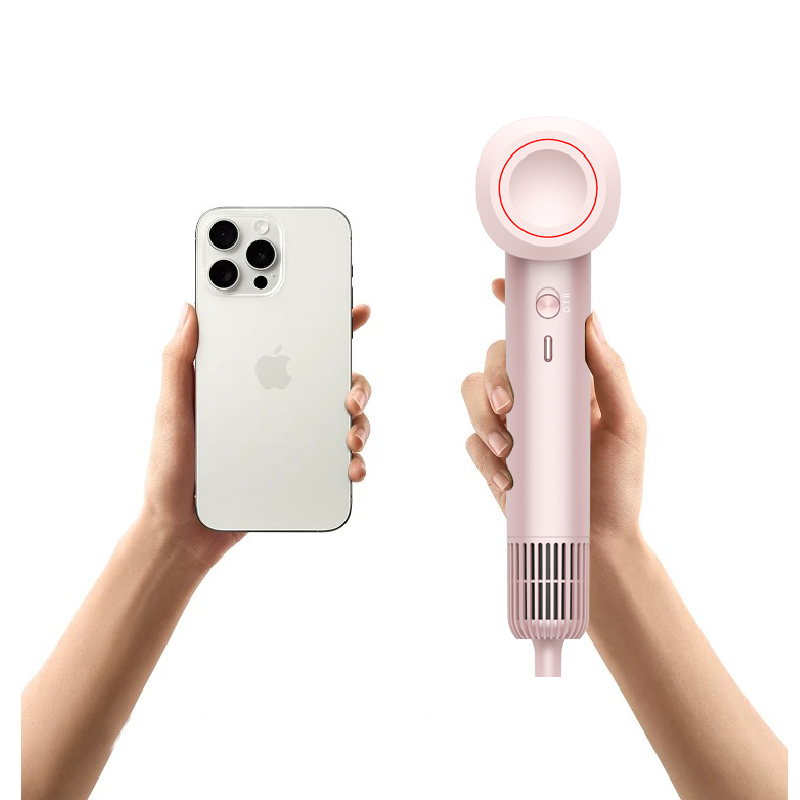 KH-807 Portable High-Speed Hair DryerDual-voltage 1400W portable dryer with 200 million negative ions and low-noise airflow, suited to compact travel drying where speed and hair protection matter.View Product →
What to Verify Before You Buy or Source
Specification sheets are written to look complete, so it pays to know exactly which figures to demand and how they should be measured.
- Air speed at the nozzle in meters per second, measured with the supplied nozzle fitted, not in the open impeller.
- Outlet temperature and its tolerance, ideally within 3 degrees Celsius, plus the sampling rate of the thermistor.
- Noise in dBA with the measuring distance stated, usually one meter, at a defined speed setting.
- Weight of the complete unit, including cable, and the balance point relative to the handle.
- Motor life in hours and the bearing type, because ball bearings behave differently from sleeve bearings at speed.
- Filter design and how it is cleaned or replaced, since a blocked intake raises temperature and shortens motor life.
- Certification for the destination market, covering both electrical safety and materials restrictions.
- Voltage and frequency variants, plug standards and cord length for each market you plan to sell into.
- For OEM and ODM projects, tooling ownership, minimum order quantity, sample lead time and spare parts availability after launch.
Common Mistakes to Avoid
- Buying on rpm alone. A 90,000 rpm motor with a well matched impeller can outperform a 110,000 rpm unit with a restrictive air path.
- Ignoring heat control. Speed without a stable, accurate temperature simply dries hair faster at a damaging temperature.
- Assuming brushless always means silent. Mounting, airflow and impeller balance decide noise more than the motor topology does.
- Skipping filter maintenance. Dust on the intake is the most common cause of overheating complaints within the first year.
- Overstating ion claims. Negative ions reduce static and improve smoothness; they do not repair damaged hair or replace a heat setting.
Where a Brushless Hair Dryer Fits in a Product Line
For brands and importers, the brushless format has moved from premium option to baseline expectation. Ningbo Youming Electrical Appliance Co., Ltd., which publishes highspeedhairdryer.net, has been developing small appliances since 2010 and now lists more than 100 products across environmental and personal care categories. The company holds national high tech enterprise status, works to ISO 9001 quality management, and operates a facility of more than 70,000 square meters with in house injection moulding, stamping and SMT board lines.
Its personal care catalogue runs from the KH800 series with noise reduction and smart monitoring, through the KH802 multi function models and the KH803 intelligent temperature range, to the KH861 scalp massage comb. Production is offered on an OEM and ODM basis, with exports to North America, South America, Europe and Asia, which means most projects start from a platform model and then move to housing, airflow and firmware customisation.
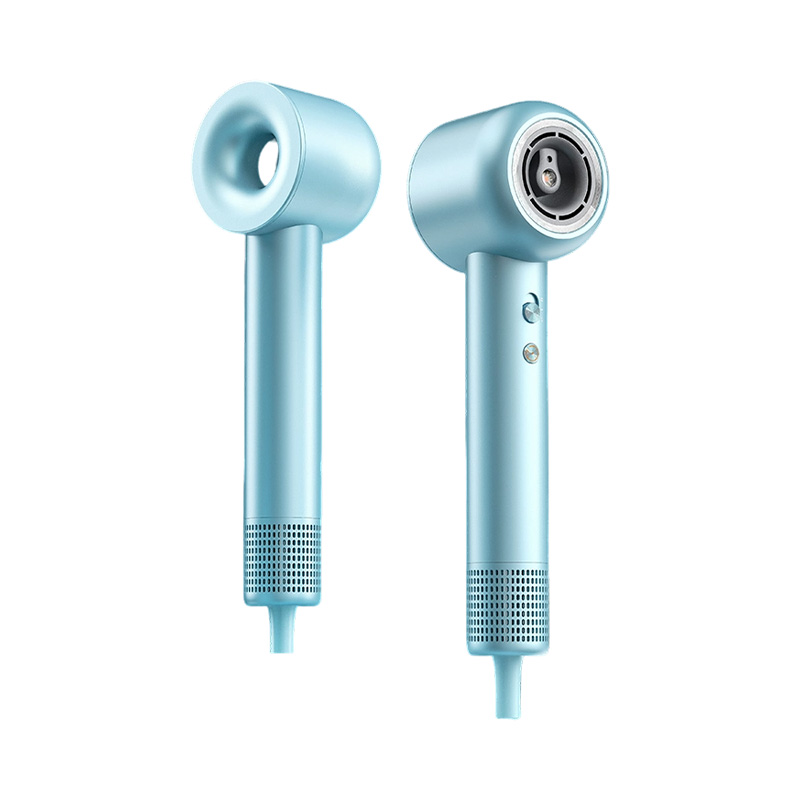 KH-803A AI High-Speed Hair DryerAI moisture sensing adjusts temperature and airflow, while the 1000-hour motor life and 380g build make it relevant when comparing intelligent control and rated durability.View Product →
Questions Buyers Ask
How long does a brushless hair dryer motor last?
Published ratings usually sit between 1,000 and 2,000 hours. In practice the bearings and the driver electronics often reach their limit before the motor winding does, so the quality of the PCB protection and the filter design is worth as much attention as the hour figure.
Is a brushless dryer always quieter?
No. A tight air path or a rigid motor mount can make a brushless unit as loud as a well built AC model at the same airflow. Compare dBA figures measured at a stated distance, and if the distance is not stated, ask for it.
Do I need 110,000 rpm?
Not necessarily. Nozzle airflow in meters per second is the number that decides drying time. A 90,000 rpm motor with a clean air path can beat a faster motor that chokes on its own grille, and it will usually run quieter and cooler.
A brushless hair dryer is ultimately a motor decision with consequences that show up in heat exposure, sound, weight and service life. Judge a model by airflow at the nozzle, temperature stability, measured noise and motor rating, then confirm those figures with a sample rather than a brochure. Buyers who work through that short list once will rarely go back to a brushed motor for daily use.


 +86-574-63982198
 +86-574-63982197
 No. 933, Lingxu 2nd Road, Binhai Economic Development Zone, Cixi, Zhejiang, China.