

 English
 中文简体
中文简体 Español
Content
A wash and blow-dry on fine hair can be finished in four minutes, and that speed is exactly the problem. You end up with dry hair and a flat crown, because the dryer that tames a friend's thick waves pushes too much heat into too little hair. The best hair dryer for thin fine hair is rarely the most powerful model on the shelf. It is the unit that moves a large volume of air at a moderate, tightly held temperature, weighs little enough that you can aim the nozzle at the roots for several minutes, and finishes with a cold shot that genuinely feels cold.
Three Numbers Decide the Result
When you compare two dryers, look at air speed at the nozzle, maximum outlet temperature and total weight before you look at anything else. Wattage tells you how much electricity the motor draws, not how quickly water leaves your hair. A high speed brushless motor can produce a stronger airstream than a conventional motor while drawing less power, which means less heat sitting on the strand for less time.
The table below sets out typical ranges for both categories. Treat them as screening criteria for a first shortlist rather than as guarantees, then confirm the real numbers with a sample test on your own hair.
| Parameter | Conventional motor dryer | High speed brushless dryer |
|---|---|---|
| Air speed at the nozzle | 10 to 14 meters per second | 20 to 25 meters per second |
| Rated power | 1800 to 2200 watts | 1200 to 1600 watts |
| Heat setting needed for fine hair | Medium to high | Low to medium |
| Temperature stability | Varies as the element cycles | Held by a sensor, small variation |
| Weight with cord | 550 to 750 grams | 400 to 550 grams |
| Noise at one meter | 70 to 80 dB | 60 to 72 dB |
| Cold shot | Often ambient air only | Cooled air with strong airflow |
| Root lift on fine hair | Limited | Easier to build and hold |
Why Air Speed Matters More Than Heating Power
Water leaves hair when the air around the strand is drier than the strand itself. If the airstream is slow, the layer of air next to your hair becomes saturated and drying stalls, so you reach for more heat to compensate. A fast airstream replaces that saturated layer continuously, and evaporation carries on at a lower temperature. This is the most useful principle for fine hair, because a fine strand has very little mass and its temperature climbs quickly. Strands measuring under roughly 60 microns across heat up several times faster than coarse hair under identical airflow.
The practical routine follows from that: highest speed setting, medium heat, nozzle 15 to 20 centimeters from the head, and keep the dryer moving. Fine hair usually dries fully in three to five minutes this way. For more background on where the efficiency gain comes from, this comparison of high speed and regular dryers walks through the motor and airflow differences in detail.
Where Fine Hair Is Actually Damaged
Heat damage begins long before hair feels hot or smells scorched. Once the water inside the cortex approaches boiling point, it turns to steam, forms bubbles inside the strand, and the cuticle lifts until the fibre snaps at its weakest point. Fine hair has less volume to absorb heat and less cuticle structure to spare, so the safe window is narrow. As a working rule, keep the air leaving the nozzle between roughly 50 and 60 degrees Celsius, and never let the scalp feel hot for more than a second or two.
On a specification sheet, the features worth paying for are a thermistor or sensor near the outlet, a control loop that adjusts power as airflow changes, and at least three distinct heat steps so you can work between settings instead of jumping from cool to hot. A stable 55 degree output dries hair faster in practice than a 90 degree blast, because you can hold the nozzle closer without discomfort.
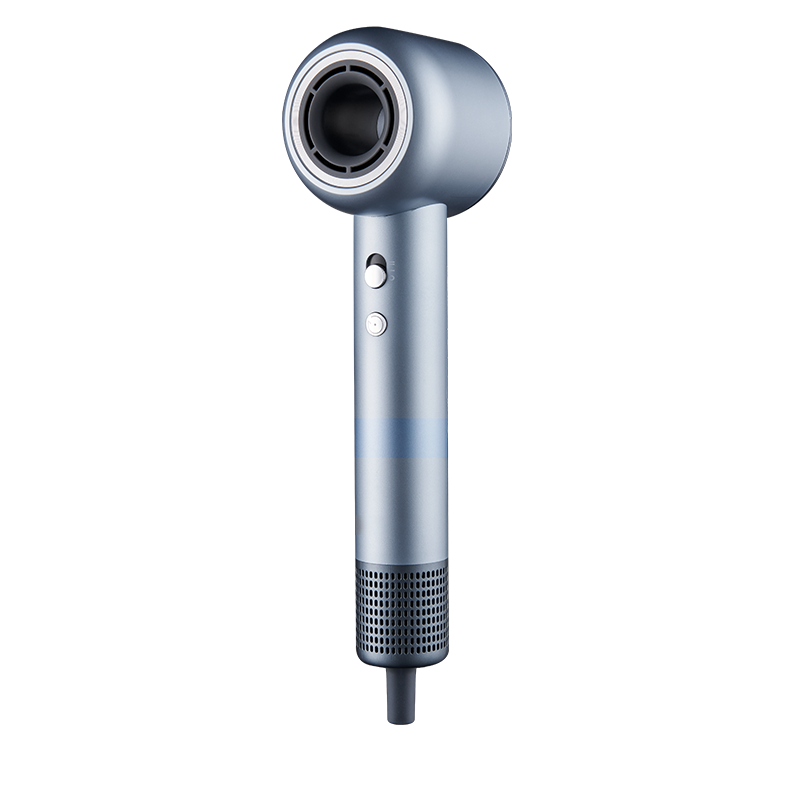
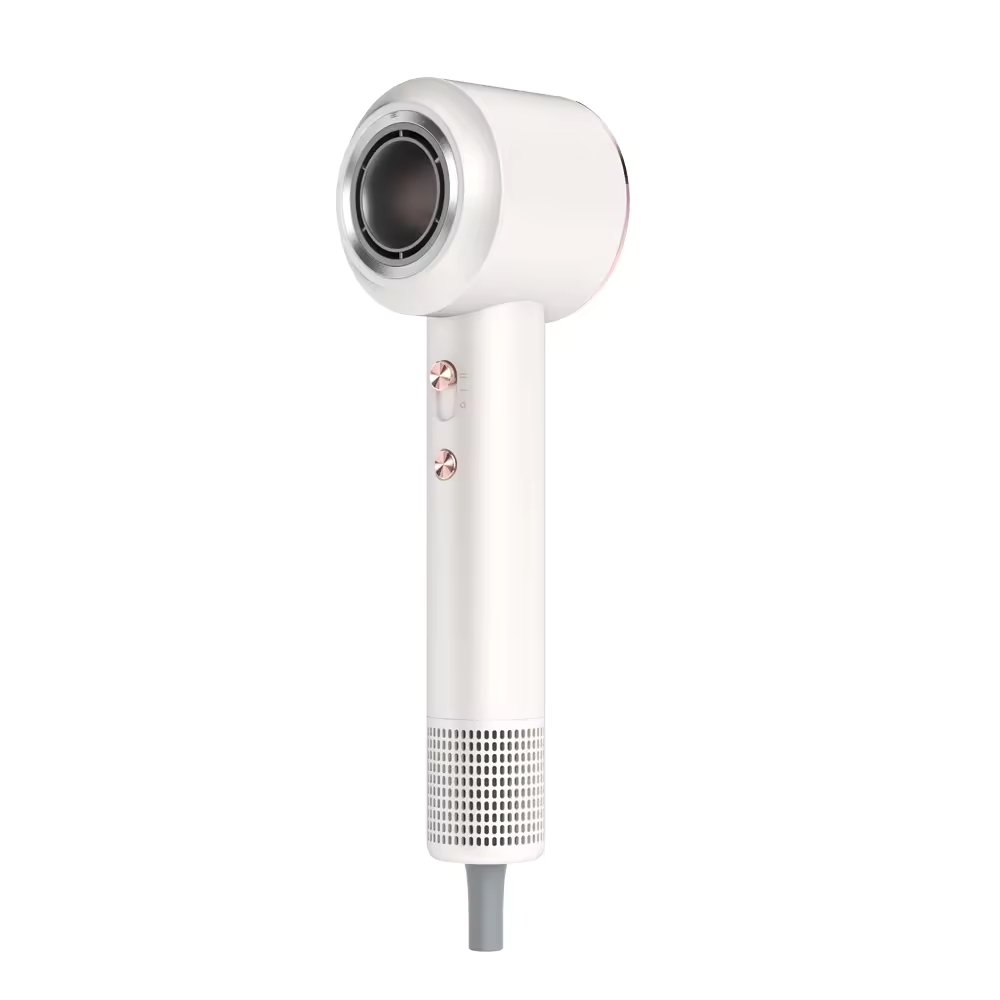
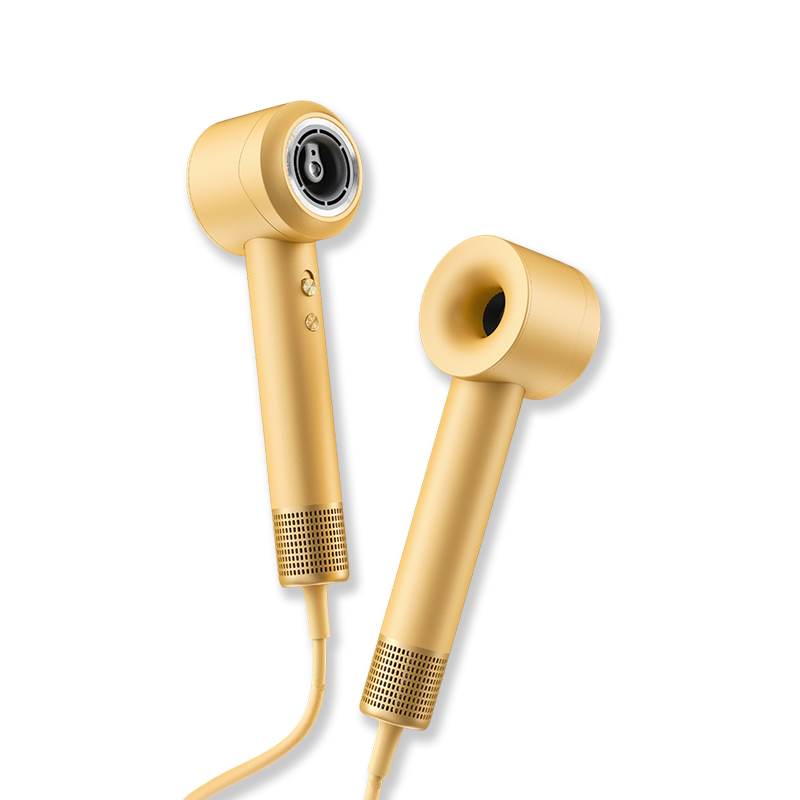 KH-803C Smart temperature control hair dryerThe KH-803C Smart Temperature Control Hair Dryer features intelligent temperature control technology that dynamically adjusts the airflow temperature based on the real...View Product →
Static, Flyaways and Negative Ion Claims
Fine hair with low density shows every flyaway. Friction between brush, comb and strand builds a positive static charge that makes hair cling to the face and float above the crown. A negative ion generator in the airflow neutralises part of that charge, so the cuticle sits flatter and the hair feels smoother after drying. The effect is real but modest, and it is not standardised: two dryers can both claim millions of negative ions with very different measured outputs, and the figure in a brochure says little about the density of ions actually reaching your hair.
Judge the feature by feel across a whole drying session rather than by the first ten seconds. On fine hair, a genuinely useful ion output shows itself as less frizz at the ends, fewer strands standing along the part line, and a comb that glides without tugging.
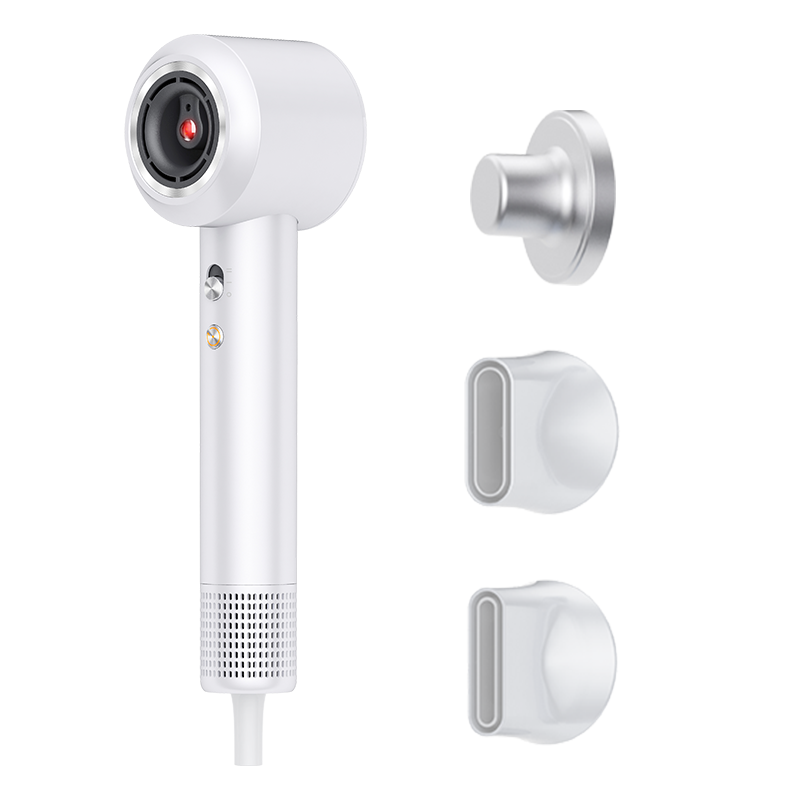
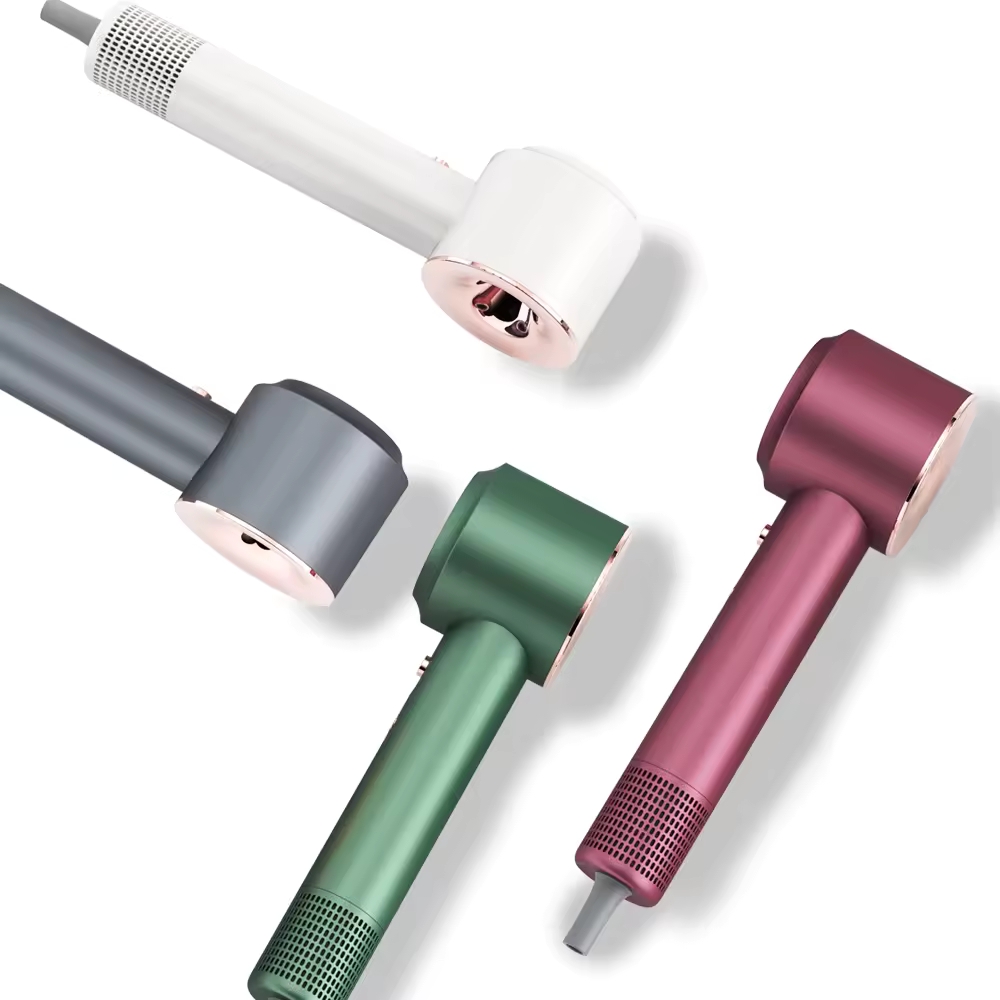 KH-801B The Negative Ion Nourishing High-Speed Hair DryerThe Negative Ion Nourishing High-Speed Hair Dryer is equipped with advanced negative ion technology, which can naturally release up to 200 million negative ions unde...View Product →
Weight, Balance and Nozzle Geometry
Holding a dryer at shoulder height tires your forearm faster than most people expect. A heavy unit feels fine for 60 seconds and burdensome after eight minutes, which is roughly how long a careful blow-dry on fine hair takes when you are building volume at the roots. Look for a unit under about 500 grams with the cord attached, with the motor positioned so the balance point sits in your palm rather than at the front of the barrel. Lightweight portable models in the mini high speed class exist for exactly this reason and double as travel tools.
The nozzle matters just as much. A narrow concentrator with a slot of 6 to 8 millimeters directs a tight band of air at the root, and that is how volume is created on fine hair. Wide nozzles spread the airstream and flatten the crown. A diffuser run on the lowest speed setting lifts and separates strands without disturbing the cuticle. Avoid comb attachments with stiff teeth; they drag on fine hair and encourage breakage at the mid lengths.
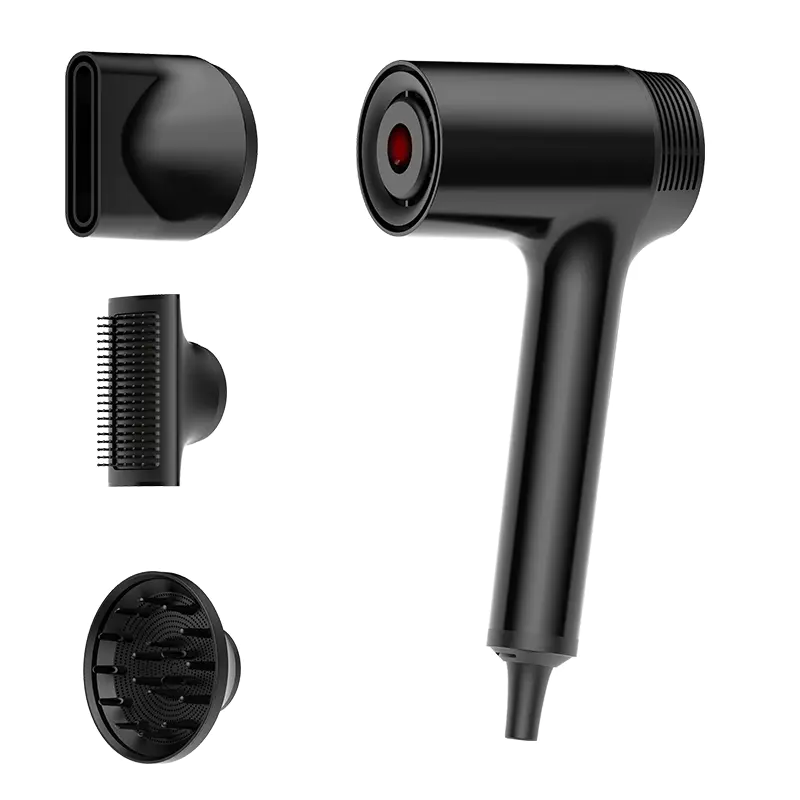
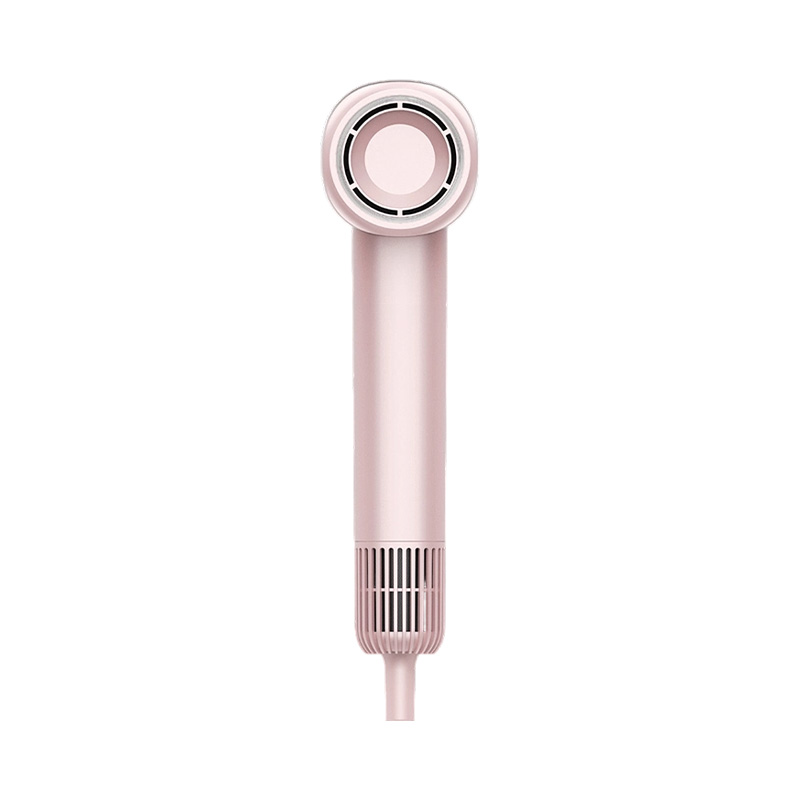 KH-807 Mini-high speed real-time monitoring of smart hair dryerThis compact smart hair dryer integrates high-speed airflow technology and real-time monitoring functions, which enables dynamic tracking of temperature, wind speed an...View Product →
A Practical Checklist Before You Buy
- Confirm the air speed figure rather than the wattage, and ask how it was measured.
- Check that the lowest heat setting is genuinely low, not a marketing name for medium.
- Weigh the unit with the cord attached; anything above 600 grams is hard work over a long styling session.
- Test the cold shot; if it delivers warm air after 30 seconds, it will not set volume.
- Look for a concentrator slot under 8 millimeters and a diffuser with adjustable airflow.
- Confirm a cord of at least 1.8 meters with a rotating joint, so the dryer does not twist in your hand.
- Inspect the intake filter; fine hair sheds lint quickly and a clogged grill raises motor temperature.
What to Ask an OEM or ODM Partner
If you are sourcing fine hair dryers for a private label range, the questions change. Ask for the motor type and bearing specification, the heater element type, the measured temperature curve at the outlet across a ten minute run, and the exact conditions used for the noise test, including distance and background level. Request certificate file numbers for the markets you sell into, and ask how the factory controls unit to unit variation. A dryer that runs at 58 degrees on a sample bench and 72 degrees in mass production will generate returns and reviews you cannot delete.
A supplier with its own design team and laboratory usually answers these questions with data rather than adjectives. Ningbo Youming Electrical Appliance, the company behind this site, builds dryers under OEM and ODM hair dryer programs from a facility of more than 70,000 square meters in Cixi, Zhejiang, and describes itself as a national high tech enterprise working to ISO 9001. Its catalogue covers noise reduced, negative ion, temperature controlled and portable models, alongside multi functional stylers, straighteners and a scalp massage comb, which is useful when one supplier has to cover a full hair care shelf.
The short version: buy air speed, not wattage; hold the temperature down; check the weight in your hand; and finish with the cold shot. On fine hair those four habits do more for volume and condition than any single feature on a specification sheet. Test any candidate dryer on your own hair, at the speed and heat you would genuinely use, for a full week before you commit.


 +86-574-63982198
 +86-574-63982197
 No. 933, Lingxu 2nd Road, Binhai Economic Development Zone, Cixi, Zhejiang, China.