

 English
 中文简体
中文简体 Español
Content
- 1 Why Long Hair Behaves Differently Under a Brush
- 2 Barrel Size, Bristle Type and Hair Length
- 3 Drying Time by Brush Type
- 4 The Five Brush Types Worth Keeping for Long Hair
- 5 How the Brush and the Dryer Share the Work
- 6 Where the Minutes Actually Go
- 7 Heat, Moisture and Where to Stop
- 8 A Buying Checklist for Long Hair
- 9 Matching the Brush to the Tool You Already Own
If your hair falls below your shoulder blades, the brush that does the most work in a blowout is a ceramic round brush with a 38 mm to 50 mm barrel and a mix of boar and nylon bristles. That combination carries heat into the section, grips a long strand without letting it slip, and smooths the cuticle while the hair is still warm and slightly damp.
Long hair is expensive to dry. A 45 cm head of medium density hair can hold 15 to 25 grams of water after towel drying, and every extra pass with a hot barrel costs time and cuticle condition. The brush decides how many passes you need, which is why it matters more than the finishing spray you reach for at the end.
Why Long Hair Behaves Differently Under a Brush
Water sits inside the hair shaft rather than on the surface. A long strand carries more of it simply because there is more material, so the mid-length and the ends stay damp long after the roots feel dry to the touch.
That gap creates the classic long-hair problem. You rough dry until the crown looks finished, then keep re-heating the same mid-length while the ends are still cool and wet. By the time the ends catch up, the crown has taken two or three times the heat it needed.
Section count matters as much as brush choice. Short hair usually takes four to six sections, while shoulder-blade length and beyond often needs eight to twelve, each thin enough for air to reach the middle. A wider barrel lets you take slightly thicker sections without trapping moisture inside them.
Barrel Size, Bristle Type and Hair Length
Barrel diameter is the first decision, because it sets how much hair the brush can hold, how much bend you get, and how fast the section dries.
| Barrel diameter | Best use on long hair | Typical result |
|---|---|---|
| 25 to 32 mm | Root lift and defined ends | Volume at the crown, slowest drying |
| 38 to 43 mm | Fine to medium density, soft waves | Control with a visible bend |
| 45 to 50 mm | Long, medium to thick density | Fastest drying, smooth body |
| 55 mm and above | Very long, straight or wavy hair | Speed with little root lift |
Bristle type is the second decision. Pure boar bristle is gentle and gives a polished finish, but it has weak grip on wet, heavy hair. Nylon or ionic filaments grip better and pull through tangles, though they can feel scratchy on a sensitive scalp. A mixed brush with boar on the outside and nylon in the core is the usual compromise, and it is the one most stylists reach for on long hair.
Barrel material matters less than the label suggests, but it is not irrelevant. Ceramic coated barrels spread heat more evenly than bare metal, which reduces the hot spots that dry one part of a section before the rest.
Drying Time by Brush Type
Estimated blow-dry time for 45 cm medium density hair
Figures assume a 1600 W dryer on high heat and high airflow, towel dried hair, and sections no thicker than 4 cm.
The gap between the slowest and fastest result here is about seven minutes on a single head of hair, which is roughly a third of the total blow-dry time. The paddle brush is not a bad tool, but without a concentrator nozzle the airflow spreads across too wide an area to dry a thick section from the inside out. Moving from a 32 mm barrel to a 50 mm barrel saves about two minutes, because each section can be thicker and still dry through. Switching to a ceramic barrel with nylon filaments mixed into the boar bristles saves another three minutes, mostly by cutting the number of repeat passes over the same strand. Anyone who blow dries three or four times a week is looking at several hours a year recovered by one change of tool. The ranking holds even if your own times run longer, since every figure was recorded with the same dryer settings.
The Five Brush Types Worth Keeping for Long Hair
Most long-hair routines need two brushes, not five. These are the builds that earn their drawer space:
- Ceramic round brush, 45 mm, mixed boar and nylon: the default for a full blowout with body.
- Ceramic round brush, 32 mm, stiffer nylon core: root lift at the crown and soft bends at the ends.
- Vented paddle brush: fast rough drying while the hair is still very wet.
- Ionic finishing brush with widely spaced filaments: detangling damp hair without roughing up the cuticle.
- Boar bristle round brush, 38 mm to 43 mm: a final smoothing pass on nearly dry hair for shine.
Relative performance of three round brush builds on long hair
45 mm ceramic round, mixed boar and nylon
50 mm vented paddle
38 mm round, ionic nylon
No single brush wins every category, and the chart makes the trade-offs visible. The 45 mm ceramic round brush sits high on speed, grip, volume and heat retention at the same time, which is why it works as a first purchase. The 50 mm vented paddle is the fastest tool in the drawer for soaking wet hair, but its grip and root lift scores drop sharply because flat bristles cannot hold tension on a long section. The 38 mm ionic round brush scores highest on smoothness and grip, and it suits fine long hair that tangles easily, though the smaller barrel costs drying time. Reading the shape rather than the individual numbers is the practical step: a round, balanced polygon means the brush will handle most of a full blowout, while a spiky polygon means the tool is a specialist. Heat retention separates the two round brushes most clearly, and it is the trait that decides whether a section stays smooth after the barrel is pulled away.
The brush only smooths what the airflow has already prepared. Point the concentrator nozzle down the shaft, keep it 2 to 3 cm from the section, and let the air do the drying while the brush does the tension. Pulling a barrel through hair that is still dripping wet simply cools the metal and stretches the strand.
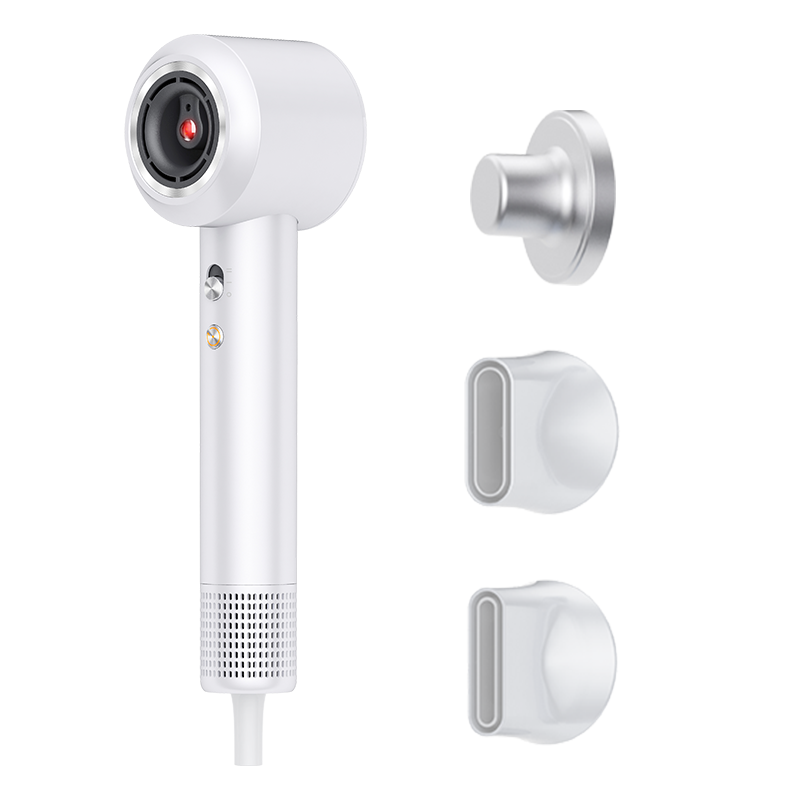
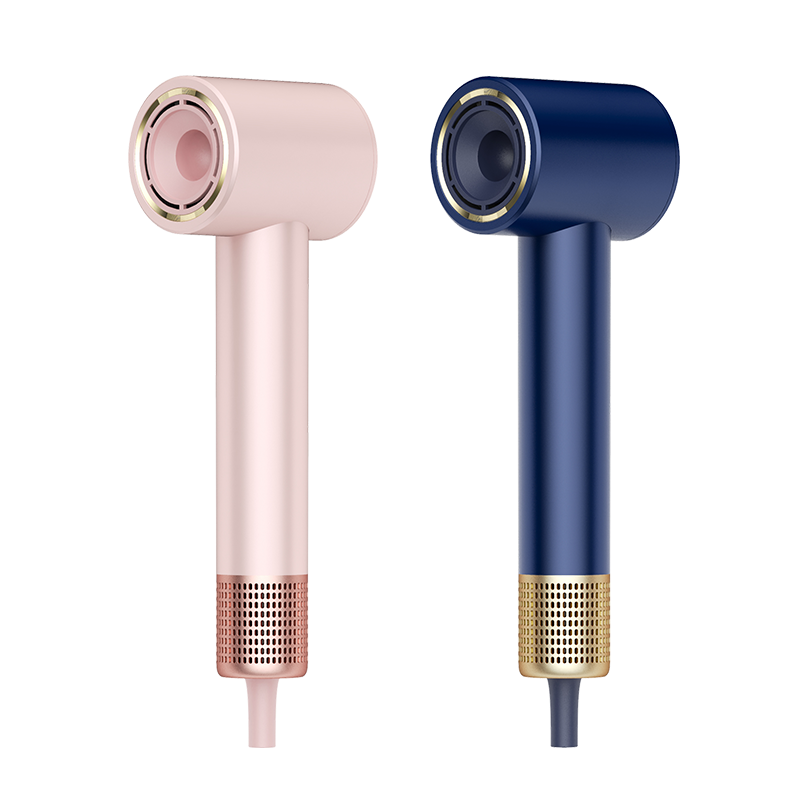
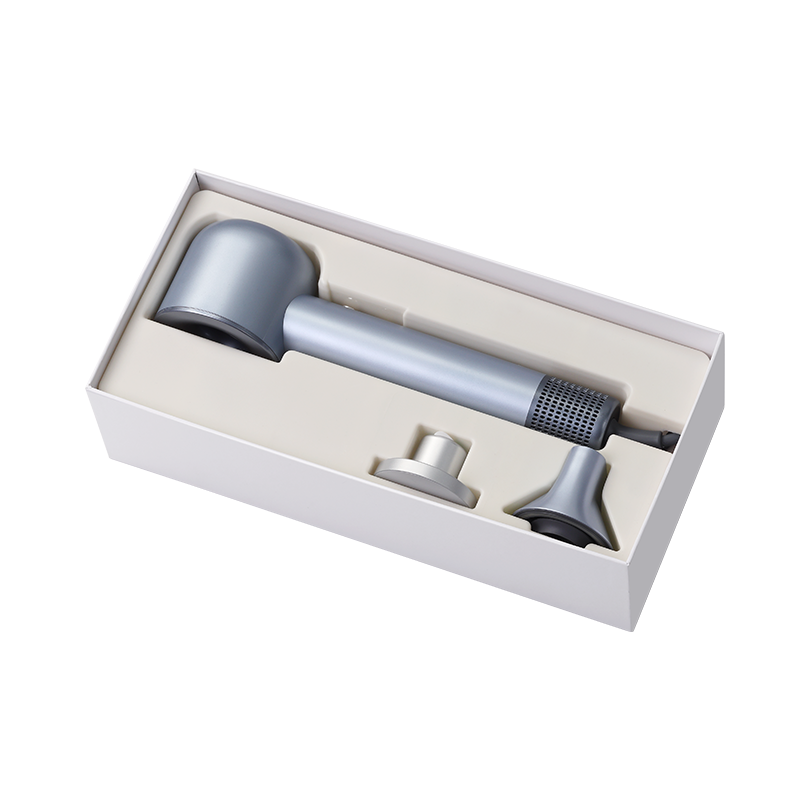 KH-801A Multi-Speed Adjustable High Speed Hair DryerMulti-speed adjustable High-Speed Hair Dryer with a powerful motor that generates a huge airflow in just a few seconds to effectively extract moisture from your hair. ...View Product →
Airflow changes the technique. A high speed dryer moves enough air to dry a section without the nozzle being pressed against it, which matters on long hair where the mid-length sits in the airstream for minutes at a time. If you are still weighing an older standard dryer against a modern high speed unit, the useful comparison is not raw wattage but how much air reaches the strand per second and how tightly the temperature is held. The same principle applies to speed settings: a lower airflow with a properly sized barrel usually beats maximum airflow with a barrel that is too small, because the section is controlled rather than blown around. You can read a fuller breakdown of the differences in this guide to high speed dryers compared with standard dryers.
Where the Minutes Actually Go
How a 12 minute long-hair blowout splits across stages
Rough dry to 80 percent
Sections 1 and 2
Sections 3 and 4
Cool set and finish
Times recorded on 45 cm medium density hair with a 45 mm ceramic round brush and a high speed dryer on medium heat.
A twelve minute blowout on long hair is not twelve minutes of styling, and the stage split explains why so many people give up halfway through. Rough drying to about 80 percent takes the largest single block, around four and a half minutes, and it is the stage where a vented paddle brush or even your fingers do the job. The two middle blocks, one for the first pair of sections and one for the second pair, add up to roughly six minutes, which is where a round brush earns its keep. The final cool set takes barely over a minute, yet it is the step that locks the shape and closes the cuticle. If your own timings show the middle blocks stretching past four minutes each, the section is too thick or the barrel is too small. Working from the back of the head forward, and finishing each section completely before moving on, keeps the total close to the model above.
Heat, Moisture and Where to Stop
Barrel surface temperature over an eight minute session
Ceramic coated round barrel
Bare metal round barrel
Surface readings taken at the barrel wall during continuous use on medium heat, with the dryer held at a constant distance.
The two curves separate within the first minute and never come back together, which is the clearest argument for a coated barrel. A bare metal round brush climbs past 110 degrees Celsius at its peak and stays above 95 degrees Celsius for the rest of the session, long after the hair wrapped around it has dried out. The ceramic coated barrel peaks lower and falls away faster, so a section that is already dry is not being reheated at damaging temperatures while you move to the next one. The practical instruction is simple: once you can feel no coolness at the centre of the section, stop and move on. Long hair spends more time on the barrel than short hair does, so every degree of excess heat is multiplied across the mid-length and the ends. If you can hear a sizzle or see steam, the barrel is far too hot for the section sitting in it.
A Buying Checklist for Long Hair
- Fix your barrel size first: 45 mm and up for hair past the shoulder blades, 38 mm for fine texture.
- Check the bristle mix. Boar alone is slow on wet hair, nylon alone can scratch, a mix covers both.
- Confirm the barrel is ceramic coated and the handle stays cool after ten minutes of use.
- Weigh the brush. Anything above roughly 120 grams becomes heavy with your arm raised for twelve minutes.
- Look for the diameter printed on the handle, since one brand often sells four near identical sizes.
- Buy one round brush and one vented paddle brush before buying any set.
Matching the Brush to the Tool You Already Own
A brush that suits one dryer can fight another. A 50 mm barrel paired with a narrow concentrator nozzle dries the outside of the section while the core stays damp, and a 32 mm barrel under a wide diffuser takes forever. The rule of thumb is to match barrel size to nozzle width, keeping the nozzle roughly one third of the barrel diameter so the airstream stays focused on the section the brush is holding.
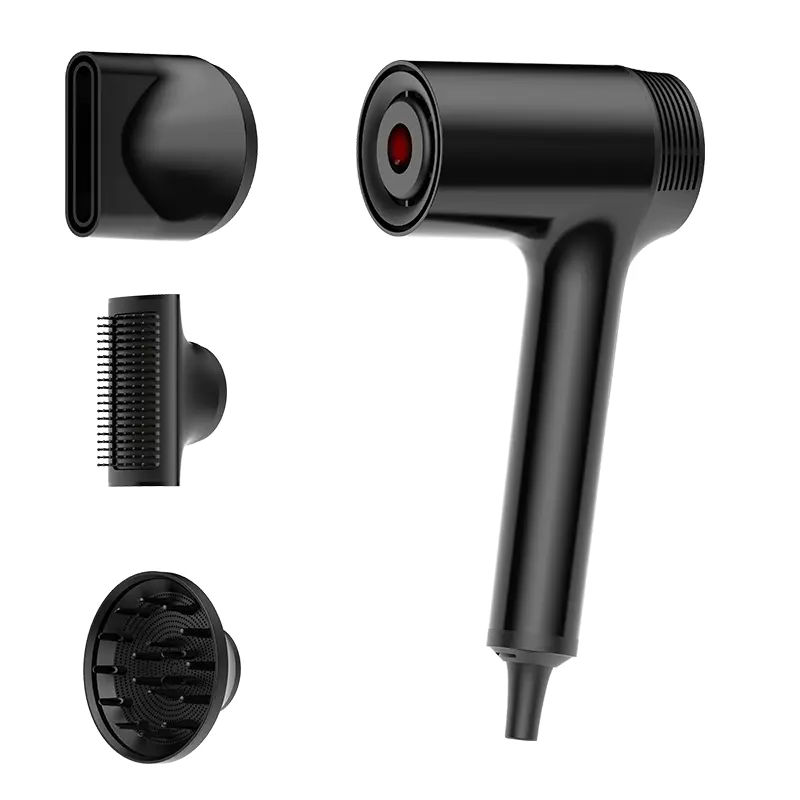
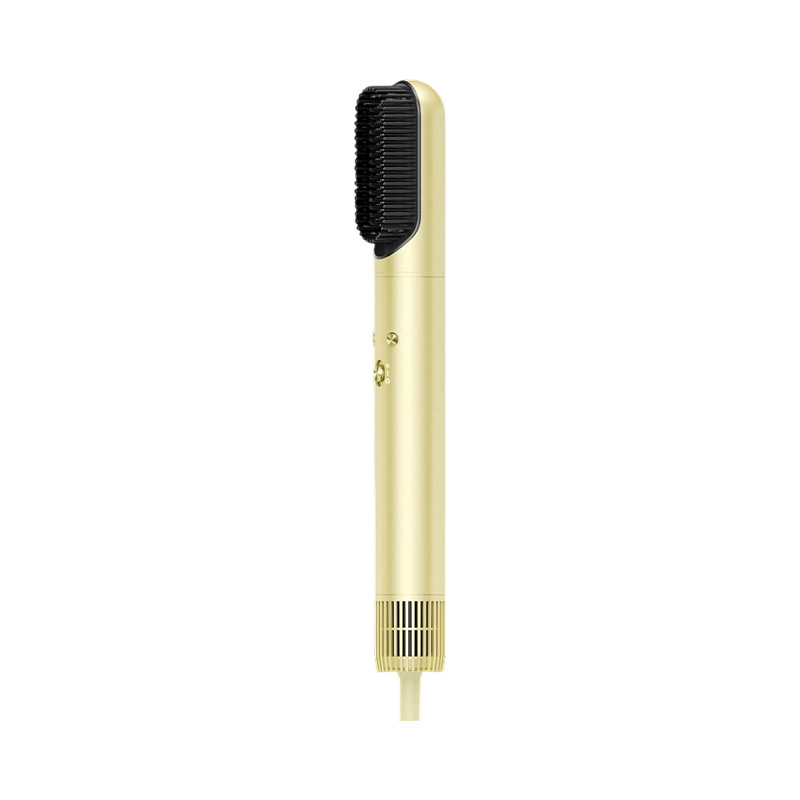 KH-802A 18 IN 1 Multi-functional hair dryerKH-802A 18 IN 1 Multi-functional Hair Dryer comes with 18 interchangeable attachments, covering drying, styling, volumizing, and smoothing needs for different hair len...View Product →
Multi-function tools change the arithmetic again. A dryer with interchangeable round and flat attachments covers the rough dry, the round brush pass and the final smoothing without switching appliances, which cuts down the number of times the hair cools between stages and has to be warmed through a second time. For very long hair, the finishing pass is often better handled by a straightener with adjustable temperature, because one slow pass at 150 degrees Celsius stresses the cuticle less than three fast passes at 200 degrees Celsius.
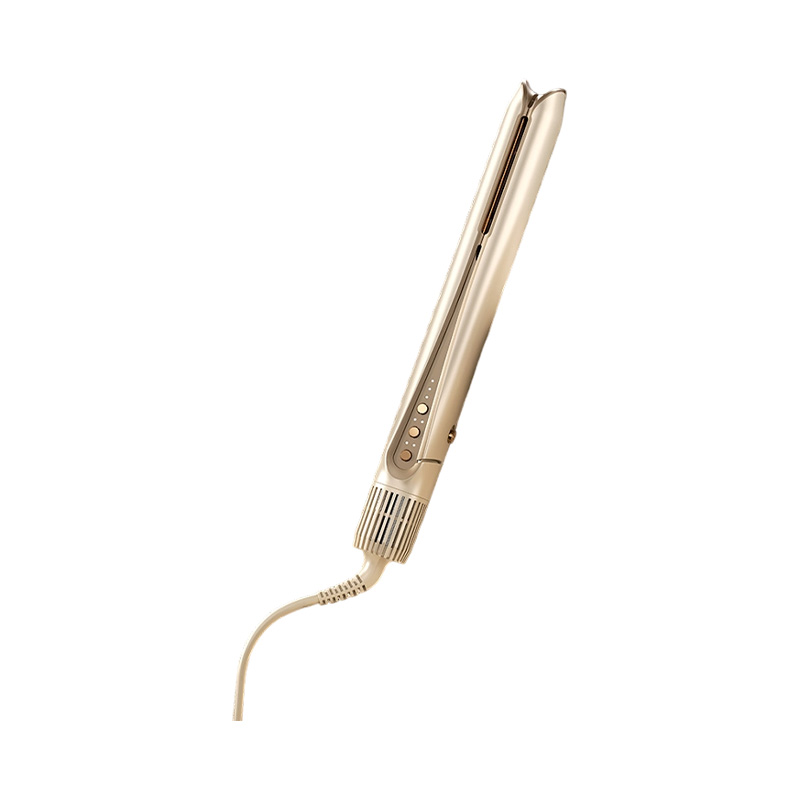 KH-810 Intelligent temperature control hair straightener and curling ironKH-810 Intelligent Temperature Control Hair Straightener and Curling Iron integrates dual straightening and curling functions, eliminating the need for multiple stylin...View Product →
Scalp care belongs in the same routine. Drying long hair with the head tipped down and the airflow running against the cuticle is a common cause of tangles at the nape, and a light scalp massage before drying supports circulation without adding heat. Some manufacturers build that step into the lineup with a dedicated scalp massage comb, which is worth having if you blow dry most days.
The short version: buy a 45 mm ceramic round brush with mixed boar and nylon bristles, keep a vented paddle brush for the first three minutes, and work in sections thin enough that warm air reaches the middle. Everything else, brand, handle colour, price, is secondary to barrel diameter and bristle grip. Get those two right and a long blowout stops being a test of patience.

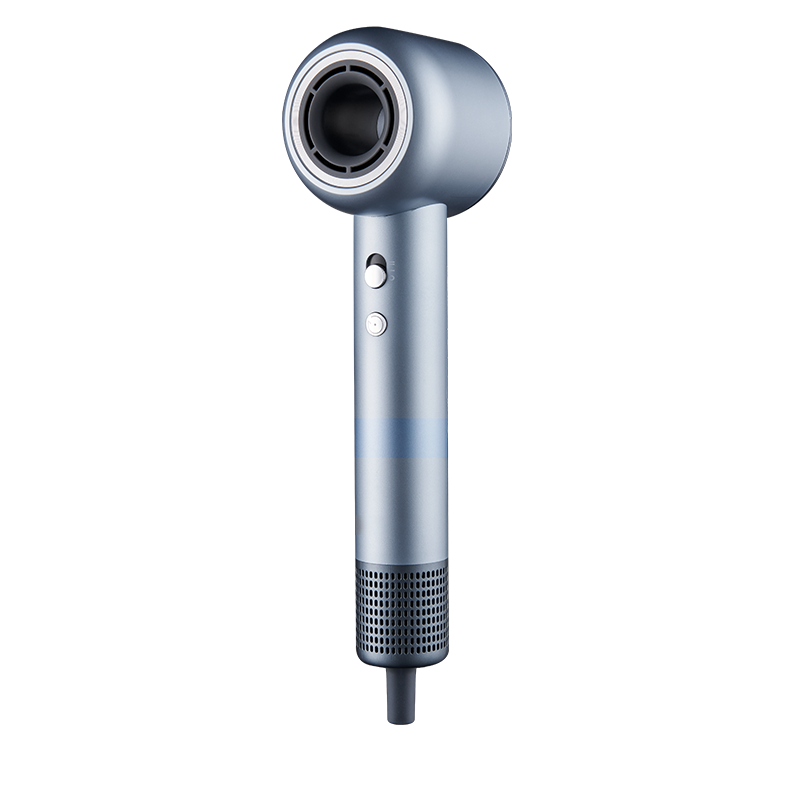

 +86-574-63982198
 +86-574-63982197
 No. 933, Lingxu 2nd Road, Binhai Economic Development Zone, Cixi, Zhejiang, China.